
- DMG
- CHINA
- IN STOCK
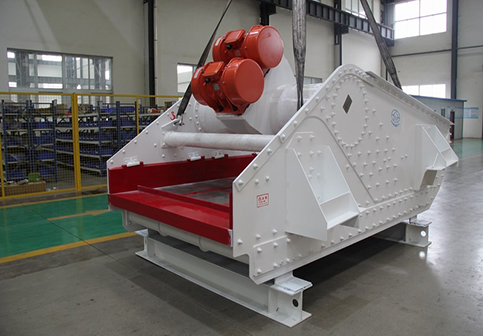
- high-frequency dewatering vibrating screen
The high-frequency dewatering vibrating screen is designed to withstand the powerful impact forces generated by vibration. Its welded steel plate structure is superior. After completion, all components are continuously welded and heat-treated for stress relief. The surface of the high-frequency dewatering vibrating screen undergoes standard treatment
high-frequency dewatering vibrating screen
I. Introduction to the High-Frequency Dewatering Vibrating Screen
The high-frequency dewatering vibrating screen is designed to withstand the powerful impact forces generated by vibration. Its welded steel plate structure is superior. After completion, all components are continuously welded and heat-treated for stress relief. The surface of the high-frequency dewatering vibrating screen undergoes standard treatment: primer, midcoat, and topcoat, effectively protecting it from corrosion. All connecting bolts use Huck bolts. The stainless steel wedge screen and polyurethane screen surface are suitable for this flat high-frequency dewatering vibrating screen structure, and the side extensions also meet these requirements. Dual proton vibration ensures linear motion of the high-frequency dewatering vibrating screen. High G-force, high throughput, and excellent dewatering performance.
II. Structure of the High-Frequency Dewatering Vibrating Screen
The high-frequency dewatering vibrating screen consists of a screen box, a vibrating screen exciter, and a shock absorber. The exciter is mounted above the screen box at a 45° angle to the screen box. The exciter is driven by an electric motor and is installed at an angle, generating the excitation force at a 45° angle to the screen surface. Under the action of the exciting force, the screen box moves linearly at a 45-degree projection angle.
1. Transmission: A belt connects the motor and the vibrator. This transmission is reliable and stable, mitigating the impact of vibration on the motor.
2. Vibration Isolation: The vibration isolation device uses steel coil springs, which are characterized by high safety and long service life.
3. Vibrator: The vibrator is installed on the side panels of the screen box and drives the motor via a V-belt. Because its rotating shaft is eccentric, the centrifugal inertia generated during rotation causes the screen box to vibrate periodically.
4. Screen Box: The high-frequency dewatering vibrating screen is constructed of a frame, with cold-formed, weld-free side panels that are high-strength and durable. High-strength bolts connect the crossbeam and side panels, making maintenance very convenient and quick. The screen surface inclination can be adjusted by changing the height of the spring supports to meet different screening requirements. Different structural types are available, such as single-deck, double-deck, and multi-deck screens, to meet different material classification requirements.
III. Working Principle of a High-Frequency Dewatering Vibrating Screen
A high-frequency dewatering vibrating screen is a solid-liquid separation device based on a combination of vibration and screening. This vibrating screen utilizes dual-motor self-synchronizing technology, a universal eccentric mass, and an adjustable-amplitude vibrator. Its main components include a screen box, motor, exciter, and support system.
First, two vibrators operate synchronously in opposite directions, independently of each other. The resulting high-frequency vibrations are transmitted to the screen surface, a mesh structure made of metal or polymer. A mixture containing solid particles suspended in a liquid is directed to the feed inlet of the high-frequency dewatering vibrating screen. The centrifugal forces generated by the two eccentric masses add together the forces in the direction of vibration, canceling out the centrifugal forces in the opposite direction. This creates a single excitation vibration in the direction of vibration, allowing the screen box to perform reciprocating linear motion.
The high-frequency vibrations cause the solid particles to bounce and roll on the screen surface, allowing smaller particles to pass through the sieve apertures while larger particles are blocked by the screen surface. During this process, solid particles are dehydrated. High-frequency dewatering vibrating screens are widely used in mining, environmental protection, and building materials due to their efficient solid-liquid separation and dehydration performance. This technology improves product quality, reduces wastewater discharge, and increases production efficiency, making it a key piece of equipment in the solid-liquid separation field.
Four. Product Performance Advantages of High-Frequency Dewatering Vibrating Screens
1. High-frequency dewatering vibrating screens are lightweight, compact, and simple in structure, making them easy to disassemble, assemble, and maintain.
2. The vibrator of the high-frequency dewatering vibrating screen is highly efficient, simple in structure, and easy to replace. The rubber spring in the base provides significant shock absorption, resulting in low-amplitude, slow vibrations and cleaner dewatering.
3. The high-frequency dewatering vibrating screen utilizes high-strength metal mesh for a long service life.
4. Wear parts are cast from high-manganese steel, ensuring a long service life and low failure rate.
5. The vibration damping springs are rubber, extending the life of the screen.
6. Compared to other equipment, high-frequency dewatering vibrating screens offer superior dehydration performance, achieving a 99% product clearance rate.
7. The machine's bottom is supported by horizontal bars, the side panels are reinforced, and the discharge port is supported by triangular steel plates. Customization is possible based on production volume and moisture content.
8. To enhance operational stability and ensure reliable dewatering, our main drive system utilizes a sealed gearbox and pulleys.
9. The screen apertures can be customized to meet specific requirements. The modular polyurethane screen requires no bolts.
10. For materials with relatively low mud content, the dewatering screen can be used directly without a sand washer, achieving the same results, saving costs for customers.
V. Applications of High-Frequency Dewatering Vibrating Screens
1. Potash Feldspar Mining
High-Frequency Dewatering Vibrating Screens can be used in potash feldspar ore. After dehydration and separation, the moisture content of the feldspar can be reduced to less than 15%. They can also remove fine sand that is lost in the spiral separator, achieving a dry stacking effect and significantly increasing the product recovery rate.
2. Sand Washing
High-Frequency Dewatering Vibrating Screens can be used in the sand washing industry. After the mixer is finished, a dewatering screen is used to separate the sand and mud. The clean sand is then separated, and the mud can be recycled after sedimentation, effectively improving production efficiency.
3. Coal Preparation Plants
High-Frequency Dewatering Vibrating Screens can be used to dewater coal sludge in coal preparation plants. In mining and coal extraction processes, the dry coal in the recyclable material can be used in conjunction with a plate and frame filter press, reducing the number of filter press operations. High-Frequency Dewatering Vibrating Screens can separate fine particles of ore or coal from water, reducing moisture content and improving product quality. The investment and production costs of the slurry water treatment system are also significantly reduced, and a closed-loop circulation system for wash water is now possible.
4. Construction Industry
In the production of building materials such as concrete, mortar, and bricks, fine particles in the raw materials must be separated and dehydrated to control the material's properties and quality.
VI. Maintenance of the High-Frequency Dewatering Vibrating Screen
1. Before using the high-frequency dewatering vibrating screen daily, check the anchor bolts to prevent loosening.
2. When the equipment is operating, the screen feed concentration should be controlled at around 40%. This will help improve classification efficiency later.
3. Cover the vibrator with a rubber sheet to prevent slurry and water from entering, which could cause blockage or short circuits. Do not expose the electromagnetic vibrator and control box to water, as this can easily cause short circuits.
4. After the equipment has operated for more than 1500 hours, check the bearing condition. If severely damaged, replace them immediately.
5. Remove the screen after one month of use and rotate it 180 degrees to improve classification efficiency.
6. When restarting the high-frequency dewatering vibrating screen after an extended period of inactivity, first measure the insulation resistance. The resistance should be measured at 500 volts per gigameter and should be greater than 0.5 MHz.
VII. Reasons for Slow Sand Screening in High-Frequency Vibration Dewatering
1. Excessive Feed
If the feed is too high, it will exceed the screen's processing capacity, causing blockage and a decrease in sand flow rate. The feed should be reduced appropriately to ensure smooth screen flow.
2. Excessive Moisture Content in the Feed
Sand with high moisture content tends to clump and stick together, affecting dewatering efficiency. Ensure the moisture content of the feed is within the appropriate range.
3. Blocked Screen Pores
After long-term use, debris will accumulate on the screen surface, blocking the mesh. Clean the screen regularly to keep it clear.
4. Spring Fatigue or Damage
After long-term use, the springs that provide vibration can fatigue or break, weakening the vibration effect. Check the springs regularly and replace any problems promptly.
5. Motor Problems
Motor problems, such as low speed or reduced efficiency, can lead to insufficient vibration force. Check the motor to ensure it is in good working condition.
6. Screen frame structure fatigue or deformation
The screen frame may become fatigued or deformed after prolonged vibration, weakening the vibration effect. The screen frame structure should be inspected to ensure its robustness.
7. Improper operating procedures
During operation, all parameters such as feed rate, moisture content, and vibration frequency should be strictly controlled. Improper operation can also lead to a decrease in sand flow rate.




Product key description, this is a very good product description, detailing our product use, product characteristics