
- DMG
- CHINA
- IN STOCK
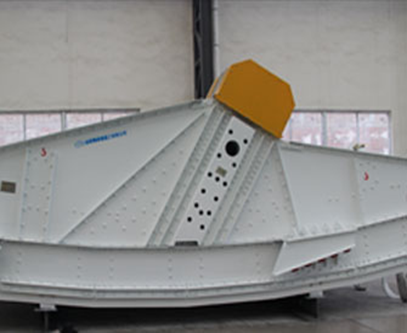
- Curved vibrating screen
Arc vibrating screens come in two types: fixed and vibrating. They can be installed in either a hanging or pedestal configuration. The screen body is reversible, extending the life of the screen deck. The tilt angle of the arc vibrating screen can be adjusted according to site conditions.
curved vibrating screen
Arc vibrating screens come in two types: fixed and vibrating. They can be installed in either a hanging or pedestal configuration. The screen body is reversible, extending the life of the screen deck. The tilt angle of the arc vibrating screen can be adjusted according to site conditions. The excitation force of the vibrating motor of the vibrating arc screen can be adjusted within a certain range to optimize the dewatering effect.
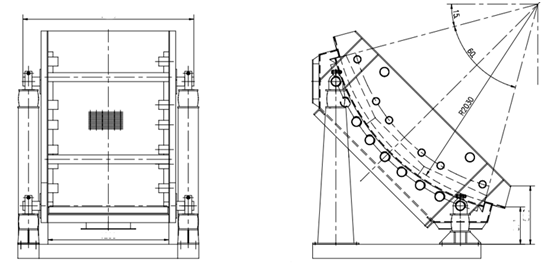
Typically, arc vibrating screens are installed before a power screen to reduce the screen's footprint. These vibrating screens offer a simple structure, excellent dewatering performance, resistance to material clogging, a small footprint, and ease of maintenance. These screens are available with screen boxes with wrap angles of 45° and 60°, and a curvature radius of 20-30 mm. The curved screen frame and screen deck utilize a pivoted structure that allows 180-degree rotation, extending the life of the screen deck.
I. Advantages of Curved Vibrating Screens
1. This type of vibrating screen has a relatively simple structure and can screen without power. Compared to slot screens, it offers slightly higher processing capacity and screening efficiency.
2. The curved vibrating screen can process large volumes with high efficiency, and can be specifically used for dehydration and media removal.
3. This vibrating screen is fully enclosed, leak-proof, and improves the working environment.
4. The screen box and screen mesh of the curved vibrating screen can be made of stainless steel according to user requirements, and the screen surface can be angled to be permeable, wear-resistant, and corrosion-resistant.
5. The screen plate and feed port can be automatically cleaned.
II. Working Principle of the Curved Vibrating Screen
The curved vibrating screen is a device used for particle screening and solid-liquid separation. Its operating principle is based on the distribution and vibration of the material on the curved screen surface. The feed side and sharp edges of the screen bars cut through the coal slurry, separating it from the water. The curved design of the screen surface helps reduce adhesion and clogging, allowing material to pass freely through the screen apertures. Vibrating the screen, the material gradually passes through the apertures according to particle size, forming multiple graded products. The feed and discharge ends of the curved vibrating screen can be reversibly positioned by rotating the feed box, screen box, and screen base shaft. This allows for convenient and flexible operation, ensuring even wear and tear, and extending the life of the curved vibrating screen.
Curved vibrating screens are available in vibrating and fixed types, depending on the material's moisture content and intended use. Due to their unique screen surface shape and vibration characteristics, curved vibrating screens are suitable for processing sticky, wet materials, and those requiring graded screening, improving screening efficiency and product quality.
III. Applications of Curved Vibrating Screens
1. Screening of Sticky Materials
Curved vibrating screens are suitable for processing sticky materials such as wet coal, wet ore, and ceramic powder. Their curved screen surface reduces material adhesion, preventing particles from clogging the screen apertures, thereby improving screening efficiency.
2. Screening of Wet Materials
For wet or highly humid materials, curved vibrating screens can better disperse and evenly distribute the material, helping to reduce sticking and adhesion during the screening process, thereby improving screening efficiency.
3. Screening of Fine Particles
Curved vibrating screens can rapidly grade and screen fine particles, separating them into different particle sizes. They are widely used in ores, sand and gravel, and building materials.
4. Multi-stage Screening
Curved vibrating screens typically feature a multi-layered screen surface structure, enabling multi-stage screening at different levels. They are used for finer particle classification, such as in powder metallurgy.




Product key description, this is a very good product description, detailing our product use, product characteristics