
- DMG
- CHINA
- IN STOCK
- Single-deck horizontal vibrating screens
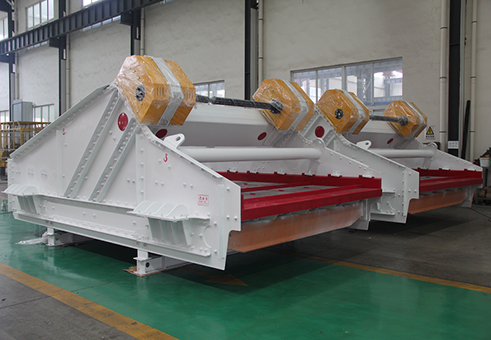
Single-deck horizontal vibrating screens are widely used in industrial production for screening, grading, and separating materials. They can classify materials into desired grades based on their size, shape, and specified particle size to meet production and processing requirements. Single-deck horizontal screens typically consist of a small number of key components
Single-deck horizontal vibrating screens
I. Introduction to Single-Deck Horizontal Vibrating Screens
Single-deck horizontal vibrating screens are widely used in industrial production for screening, grading, and separating materials. They can classify materials into desired grades based on their size, shape, and specified particle size to meet production and processing requirements. Single-deck horizontal screens typically consist of a small number of key components, such as a motor, main drive shaft, vibrator, and screen body. Their relatively simple structure makes them easy to install and maintain.
This device utilizes linear vibration, with the excitation force at a 45-degree angle to the horizontal. This vibration method effectively separates and grades materials, improving screening efficiency. The continuous reciprocating vibration force continuously screens the material on the screen surface. This continuous operation method is suitable for applications requiring continuous, high-volume material processing.
Single-deck horizontal vibrating screens are widely used in many industries, such as mining, metallurgy, chemicals, building materials, and grain processing. They can be used for screening, grading, separating, and removing impurities from granular materials. Due to their simple structure, single-deck horizontal vibrating screens offer high vibration transmission efficiency and relatively low energy consumption. At the same time, it can achieve efficient screening effects, improve production efficiency, and save resources and energy costs.
2. Model specifications of single-layer horizontal vibrating screen
Model | Screen data(m) | Weight(kg) |
HSS1836 | 1.8×3.6 | 4805 |
HSS1848 | 1.8×4.8 | 5787 |
HSS1861 | 1.8×6.1 | 6027 |
HSS2436 | 2.4×3.6 | 6070 |
HSS2448 | 2.4×4.8 | 6652 |
HSS2461 | 2.4×6.1 | 9064 |
HSS3036 | 3.0×3.6 | 6319 |
HSS3048 | 3.0×4.8 | 7346 |
HSS3052 | 3.0×5.2 | 7478 |
HSS3061 | 3.0×6.1 | 10676 |
HSS3073 | 3.0×7.3 | 13050 |
HSS3630 | 3.6×3.0 | 6539 |
HSS3636 | 3.6×3.6 | 9501 |
HSS3642 | 3.6×4.2 | 9886 |
HSS3648 | 3.6×4.8 | 11180 |
HSS3655 | 3.6×5.5 | 11301 |
HSS3661 | 3.6×6.1 | 10570 |
HSS3667 | 3.6×6.7 | 11754 |
HSS3673 | 3.6×7.3 | 15620 |
HSS3685 | 3.6×8.5 | 16137 |
HSS4361 | 4.3×6.1 | 20892 |
HSS4373 | 4.3×7.3 | 20113 |
III. Working Principle of a Single-Deck Horizontal Vibrating Screen
The motor transmits driving force to the main drive shaft via a belt drive mechanism. The main drive shaft drives the vibrator to generate linear vibration force, causing the screen body to vibrate on the buffer springs. The vibration of the screen body is transmitted through the screen surface to the material, causing it to be stratified, graded, and separated on the screen surface. Finer materials pass through the screen holes into the chute below the screen, while coarser materials remain on the screen. This continuous vibration and screening process achieves precise screening and grading of materials, making it suitable for processing and separating particulate materials in various industries.
IV. Features of a Single-Deck Horizontal Vibrating Screen
1. Simple Structure: The single-deck horizontal vibrating screen has a relatively simple structure, consisting of a small number of major components, making it easy to install and maintain.
2. Vibration Mode: It utilizes linear vibration, with the excitation force direction generally set at a 45-degree angle to the horizontal, effectively stratifying and grading the material.
3. Continuous Operation: Continuous reciprocating vibration achieves continuous material screening and processing, making it suitable for applications requiring continuous large-scale material processing. 4. Buffer Springs: Buffer springs are installed on the screen body to reduce the dynamic load on the screen support foundation, reduce vibration transmission and noise, and improve the stability of the screen.
5. Precision Screening: The single-deck horizontal vibrating screen can accurately screen and grade materials according to specified particle size requirements, meeting the material quality and particle size requirements during production and processing.
6. Wide Application: It is widely used in the mining, metallurgy, chemical, building materials, grain processing and other industries for screening, grading, separating, and removing impurities from granular materials.
7. High Efficiency and Energy Saving: With a simple structure and relatively low energy consumption, it can achieve efficient screening results, improve production efficiency, and save resources and energy costs.





Product key description, this is a very good product description, detailing our product use, product characteristics