
- DMG
- CHINA
- IN STOCK
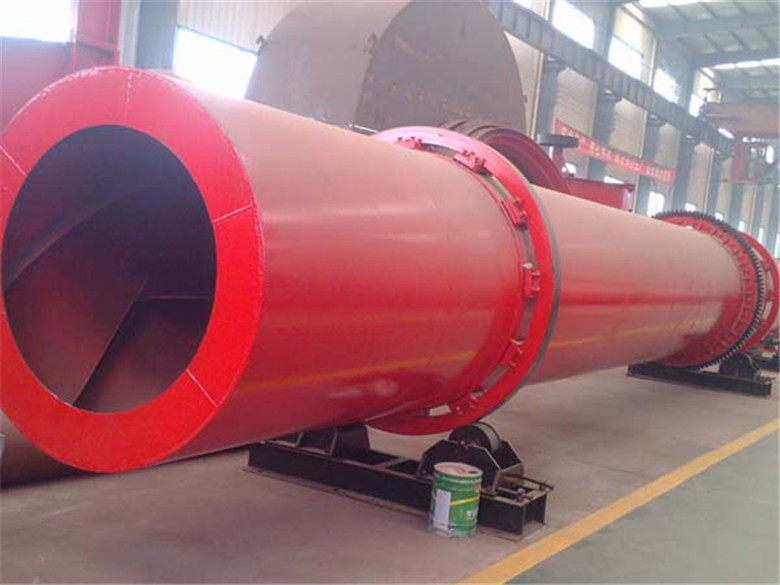
- sand rotary dryer
Sand dryers are primarily used to dry granular materials within a certain humidity range, such as yellow sand used in the dry mortar industry, various molding sands used in the foundry industry, blast furnace slag used in the building materials and cement industry, small-grained clay, and small-grained materials that are chemically stable and resistant to high temperatures and dust contamination in the chemical industry.
Sand rotary dryer
Sand dryers are primarily used to dry granular materials within a certain humidity range, such as yellow sand used in the dry mortar industry, various molding sands used in the foundry industry, blast furnace slag used in the building materials and cement industry, small-grained clay, and small-grained materials that are chemically stable and resistant to high temperatures and dust contamination in the chemical industry. Depending on the moisture requirements of different industries, the dried material can be dried to a moisture content below 0.5%.
[Feed Size]: <= 50mm [Processing Capacity]: 0.5-100t/h
[Applications]: Construction and building materials, foundry, smelting, chemical industry, etc.
[Applicable Materials]: Various types of sand, molding sand, quartz sand, river sand, yellow sand, river sand, sea sand, ore sand, iron powder, copper slag, slag, etc.
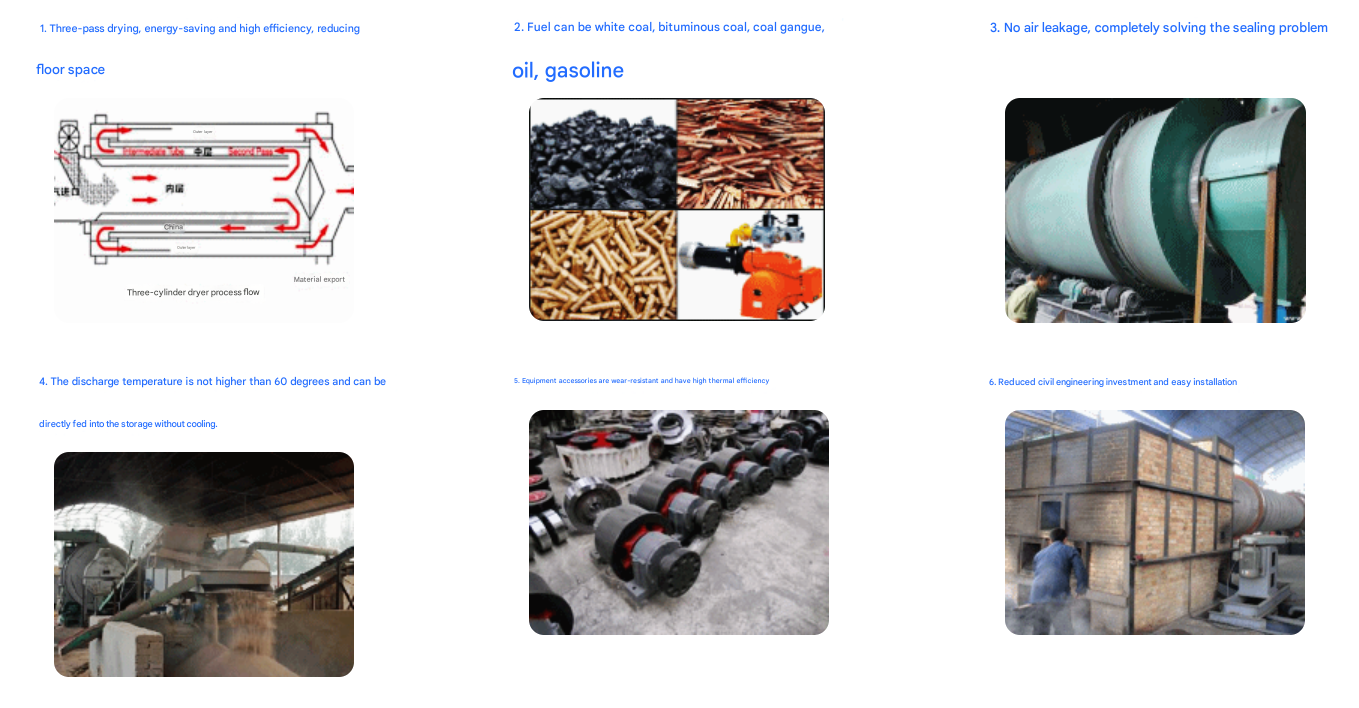
Advantages
Principle of working
DMG Machinery utilizes advanced foreign technology. The sand dryer consists of three concentric cylinders of varying diameters, interlocked and arranged according to a specific mathematical relationship and structural form. Based on the principle of thermal energy, the cylinders are equipped with lifting and guiding plates at varying angles and spacings. This structure ensures that the material being dried follows the spiral motion under the influence of gravity, maintain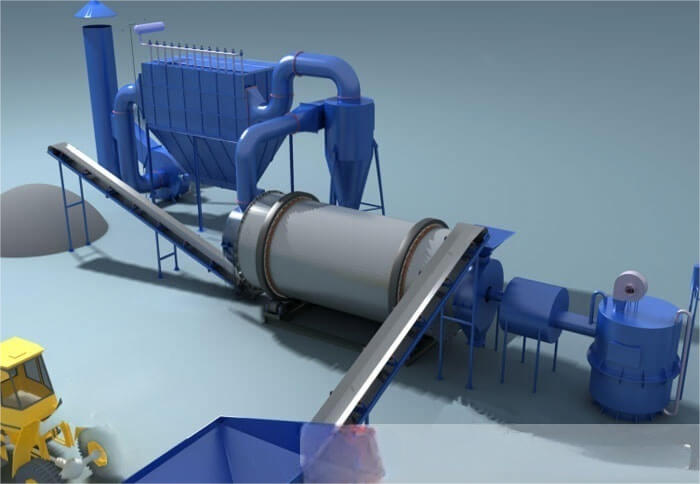 ing sufficient residence time and dispersion within the cylinders. This allows for sufficient heat exchange between the material and the hot air flow from the combustion chamber, eliminating the drawbacks of conventional drying equipment, which often result from wind tunnels in their cross-sections, resulting in a small heat exchange area and low evaporation intensity per unit volume. The unique three-cylinder structure surrounds the inner and middle cylinders within the outer cylinder, creating a self-insulating system. Heat dissipated from the surfaces of the inner and middle cylinders participates in the heat exchange with the material in the outer cylinder. Since the outer cylinder is at the cooler end of the hot air flow, the heat dissipation area and heat energy loss are significantly reduced. The energy-saving three-drum dryer can make full use of waste heat, reduce heat loss, increase heat exchange area, and greatly improve the evaporation intensity per unit volume of the dryer, thereby effectively improving the thermal energy utilization rate, reducing energy consumption, and significantly improving the thermal efficiency of the sand dryer.
Data
Model (m) | Capacity T/h | Consumption g/T | Power KW | |||
Slag | Coal ash | Clay | sand | |||
¢2.0×4 | 5~10 | 4 | 4~6 | 10~15 | 12~14 | 11 |
¢2.0×5 | 10~15 | 6 | 6~8 | 15~20 | 12~14 | 11 |
¢2.5×5 | 20~25 | 8 | 8~12 | 20~25 | 10~12 | 15 |
¢2.5×6 | 25~30 | 10 | 12~15 | 25~30 | 10~12 | 15 |
¢2.8×6 | 30~35 | 15 | 15~20 | 35~40 | 10~12 | 22 |
¢3.0×6 | 35~40 | 20 | 20~25 | 40~45 | 8~10 | 30 |
¢3.0×7 | 40~45 | 25 | 25~30 | 45~50 | 8~10 | 30 |
¢3.2×7 | 45~50 | 30 | 30~35 | 50~60 | 8~10 | 44 |
¢3.2×8 | 50~60 | 35~40 | 35~40 | 60~70 | 6~8 | 44 |
¢3.6×8 | 60~70 | 40~45 | 40~45 | 70~80 | 6~8 | 60 |
¢3.8×9 | 70~80 | 45~50 | 45~50 | 80~90 | 6~8 | 60 |
¢4.0×10 | 80~90 | 50~60 | 50~60 | 90~100 | 6~8 | 74 |




Product key description, this is a very good product description, detailing our product use, product characteristics