
- DMG
- CHINA
- IN STOCK
- Aluminum rotary kiln
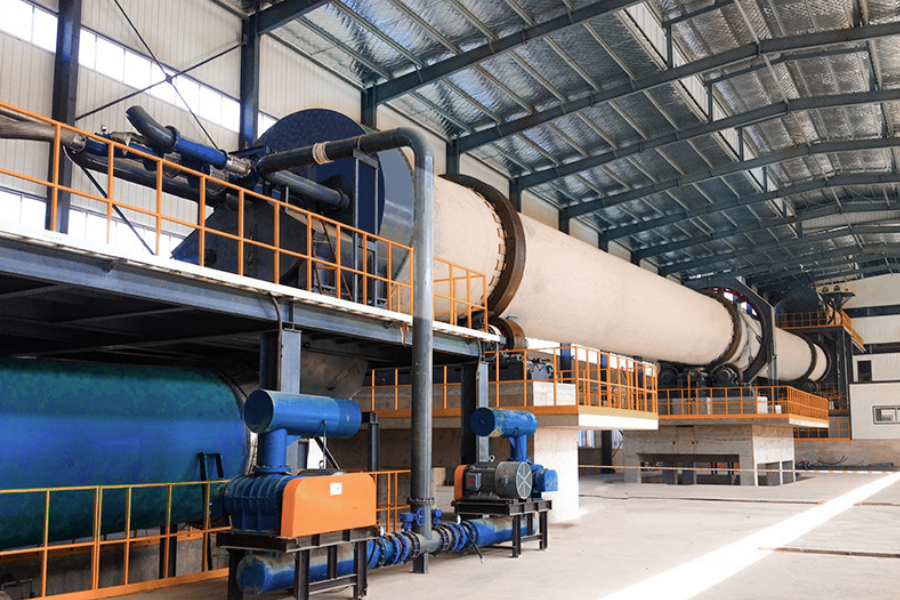
Alumina rotary kilns are used to calcine materials at temperatures between 950°C and 1700°C in the Bayer process, soda-lime sintering process, and Bayer-sintering process to produce alumina. This calcination process achieves the required physical and chemical changes, such as dehydration, crystal transformation, and pyrolysis.
Alumina rotary kiln
Alumina Rotary Kiln
Alumina rotary kilns are used to calcine materials at temperatures between 950°C and 1700°C in the Bayer process, soda-lime sintering process, and Bayer-sintering process to produce alumina. This calcination process achieves the required physical and chemical changes, such as dehydration, crystal transformation, and pyrolysis.
Raw Materials: Bauxite, aluminum hydroxide, crude alumina, fly ash, etc.
Fuel: Natural gas, coal gas, coal, etc.
Applications: Primarily used for calcining alumina raw materials in aluminum smelting, refractory materials, and ceramics.
Alumina Rotary Kiln Product Introduction
Alumina is widely used in industries such as electrolytic aluminum, ceramics, pharmaceuticals, electronics, and machinery, and market demand for alumina continues to grow significantly. Zhengzhou Mine's alumina rotary kiln is a free-flowing rotary kiln developed by Zhengzhou Mine's technical staff based on years of research and development, building on existing industrial alumina production practices. It features energy-saving, easy-to-operate, and stable operation.
Highlights
1. The rotary kiln utilizes variable frequency drive for high efficiency and low power consumption.
2. Low fuel consumption per unit product, negative pressure operation, and minimal dust pollution.
3. Highly adaptable, suitable for various production processes including Bayer, soda-lime sintering, and mixed processes.
4. PLC remote centralized control ensures convenient operation and adjustment, as well as safety and stability.
Working Principle: Aluminum hydroxide or bauxite is fed into the kiln from the kiln's rear end. Due to the kiln's tilt and slow rotation, the material rolls circumferentially and moves axially from the kiln's rear end (high end) to the kiln's front end (low end). Fuel is injected into the kiln from the kiln's front end (low end) through a burner and burns. Heat is transferred to the material through radiation, convection, and conduction. During this movement, the material undergoes various physical changes and chemical reactions, achieving the technical specifications required by the production process. The material is finally discharged from the kiln's front end and enters a cooler.
Data
Model | Capacity(t/h) | Support | reducer | motor | Power(kW) |
Ø2.2×45m | 3.5 | 3 | ZS125-5 | YVF2-225M-4 | 45 |
Ø2.5×50m | 5 | 3 | ZS145-5 | YVF2-250M-4 | 55 |
Ø2.8×50m | 8.5 | 3 | ZS165-6 | YVF2-280S-4 | 75 |
Ø3.0×55m | 11 | 3 | ZS165-3 | YVF2-280M-4 | 90 |
Ø3.2×60m | 15 | 3 | ZL130-16 | YVF2-315L2-6 | 132 |
Ø3.6×64m | 20 | 3 | ZSY560-63 | YVF2-355M1-6 | 160 |
Ø3.8×70m | 26 | 3 | ZSY560-63 | YVF2-355M4-6 | 200 |




Product key description, this is a very good product description, detailing our product use, product characteristics