
- DMG
- CHINA
- IN STOCK
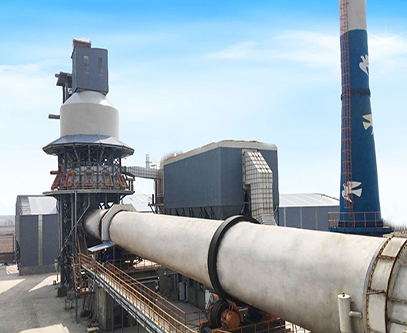
- Lime rotary kiln
Product Introduction: This new type of rotary kiln, specifically designed for active lime, is designed specifically for limestone calcination. This kiln draws on the experience and expertise of similar rotary kilns both domestically and internationally, specifically designed for active lime.
lime rotary kiln
Lime Rotary Kiln
Product Introduction: This new type of rotary kiln, specifically designed for active lime, is designed specifically for limestone calcination. This kiln draws on the experience and expertise of similar rotary kilns both domestically and internationally, specifically designed for active lime.
Capacity: 150-1200 t/d
Models: φ2.5×40-φ5.1×72m
Calcination Temperature: 1100±50°C
Calcination Heat Source: Pulverized coal, coke oven gas, semi-coke furnace gas, converter gas, blast furnace gas, calcium carbide furnace gas, natural gas, diesel, heavy oil, liquefied petroleum gas, and biomass fuel.
Application Industries: Suitable for limestone calcination in the metallurgical, chemical, and building materials industries.
Lime Rotary Kiln Product Introduction
The lime rotary kiln is a new type of rotary kiln specifically designed for active lime, developed based on the calcination characteristics of limestone and drawing on the experience of similar rotary kilns both domestically and internationally. This rotary kiln (optionally equipped with a vertical preheater and vertical cooler to form an energy-saving rotary kiln calcination system) features high raw material utilization, complete calcination, uniform quality, high quality, high production capacity, high operating efficiency, energy conservation and environmental protection, simple operation, and a long machine life.
Highlights
1. The rotary kiln offers stable output and is suitable for large, medium, and small active lime production lines.
2. The rotary kiln is an open calcination system with a simple kiln structure, uniform heating, stable product quality, and low rates of green and overburning.
3. The vertical preheater at the kiln tail fully utilizes the high-temperature flue gas generated by calcination within the rotary kiln, increasing the kiln's output.
4. The vertical cooler at the kiln head not only quenches the high-temperature lime, improving product activity, but also facilitates transportation and storage.
Working Principle: Limestone of acceptable particle size flows from the preheater's top hopper through a discharge chute into the preheater body. Inside the preheater, it combines with the hot flue gas from the rotary kiln exhaust to heat the limestone to over 800°C, partially decomposing it. A hydraulic push rod then pushes the limestone into a transfer chute for high-temperature calcination in the rotary kiln. The hot flue gas from the rotary kiln exhaust is cooled to below 250°C before entering the flue gas treatment system. After calcination in the rotary kiln, the limestone falls into a vertical cooler, where it is cooled by cold air from the cooling fan to below ambient temperature +60°C before being discharged from the vertical cooler. The secondary air used to cool the lime is heated to form high-temperature combustion air, which enters the rotary kiln for combustion.
Process flow
(1) Storage and transportation of raw materials
Limestone with a particle size of 10-50mm is transported to the factory area and piled in the material yard. Loaders are used for material yard operations. The loader loads the qualified particle size material into the receiving trough set up in the material yard. The feeder feeds the material in a quantitative manner under the receiving trough and feeds the stone to the high-angle conveyor, and then to the screening building. After screening, the qualified particle size of limestone is weighed and then sent to the top silo of the preheater by the high-angle conveyor. The powder material under the screen is sent to the yard by the 3# conveyor and regularly transported out by a forklift.
(2) Limestone calcination
The limestone calcination process consists of a vertical preheater + rotary kiln + vertical cooler, with a production capacity of 100~1000t/d. The material is introduced from the top hopper of the preheater through the discharge chute into the preheater body. At the same time, the high-temperature flue gas introduced from the rotary kiln preheats the material to above 1000℃, causing partial decomposition of the limestone. The material is then pushed into the tail of the rotary kiln by a hydraulic push rod. After high-temperature calcination in the rotary kiln, it is unloaded into the cooler. The material is cooled by cold air blown in by the fan to below the ambient temperature + 60℃ and discharged from the cooler. The air blown in through the cooler enters the rotary kiln as secondary air to participate in combustion.
(3) Finished product transportation
After being discharged from the cooler, the finished lime is transported to each finished lime storage via a chain conveyor, bucket elevator, and belt conveyor. The lower discharge valve of the lime storage silo is used to load the lime in the silo into cars or tank trucks for transportation. Silos of different sizes are set up according to the customer's storage requirements.
The finished product storage silo adopts a circular silo, with two silos for 5-50mm finished products and one silo for <5mm finished products. The capacity of each silo is about 800t;
(4) Flue gas treatment
The high-temperature flue gas generated by the combustion of the rotary kiln is cooled to below 250℃ after heat exchange with the limestone in the preheater. It then enters the cyclone dust collector for first-level dust collection to capture large particles of dust. It then enters the bag dust collector and is discharged into the atmosphere through a high-temperature fan after dust removal. The dust concentration of the exhaust gas is less than 30mg/m3. A cold air control system is set at the inlet of the dust collector to protect the dust collector.
Data
capacity(t/d) | 150 | 200 | 250 | 300 | 350 | 400 | 500 | 600 | 800 | 1000 | 1200 |
Main equipment | Main supporting equipment models and technical and economic indicators | ||||||||||
Vertical preheater | YRQ04 | YRQ06 | YRQ06 | YRQ08 | YRQ08 | YRQ10 | YRQ12 | YRQ12 | YRQ14 | YRQ18 | YRQ20 |
Rotary kiln | φ2.5×40m | φ2.8×43m | φ3.0×48m | φ3.2×50m | φ3.3×52m | φ3.6×55m | φ3.8×58m | φ4.0×60m | φ4.3×65m | φ4.9×70m | φ5.1×72m |
Vertical cooler | LSF36 | LSF44 | LSF56 | LSF80 | LSF112 | ||||||
Calcination temperature /℃ | 1100±50 | ||||||||||
Energy consumption indicators /(kCal/kg) | 1200±100 | ≤1150 | ≤1100 | ||||||||
Power consumption index /(kW·h/t) | 40±5 | ||||||||||
Limestone : Stone | 1.7~1.78:1 | ||||||||||
Lime overburning rate /% | ≤5 | ||||||||||
Lime activity /ml | ≥340(Determined by the composition of limestone) | ||||||||||
Ash discharge temperature /℃ | Temperature +60 | ||||||||||
Feed size /mm | 10~20/20~40 | ||||||||||
Emission concentration /(mg/Nm3) | ≤10 | ||||||||||
Working days | ≥340 | ||||||||||
Inspection/year | 1~3 | ||||||||||
Operator | 2~3 | ||||||||||
Fuel | Pulverized coal, coke oven gas, semi-coke furnace gas, converter gas, blast furnace gas, calcium carbide furnace gas, natural gas, diesel, heavy oil, liquefied petroleum gas, biomass fuel | ||||||||||




Product key description, this is a very good product description, detailing our product use, product characteristics