
- DMG
- CHINA
- IN STOCK
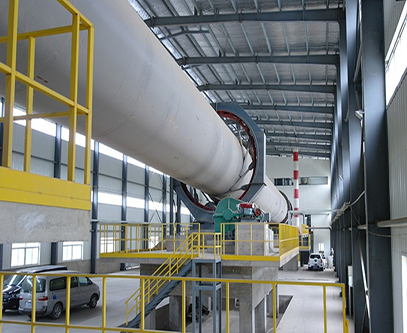
- bauxite rotary kiln
Bauxite rotary kilns are primarily used for roasting high-alumina bauxite in refractory plants and clinker and aluminum hydroxide in aluminum plants; magnetized roasting of iron ore in metallurgical and steel mills; and oxidation roasting of chromium and nickel ore.
bauxite rotary kiln
Bauxite Rotary Kiln
Capacity: 3.5-26 t/h
Models: Ø2.2×45m-Ø3.8×70m
Power: 45-200kW
Applications: Bauxite rotary kilns are primarily used for roasting high-alumina bauxite in refractory plants and clinker and aluminum hydroxide in aluminum plants; magnetized roasting of iron ore in metallurgical and steel mills; and oxidation roasting of chromium and nickel ore.
Bauxite Rotary Kiln Product Introduction
Bauxite clinker, produced from calcined bauxite ore, is processed and used in aluminum smelting, precision casting, refractory fiber, cement, and chemical industries. Our bauxite rotary kilns offer seven models with cylinder diameters ranging from 2.2m to 3.8m, equipped with motors with power ratings ranging from 45kW to 200kW, capable of calcining bauxite clinker at outputs of 3.5-26t/h.
The bauxite rotary kiln, also known as the bauxite calcining kiln, is a type of rotary kiln specifically designed for bauxite calcination. It primarily consists of a rotary section, support assembly, transmission mechanism, kiln head hood, kiln head and kiln tail seals, and a combustion device. It features a simple structure, rational design, easy and reliable operation, minimal labor requirements, and stable processes.
Outstanding Advantages
1. Low energy consumption, reducing unit coal consumption by 40% compared to conventional dome-shaped converters, with excellent stability and a strong market price advantage;
2. Simple and reliable operation, requiring minimal personnel, and stable process;
3. Low environmental pollution, low maintenance requirements, and high operating efficiency;
4. Compatible with a variety of fuels, including gas, pulverized coal, and fuel oil.
Operating Principle
The material enters the kiln at the kiln tail (the higher end of the cylinder) for calcination. Due to the cylinder's tilt and slow rotation, the material tumbles circumferentially and moves axially (from the higher end to the lower end), continuing the process. The resulting clinker passes through the kiln head hood and enters the cooler for cooling.
Technical Parameters
Specification | Capacity(t/h) | support | reducer | Motor | Power(kW) |
Ø2.2×45m | 3.5 | 3 | ZS125-5 | YVF2-225M-4 | 45 |
Ø2.5×50m | 5 | 3 | ZS145-5 | YVF2-250M-4 | 55 |
Ø2.8×50m | 8.5 | 3 | ZS165-6 | YVF2-280S-4 | 75 |
Ø3.0×55m | 11 | 3 | ZS165-3 | YVF2-280M-4 | 90 |
Ø3.2×60m | 15 | 3 | ZL130-16 | YVF2-315L2-6 | 132 |
Ø3.6×64m | 20 | 3 | ZSY560-63 | YVF2-355M1-6 | 160 |
Ø3.8×70m | 26 | 3 | ZSY560-63 | YVF2-355M4-6 | 200 |




Product key description, this is a very good product description, detailing our product use, product characteristics