
- DMG
- CHINA
- IN STOCK
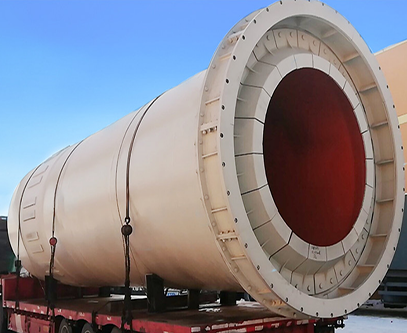
- Cement rotary kiln
Cement raw meal ground from limestone, siliceous raw materials, aluminous raw materials, and a small amount of ferrous raw materials
cement rotary kiln
Cement Rotary Kiln
Model: Φ2.5×40-Φ4.3×60
Production Capacity: 180-3200 t/d
Applicable Materials: Cement raw meal ground from limestone, siliceous raw materials, aluminous raw materials, and a small amount of ferrous raw materials
Application Industries: Suitable for cement plants and clinker production lines.
Cement Rotary Kiln Product Introduction
Cement rotary kilns are widely used in the production and calcination of cement clinker. Our company currently manufactures cement rotary kilns primarily for dry-process cement clinker production lines. Based on different cement clinker production processes, these kilns are categorized into hollow dry-process kilns, kilns with preheaters, and external decomposition kilns. Sixteen models are available with cylinder diameters ranging from 2.5m to 4.3m, capable of producing dry-process clinker with a daily output of 180-3200 tons.
Cement rotary kilns are used for cement clinker calcination. Cement clinker calcination is the process of calcining raw cement meal into cement clinker at high temperatures. It is a crucial step in the "two grinding and one calcining" (raw material grinding, clinker calcination, and cement grinding) process of cement production. The rotary kiln is designed with one end high and the other low, with material feeding at the high end and material and coal feeding at the low end. Clinker calcination is completed within the kiln during continuous rotation.
Outstanding Advantages
1. Product Stability: The calcination process ensures uniform heating of the materials, resulting in consistent product quality.
2. Drive System: The main drive system utilizes the latest AC variable-frequency speed regulation technology, which is energy-efficient and environmentally friendly, offering a wide speed regulation range, high efficiency, high speed regulation accuracy, and stable operation.
3. Puller Device: The bases of the single roller support and the retaining roller support are welded and vibration-aged to eliminate welding stress, enhancing the installation accuracy and reliability of the entire machine.
4. Optimized Structure: The overall structural design of the kiln head and tail sections has been optimized to address the common issues of backflow and dust leakage at the kiln tail, ensuring smoother and more natural conveying.
Operating Principle
Materials enter the kiln at the kiln tail (high end). Due to the inclination and slow rotation of the kiln drum, the materials roll axially and radially, gradually moving forward. The fuel is sprayed into the kiln from the kiln head (low end) through the burner for combustion. The heat is transferred to the material by radiation and conduction. The material produces a liquid phase during the movement, generating minerals such as tricalcium silicate, dicalcium silicate, tricalcium aluminate, and tetracalcium aluminoferrite. Sintering is completed and clinker is produced, which is then discharged from the kiln head.
Installation and Commissioning of a Cement Rotary Kiln
After purchasing a cement rotary kiln, we need to carefully install and commission the equipment. This process mainly involves the following steps:
1. Familiarization with the Drawings:
Before installing the rotary kiln, you must first familiarize yourself with the drawings and understand the water, electricity, road, and safety requirements of the site. You must also determine the location of the power supply and the temporary power supply.
2. Lifting and Transportation:
During the installation process, as the cement rotary kiln is relatively heavy, we must be well prepared for lifting equipment. Transportation and installation tools must also be prepared in advance to prevent any potential problems.
3. Personnel Requirements:
During installation, as the cement rotary kiln is relatively large, it is important to avoid overlapping operations. Since the kiln is located a certain distance from the ground during installation, we must pay special attention to safety. It is recommended that a safety officer provide technical guidance to ensure a satisfactory installation result.
Data
specification | Diameter (m) | length (m) | Angle (%) | Capacity (t/d) | Rotation (r/min) | Motor (kw) | weight (t) |
Φ2.5×40 | 2.5 | 40 | 3.5 | 180 | 0.44-2.44 | 55 | 149.61 |
Φ2.5×50 | 2.5 | 50 | 3.0 | 200 | 0.62-1.86 | 55 | 187.37 |
Φ2.5×54 | 2.5 | 54 | 3.5 | 280 | 0.48-1.45 | 55 | 196.29 |
Φ2.7×42 | 2.7 | 42 | 3.5 | 320 | 0.10-1.52 | 55 | 198.50 |
Φ2.8×44 | 2.8 | 44 | 3.5 | 450 | 0.437-2.18 | 55 | 201.58 |
Φ3.0×45 | 3.0 | 45 | 3.5 | 500 | 0.5-2.47 | 75 | 210.94 |
Φ3.0×48 | 3.0 | 48 | 3.5 | 700 | 0.6-3.48 | 100 | 237.00 |
Φ3.0×60 | 3.0 | 60 | 3.5 | 800 | 0.3-2 | 100 | 310.00 |
Φ3.2×50 | 3.5 | 50 | 4.0 | 1000 | 0.6-3 | 125 | 278.00 |
Φ3.3×52 | 3.3 | 52 | 3.5 | 1300 | 0.266-2.66 | 125 | 283.00 |
Φ3.5×54 | 3.5 | 54 | 3.5 | 1500 | 0.55-3.4 | 220 | 363.00 |
Φ3.6×70 | 3.6 | 70 | 3.5 | 1800 | 0.25-1.25 | 125 | 419.00 |
Φ4.0×56 | 4.0 | 56 | 4.0 | 2300 | 0.41-4.07 | 315 | 456.00 |
Φ4.0×60 | 4.0 | 60 | 3.5 | 2500 | 0.396-3.96 | 315 | 510.00 |
Φ4.2×60 | 4.2 | 60 | 4.0 | 2750 | 0.41-4.07 | 375 | 633.00 |
Φ4.3×60 | 4.3 | 60 | 3.5 | 3200 | 0.396-3.96 | 375 | 583.00 |




Product key description, this is a very good product description, detailing our product use, product characteristics