
Copper sulfide ore beneficiation process
The copper sulfide ore beneficiation process primarily targets copper sulfide ores containing iron sulfide, which have a relatively simple composition. Therefore, a multi-stage flotation process is the conventional flotation process for copper sulfide ores, focusing on copper and sulfur separation. A closed-circuit flotation process consisting of a multi-stage roughing process, a multi-stage cleaning process, and a scavenging process is generally used, which can achieve good recovery results. However, ideal separation results are not achieved for copper sulfide ores with more complex compositions.
The copper sulfide ore beneficiation process works by adding an anionic collector to the ore pulp. As the flotation machine operates, the copper ore floats into the froth product, while the gangue minerals remain in the ore pulp, achieving flotation separation of the copper ore and gangue minerals. Grinding is an essential prerequisite for separating copper ore from gangue minerals, and grinding and flotation are also the core processes of copper ore beneficiation.
The copper sulfide ore beneficiation process mainly includes nine types: single-stage grinding-flotation, single-stage grinding-flotation-coarse concentrate regrinding, two-stage grinding-two-stage (or one-stage) flotation, step-by-step preferential flotation, flotation-mixed concentrate separation, equal flotation, reverse flotation, direct flotation, and mixed flotation. I. Introduction to the Single-Stage Grinding-Flotation Process for Copper Sulfide Ore Beneficiation: This process is suitable for ores with coarse and uniform copper mineral distribution, loosely bonded to the gangue, and smooth, flat contact edges. Typically, by grinding the ore to -200 mesh, which accounts for 50-60% of the copper minerals, the copper minerals are essentially separated into individual pieces. After roughing, scavenging, and one to three rounds of concentrating, good flotation performance can be achieved. This flotation process is simple and offers low beneficiation costs, making it commonly used in small and medium-sized copper concentrators. II. Sulfide Copper Ore Beneficiation Process: Primary Grinding - Flotation - Rougher Concentrate Regrinding: This process is primarily suitable for processing single sulfide ores from porphyry copper deposits or copper-molybdenum ores. Depending on the distribution of the copper minerals, the raw ore is ground to -200 mesh, accounting for 40-70% of the total ore. Roughing and scavenging discard a significant amount of tailings. The coarse concentrate undergoes regrinding and then undergoes two or three rounds of concentrating to produce copper concentrate. The primary concentrate tailings from the flotation cycle can be discarded after scavenging or concentrated and returned to the roughing cycle. A few copper concentrators regrind the middlings separately for further processing. This process enables copper concentrators to achieve optimal economic benefits even with low-grade ore and high processing capacity. Furthermore, the finer particle size of the regrinding rougher concentrate improves the separation of copper minerals from gangue minerals and pyrite, resulting in a higher quality flotation concentrate. III. Sulfide Copper Ore Beneficiation Process: Two-stage Grinding-Two-stage (or One-stage) Flotation Process Introduction: For copper ores with unevenly distributed coarse and fine grains, the ore must be ground to a -200 mesh size, representing 80%, or even finer, to dissociate the majority of the copper minerals. In this case, two-stage grinding outperforms single-stage grinding in terms of both grinding efficiency and preventing over-crushing of the copper minerals. When using two-stage grinding-two-stage flotation, a portion of coarse copper minerals can be flotated after the primary coarse grinding, thus avoiding over-crushing. This concentrate is generally higher in grade and can be used directly as concentrate, sent to the final primary concentrator, or combined with the concentrate obtained from flotation after two-stage grinding. If the ore contains fewer coarse copper minerals, a two-stage grinding-one-stage flotation process can be used. The flotation cycle employs scavenging and secondary or tertiary concentrators, with the middlings generally returning to the secondary grinding cycle. This process is relatively costly, and the equipment configuration and production operations are complex. It is primarily used in large and medium-sized copper concentrators. IV. Copper Sulfide Ore Beneficiation Process: A step-by-step preferential flotation process is described: Distributed preferential flotation is suitable for more complex copper sulfide ores, which feature a diverse range of copper mineral types, primarily azurite and arsenic copper. While the focus remains on copper and sulfur separation, conventional flotation processes cannot produce a qualified copper concentrate due to its complex structure. Due to the varying flotation rates of various copper ores, a roughing process is employed to initially select the easily floatable copper minerals. The less floatable copper minerals are then regrinded and re-selected for middlings, with the resulting copper concentrate recovered as a combined product to ensure high grade and recovery. V. Copper Sulfide Ore Beneficiation Process: A flotation-mixed concentrate separation process is described: This process is primarily used for lower-grade copper sulfide ores with complex intergrowths with chalcopyrite, sphalerite, and galena. Rough grinding and roughing of the raw ore discards a significant amount of gangue minerals, resulting in a mixed concentrate of copper, lead, and zinc. This concentrate is then separated to yield the pure copper minerals. This process allows for the separate recovery of the three minerals, but can result in incomplete separation of the mixed concentrate. 6. Copper sulfide ore beneficiation process flow and other flotation process flow introduction: This process flow is based on the flotation rate of copper minerals and other metal minerals such as lead and zinc. Minerals with fast and slow flotation rates are floated separately, which can eliminate the impact of residual flotation reagents on flotation separation and reduce reagent usage. However, the process flow is relatively complex, time-consuming, and requires more grinding equipment. 7. Copper sulfide ore beneficiation process flow and reverse flotation process flow introduction: The copper ore reverse flotation process requires a process flow of crushing and screening → grinding and classification → coarse, fine, and scavenging → concentration and dehydration. During the flotation operation, a collector needs to be added to the slurry to adjust the pH value. As the pH value changes, the gangue minerals will float into the foam product and separate from the slurry along with the foam, while the copper ore will remain in the slurry. 8. Copper Sulfide Ore Beneficiation Process Flowchart: Direct Flotation Process Introduction: The copper sulfide direct flotation process involves several steps: crushing and screening → grinding and classification → roughing, concentrating, and scavenging → concentration and dehydration. The process works by adding anionic collectors to the ore pulp during flotation, forcing the copper ore to float into the froth product while the gangue minerals remain in the pulp, thereby separating the copper ore from other minerals. 9. Copper Sulfide Ore Beneficiation Process Flowchart: Mixed Flotation Process Introduction: The copper ore mixed flotation process involves grinding and classification → mixed flotation to obtain a mixed concentrate → concentrate separation and roughing → concentration and dehydration. The copper ore mixed flotation process involves flotating the copper concentrate along with other minerals contained in the ore to obtain a mixed concentrate. This mixed concentrate is then sorted to obtain a copper concentrate.
The above is a common copper sulfide ore beneficiation process. For copper ore flotation beneficiation, different copper ore types utilize different flotation processes and reagents. It is recommended to conduct beneficiation experiments first to understand the properties and characteristics of the ore. Then, considering the investment budget and the actual conditions of the beneficiation plant, the appropriate flotation process and reagent system should be selected to achieve ideal flotation indicators and economic benefits. Flotation is a commonly used copper ore beneficiation process, applicable to both copper sulfide and copper oxide ores. The general copper sulfide ore beneficiation process is: ore crushing and screening → grinding → flotation → concentration and dehydration → copper concentrate.
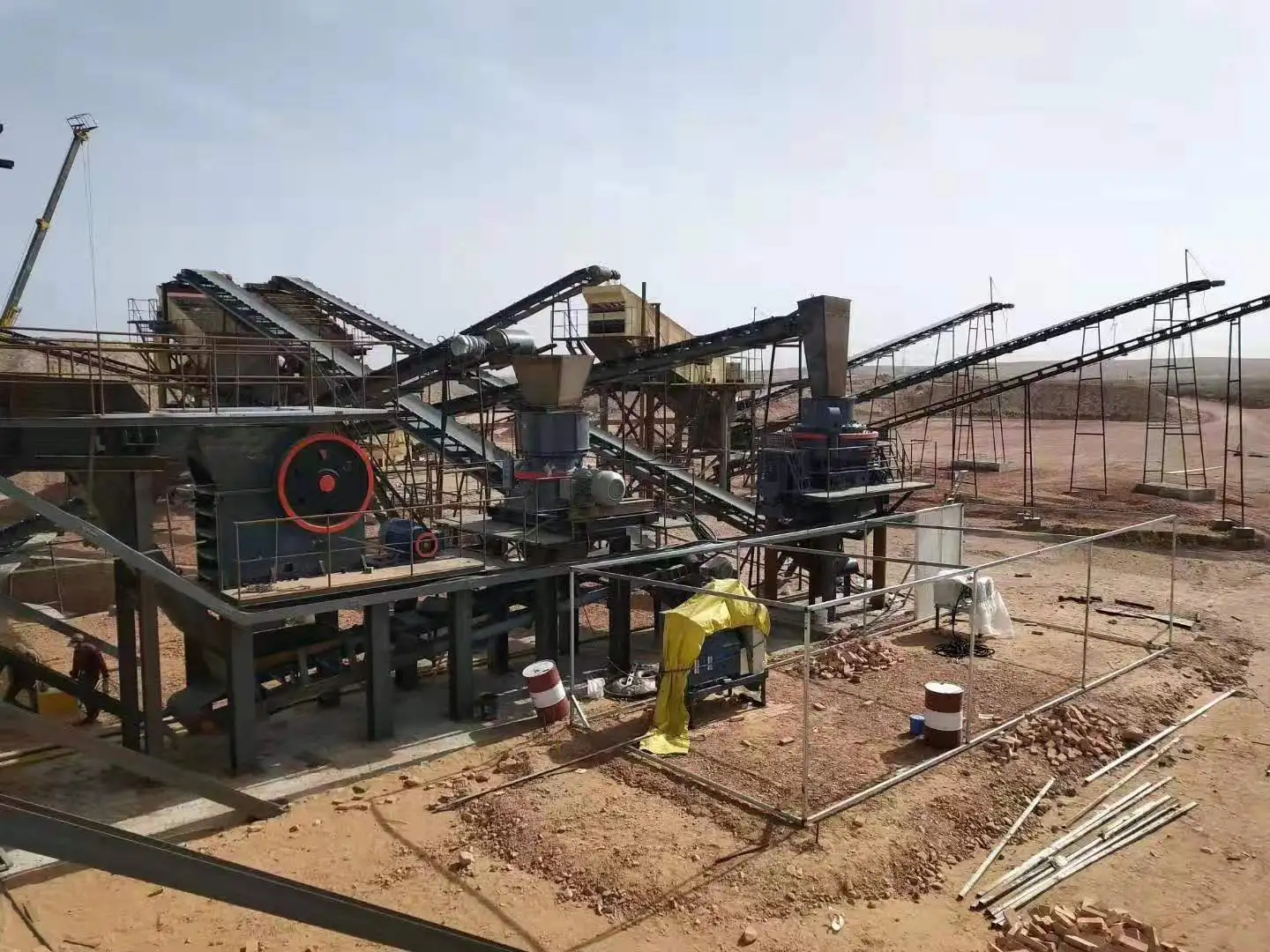
The first step in the copper sulfide ore beneficiation process is iron ore crushing and screening: After mining, copper ore typically requires crushing equipment to a certain particle size to meet the feed size requirements for subsequent grinding operations. A three-stage, closed-circuit process is commonly used in copper ore beneficiation plants. This process consists of coarse crushing, secondary crushing, fine crushing, and screening. Screening is used to ensure the particle size of the crushed product. Coarse crushing equipment typically includes a gyratory crusher and a jaw crusher. Secondary crushing equipment typically includes a jaw crusher and a cone crusher. Fine crushing typically uses a cone crusher. Screening equipment includes either a circular or linear vibrating screen. Of course, the actual crushing process varies depending on the properties of the ore. Some copper ore beneficiation plants also incorporate high-pressure roller grinding (HPGR) into their ore crushing process. Conventional copper ore crushing and screening processes are either three-stage, closed-circuit or two-stage, closed-circuit. Some large copper ore beneficiation plants also employ semi-autogenous grinding or SABC crushing processes. SABC crushing is an ore crushing process that has emerged in recent years. It can crush the stubborn stones in the semi-autogenous grinding mill separately and effectively crush the stubborn stones.
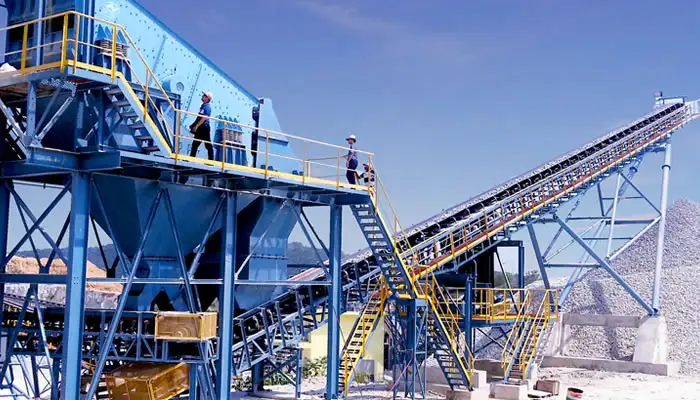
The second step in the copper sulfide ore beneficiation process involves iron ore grinding and flotation. Because the useful minerals and gangue minerals in copper ore are finely and unevenly distributed, making the ore prone to muddling, copper ore is typically processed using a staged grinding and flotation process. The grinding equipment used in these stages includes grate ball mills, overflow ball mills, and straight-cylinder ball mills. Classification equipment includes spiral classifiers and hydrocyclones. Flotation cells are either mechanically agitated flotation cells or columns. The most critical process parameter in the copper sulfide ore beneficiation process is the overflow particle size of the secondary grinding cyclone. From a control perspective, the main factors influencing grinding performance include the primary ball mill feed rate, primary ball mill grinding mass concentration, spiral classifier overflow mass concentration, hydrocyclone feed pressure, and hydrocyclone feed mass concentration. Keeping the ball mill feed stable so that it does not fluctuate or fluctuates within a very small range is a very important factor for stabilizing product quality and stabilizing the ball mill grinding process. At the same time, from the perspective of economic benefits, the maximum processing capacity of the ball mill should be guaranteed. For a grid-type ball mill, a relatively suitable grinding mass concentration is the prerequisite for achieving high or low grinding efficiency of the ball mill. Too high or too low grinding mass concentration will have a negative impact, such as accidents such as ball mill bulging. The overflow mass concentration of the spiral classifier is to some extent related to the overflow particle size of the first classification, and the overflow mass concentration will affect the amount of sand returned by the classifier and the mass concentration of the returned sand, thereby affecting the grinding efficiency and processing capacity of the ball mill. Therefore, controlling the overflow mass concentration of the classifier is an important link in controlling product quality and grinding efficiency. To ensure stable hydrocyclone production and consistent product quality, the feed pressure must be controlled to ensure optimal cyclone operation (sand settling should occur in an umbrella-like pattern, with neither excessively large nor excessively small angles). This prevents fluctuations in product quality and prevents the feed pump sump from being empty or bubbling. The overflow particle size of the cyclone is related to the feed concentration. This parameter, combined with the feed pressure, is a key operating parameter for controlling cyclone classification efficiency. The interplay of these factors determines the performance of grinding operations. The comprehensive automation system for the grinding process was designed based on the production technical requirements and process characteristics of this process.
The third step in the copper sulfide ore beneficiation process is copper concentrate concentration and dehydration: For product storage and transportation, copper concentrate requires concentration and dehydration. Common copper ore concentration equipment includes high-efficiency concentrators, deep-cone concentrators, and inclined-plate concentrators. Key dehydration equipment includes Xinhai's independently developed high-frequency dehydration screens, vacuum filters, and ceramic filters. Based on the traditional copper sulfide ore beneficiation process, continuously adjusting the grinding and flotation process based on the ore properties and coarse particle size distribution of the copper sulfide ore is the primary method used by major beneficiaries to improve copper concentrate grade, recovery rate, and reduce production costs, and its effectiveness is the most significant. To further improve copper concentrate grade and recovery rate, some have introduced new rapid flotation processes and combined them with selective collectors, achieving rapid flotation and early recovery of most contaminated minerals. In response to recent changes in ore properties, a process combining efficient copper distribution flotation, middling regrinding and re-selection, lime slurry conditioning, medium-alkalinity roughing, and high-alkalinity concentrating has been adopted. This process also creates favorable conditions for the comprehensive recovery of associated gold and silver and the selective utilization of sulfur. Alternatively, based on the variable floatability of sulfur in high-sulfur copper ores, the sulfide copper ore beneficiation process adopts a combination of wired flotation and equal flotation, plus a process of regrinding and separate sorting of middlings to obtain qualified copper concentrates. At the same time, for copper ores with high arsenic content, high alumina content, and complex occurrence states that are difficult to select, stage grinding, coarse concentrate regrinding, and fine tailings regrinding and re-selection processes are adopted, with sodium sulfide as a precipitant and a combination of sodium thiosulfate and ammonium chloride as arsenic inhibitors. The separation of copper and arsenic is successfully achieved, and good selection indicators are achieved.
The copper sulfide ore beneficiation process uses propionitrile butyrate as a copper collector. During the preferential copper flotation process, even complex copper ores and pyrites heavily activated by copper ions can be processed in a weakly alkaline medium. This eliminates the need for pre-sulfur suppression with excessive lime (sodium sulfide, cyanide, etc.), and eliminates the need for large amounts of sulfuric acid for neutralization during sulfur selection. This improves copper grade and recovery. This process has yielded positive results, saving reagent costs, increasing pyrite production, and improving copper recovery. This has enabled copper beneficiation companies previously experiencing significant losses to return to profitability, significantly improving their economic performance.
The main equipment configurations in the copper sulfide ore beneficiation process include: 1. Crushing equipment: crusher, belt conveyor, feeder, and sometimes screening equipment; 2. Grinding equipment: feeder, belt conveyor, ball mill or rod mill, spiral classifier or cyclone, sand pump, etc.; 3. Flotation equipment: generally flotation cell, sometimes flotation column; 4. Concentrate concentration and filtration equipment: generally thickener, filter, etc., often also equipped with sand pump; 5. Water supply equipment: water pump, elevated water tank, etc.; 6. Tailings transportation and storage: tailings pump and pipeline, tailings pond, return water recovery equipment, etc.; 7. Maintenance equipment: depending on the specific situation. my country's copper ore has a complex structure and uneven particle size distribution, mostly characterized by unevenly impregnated particle size. Some even have fine mineral assemblages, complex composition, and difficult-to-separate ores. Currently, most developed copper deposits are complex, with a variety of beneficial and harmful elements associated with them. These elements need to be comprehensively utilized to transform harmful elements into beneficial ones and waste into valuable ones. Copper ore beneficiation is primarily based on flotation. Flotation generally follows a relatively simple copper sulfide beneficiation process: a primary grinding process with a fineness of approximately 50% to 70% below 200 mesh, followed by a roughing run, two to three cleaning runs, and one to two scavenging runs. If the copper ore is impregnated with a relatively fine particle size, a staged grinding process may be considered. Most bornite processing plants employ a staged grinding process with regrinding the coarse concentrate followed by cleaning, essentially a mixed-preferential flotation process. After a primary coarse grinding, roughing, and scavenging, the coarse concentrate is regrinded and cleaned to produce a high-grade copper and sulfide concentrate. The coarse grinding process typically has a fineness of approximately 45% to 50% below 200 mesh, while the regrinding process typically has a fineness of approximately 90% to 95% below 200 mesh.
Our company designed a copper sulfide ore beneficiation plant for a Brazilian company capable of processing 800 tons of copper sulfide ore per day. The product is copper concentrate, achieving a copper recovery rate of 90% and a moisture content of less than 10%. Based on the properties of the raw ore, we determined the work system for each workshop and selected and verified the design process flow. The finalized process flow for copper sulfide ore beneficiation is: a three-stage, closed-circuit crushing process; a single-stage grinding process with inspection and grading; and a flotation process consisting of a primary roughing process, a secondary scavenging process, and a tertiary concentrating process. We calculated process parameters for the design process flow, including crushing, screening, grinding, and flotation (including the slurry process). We selected, calculated, and compared options for crushing, screening, grinding, grading, flotation, and dewatering equipment, ultimately determining the required process equipment. We also completed the overall plant layout and equipment configuration. We also completed the plant equipment layout plan, process flow chart, and overall plant equipment system diagram, as well as data, quality, and slurry flow charts.



