
Spodumene flotation process flow chart
The spodumene flotation process flow chart includes grinding, grading, slurry preparation, and flotation operations: roughing, concentrating, and scavenging. There are three stages: grinding and flotation; staged grinding and flotation; and regrinding and concentrating of concentrates or middlings. The process of producing a rough concentrate from flotation is called roughing; the reconcentration of the rough concentrate is called concentrating; and the reconcentration of tailings is called scavenging. When recovering multiple useful minerals from the ore, the process of sequentially flotating different minerals is called preferential flotation or selective flotation. The process of first floating all useful minerals and then separating them is called mixed-separation flotation. Industrial production requires different flotation methods and processes tailored to the properties of the spodumene and the product requirements.
The spodumene flotation process flow chart is as follows: The mined spodumene ore is initially crushed in a jaw crusher. Once crushed to a suitable fineness, it is evenly fed via an elevator and feeder to a ball mill, where the ore is crushed and ground. The fine ore milled in the ball mill enters the next step: classification. A spiral classifier cleans and classifies the spodumene mixture, leveraging the principle that solid particles with varying specific gravities settle at different rates in liquid. The cleaned and classified mineral mixture is then fed to a flotation machine, where different reagents are added based on the characteristics of the minerals to separate the desired minerals from other substances. After the desired minerals are separated, they are initially concentrated in a concentrator due to their high water content, followed by drying in a dryer to produce a dry spodumene concentrate.
The spodumene flotation process flow chart features two distinct processes: direct flotation and reverse flotation. Direct flotation prioritizes spodumene and involves grinding the ore in an alkaline medium composed of sodium hydroxide or sodium carbonate. After high concentration, vigorous agitation, and multiple washing and desludging steps, fatty acids or their soaps are added as collectors to directly flotate the spodumene. Reverse flotation involves using dextrin or starch to suppress spodumene in an alkaline medium adjusted with lime. Cationic collectors are then used to flot silicate gangue minerals as foam. The resulting product is the spodumene concentrate.
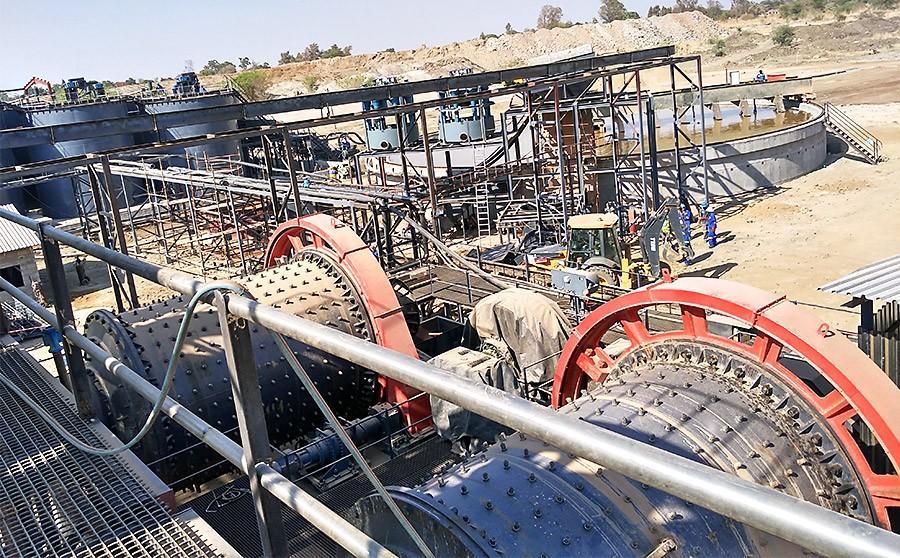
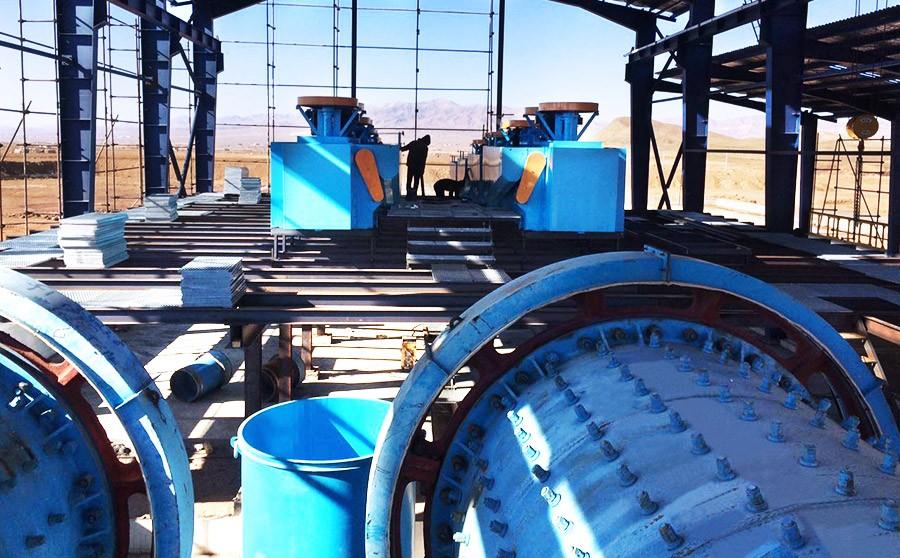
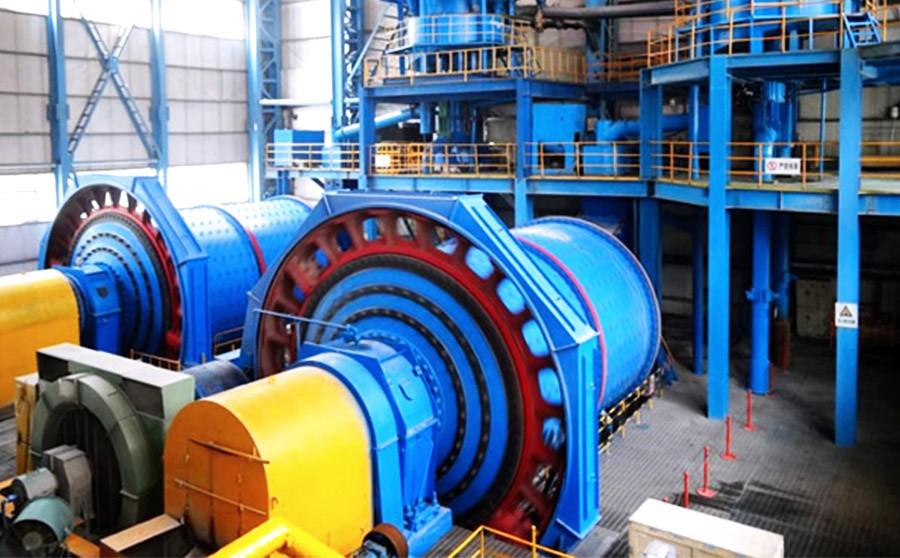
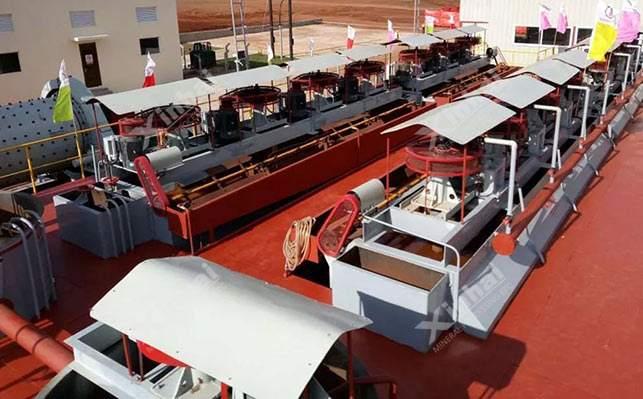
The spodumene flotation process flow chart comprises key equipment such as a jaw crusher, impact crusher, ball mill, classifier, mixing tank, flotation cell, thickener, and dryer, along with feeders, elevators, and belt conveyors, forming a complete spodumene beneficiation production line. This production line offers the advantages of high production, low energy consumption, high throughput, and economic efficiency.
The key equipment in the spodumene flotation process flow chart includes, in order, a jaw crusher for coarse crushing of the spodumene, a jaw crusher for fine crushing of the spodumene, a silo for storing the crushed spodumene, a ball mill for grinding the spodumene, a hydrocyclone for classifying the spodumene, an agitation tank for slurrying and stirring the spodumene, and a flotation cell for flotation of the spodumene. The hydrocyclone and ball mill form a closed-circuit grinding and classifying cycle, improving the efficiency and fineness of the classifying grinding.
The spodumene flotation process flow chart clearly illustrates the spodumene mineral processing process. The flotation cell is a key device in flotation. After the slurry is thoroughly aerated and agitated, the useful minerals are concentrated, completing the spodumene flotation process. The selection and operation of the flotation reagents are crucial steps in the process to achieve optimal beneficiation results. Compared with other beneficiation methods, spodumene flotation is economical and efficient, and offers excellent results. Note: This process is designed according to a standard flowsheet and can be optimized to meet the customer's annual production volume and requirements.
Key Features of the Spodumene Flotation Process Flow Chart:
1. The spodumene flotation production line utilizes electronic control, eliminating the need for human operators in some cases. This fully automated process offers numerous advantages, including stable operation, high flotation efficiency, energy savings, high production output, and low pollution.
2. The selection and operation of the flotation reagents are crucial steps in the spodumene flotation process, and therefore the flotation cell is a crucial device for achieving optimal beneficiation results. Compared with other methods, flotation is economical and efficient, and offers excellent results.
3. The spodumene flotation line features a compact structure and stable operation, resulting in a low failure rate and reduced maintenance costs for users. Furthermore, the flotation line itself offers advantages such as high returns. The entire production line generates significant returns.
4. The spodumene flotation line utilizes high-quality equipment, such as jaw crushers and flotation cells. This significantly increases the production capacity of the entire line, significantly boosting output by approximately 30%.
The spodumene flotation process flow chart not only achieves flotation indices similar to conventional flotation processes, but also reduces flotation reagent costs, significantly lowers the pH of spodumene flotation concentrate and tailings slurry, and significantly improves the dewatering performance of flotation tailings slurry and concentrate products, facilitating the disposal and recycling of spodumene ore processing wastewater.
Spodumene is the primary silicate mineral currently used for lithium extraction in my country. This ore is primarily found in granite pegmatites, and its gangue minerals are primarily feldspar and quartz. The spodumene flotation process flow chart often utilizes a "three alkalis, two soaps" reagent system for flotation separation. The dosage of alkali and soap used in spodumene flotation, as well as the concentrations of Ca2+, OH-, and CO32- in the flotation slurry, are important factors influencing flotation indices. Furthermore, during the actual flotation process, spodumene's surface is often affected by weathering and slime in the slurry, resulting in poor floatability. Furthermore, dissolved salt ions (Fe3+, Ca2+, and Mg2+) in the slurry not only activate spodumene but also gangue minerals, thereby reducing the flotation separation efficiency of spodumene. Furthermore, spodumene ore flotation produces a large amount of flotation tailings (primarily composed of feldspar and quartz). The comprehensive recovery of feldspar and quartz from these tailings is of great significance to the comprehensive development and utilization of mineral resources.
For a spodumene flotation plant, the quality of its flotation process flow chart design directly impacts the final beneficiation performance, investment and construction costs, and post-production costs. Therefore, when designing a spodumene flotation process flow chart, a solution with mature processes, advanced technology, reliable production, and high economic returns should be selected, adhering to the following principles and methods. The design principles for the spodumene flotation process flow chart should be based on the process flow recommended in the reviewed or approved beneficiation test report, drawing on the practical experience of similar plants. When determining the spodumene flotation process flow chart, the associated minerals proposed for recovery in the beneficiation test report should be selected after technical and economic comparison. When determining the spodumene beneficiation product plan and technical indicators, economic efficiency should be the primary focus. After comparing plans, the type, quality, and recovery rate of the recovered products should be determined as the primary indicators. Data from similar plants should be used, and average advanced indicators should be adopted. Spodumene beneficiation equipment should be large-scale. For the same process flow, large-scale mineral processing plants should have 2-3 series, those with simple or mature processes can have 1 series, and medium-sized and small-scale mineral processing plants should have 1-2 series. The specific series can be determined by comparing the plans. When the content of the main useful and harmful minerals in the selected raw ore varies greatly, or when there are many supply points and the ore types are complex, ore blending facilities should be available. The conventional spodumene crushing and grinding process should reduce the particle size of the crushed product, with more crushing and less grinding. The particle size of the final crushed product should be determined according to the scale of the mine and mineral processing plant, the properties of the ore, and the crushing and grinding equipment selected. The design of the return water process should include facilities to ensure normal water supply when there is no water to return in the early stage of production.
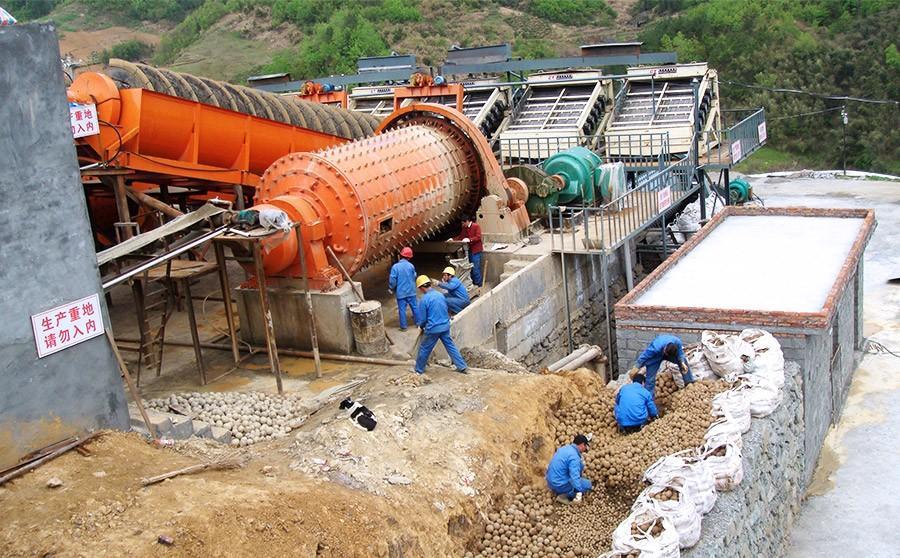
Many factors influence flotation performance, with the key factors including grinding fineness, ore slime and floatable impurities, water quality, agitation intensity during slurry preparation, temperature, and appropriate use of chemicals.
1. Grinding Fineness
One of the characteristics of spodumene flotation is that coarse particles are difficult to float. At a particle size of 0.2 mm, the flotation recovery rate is 61%, while at 0.3 mm, the flotation recovery rate is 22%. Therefore, the flotation particle size of spodumene is generally less than 0.15 mm. As the particle size of spodumene varies, appropriate grinding fineness plays a crucial role in flotation.
2. Sludge and Floatable Impurities
Ore surface contamination, contamination by ore slime in the slurry, and the influence of floatable impurities can impair floatability. Consequently, desliming or prioritizing the removal of floatable impurities is often performed in production practice. This not only complicates the process but also increases production investment and reduces economic benefits.
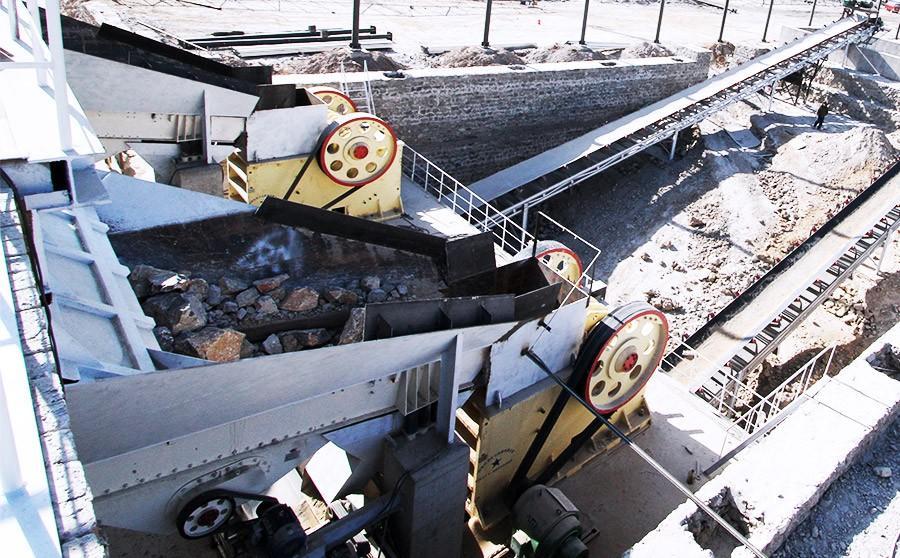
3. Impact of Water Quality
The ratio of CO₂₃₄, OH₄₄, and Ca₂₆₄ ion concentrations in the flotation slurry is a key factor affecting flotation performance. The amount and location of the adjuster used vary depending on the hardness of the water used. Metal cations in the water can easily activate spodumene and other silicate minerals, thereby affecting flotation separation performance.
4. Slurry Agitation
Pre-flotation slurry agitation is fundamental to ensuring flotation separation, and equipment conditions and agitation intensity are two key issues that must be addressed in slurry operations. Data shows that, under the same conditions, the recovery rate of the four-tank series agitation system at the Kelumu Special Concentrator is 5.41% higher than that of the two-tank system, even at a stirring intensity approximately half that of the Keketuohai Concentrator. When the agitation intensity at the Keketuohai Concentrator was nearly doubled compared to the Kelumu Special Concentrator, the lithium concentrate grade and recovery rate increased by 0.49% and 7.85%, respectively.
5. Effect of Temperature
Spodumene mines in my country are primarily distributed in Ganzi Prefecture, Sichuan, and Keketuohai and Altai regions of Xinjiang. For example, the high-altitude, cold region of the Sichuan Jijiaka lithium-beryllium mine experiences year-round low temperatures and thin air. The performance of fatty acid and amine collectors is significantly affected by temperature, making spodumene flotation more challenging. Yi Xinhui conducted a study using a fatty acid collector at a spodumene mine located at an altitude of over 4,000 meters, using the same process flow and reagent system but varying temperatures. The results showed that when the post-grinding water temperature was 10°C and the agitation flotation temperature was 13-14°C, the lithium concentrate had a Li₂O grade of 6.01% and a recovery rate of 32.62%. When the post-grinding water temperature was 16°C and the agitation flotation temperature was 17-18°C, the lithium concentrate had a Li₂O grade of 6.72% and a recovery rate of 64.49%.
6. Rational Use of Collectors
For a long time, spodumene flotation has primarily relied on a traditional two-alkali, two-soap, one-oil reagent formulation. However, with changing ore properties, this traditional formulation no longer achieves optimal flotation performance. Different collectors have varying performance characteristics for spodumene. For the separation of low-grade spodumene, the use of conditioning agents and activators is crucial.
Spodumene flotation process flow chart The main problems of spodumene ore flotation in production practice can be summarized as follows:
(1) The research on the flotation behavior of the main minerals in spodumene ore needs to be strengthened. At present, domestic and foreign scholars have mainly conducted research on the actual ore of spodumene ore and the physical and chemical properties of the main minerals in spodumene ore, and the research on the selective fragmentation of spodumene ore is still blank. The research on the flotation kinetics of spodumene under different conditions is insufficient. Strengthening the research on the flotation kinetics of spodumene ore is conducive to regulating the separation conditions of the spodumene flotation process and improving the flotation efficiency. In addition, the research work mainly focuses on the target mineral spodumene, while ignoring the flotation behavior of its associated gangue minerals. Therefore, it is very necessary to systematically study the flotation behavior of different gangue minerals and their influence on the flotation behavior of spodumene.
(2) The performance of spodumene ore flotation collectors needs to be further improved. Currently, most collectors used in flotation have certain drawbacks, primarily the inability to balance collection performance and selectivity. These can manifest in weak collection or foaming capabilities, poor selectivity, difficulty dissolving and dispersing the agent, and high requirements for flotation equipment. Therefore, systematic research on the structure-activity relationship of spodumene flotation collectors and improving their performance remain important future research directions.
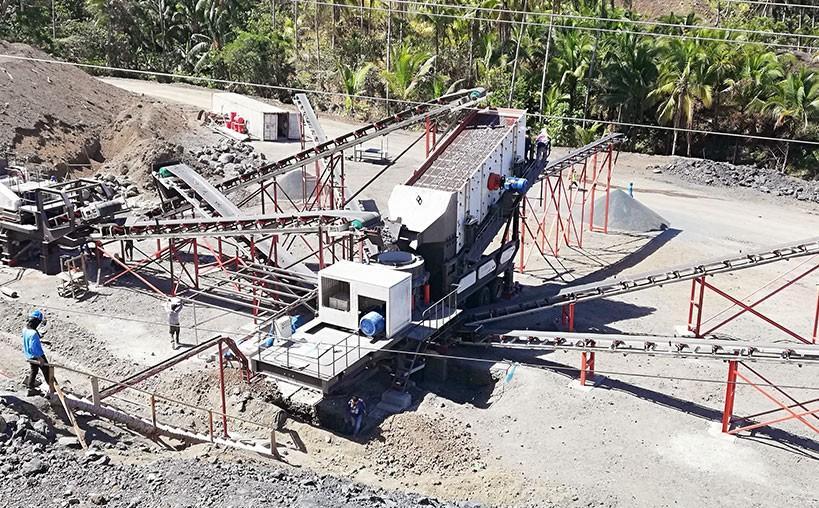
(3) The selectivity of inhibitors for spodumene flotation separation needs to be improved. Inhibitors commonly used in production practice include: water glass, starch, dextrin, lignin sulfonate, Na2S, etc. However, these agents still have problems in many aspects such as environmental protection, dosage, and stability. For example, Na2S is a selective inhibitor used in the practice of lithium-beryllium flotation separation, but Na2S is easily oxidized and becomes ineffective, resulting in complex process operations and large production fluctuations. In addition, Na2S has certain toxicity and can no longer meet the current increasingly high environmental protection requirements.
(4) The flotation behavior of ore slime and its impact on the flotation behavior of spodumene, as well as the research on efficient ore slime disposal technology, need to be strengthened. At present, most domestic concentrators use high concentration, strong stirring, and multiple washing and desludging flotation processes. These processes not only complicate the process, but also have a very low desludging rate, further deteriorating the subsequent flotation process, and the overall economic benefits are not high.
(5) At present, most of the spodumene resources in China are located in areas above 3,000 m above sea level. Due to the thin air in high-altitude areas, the impact of the spodumene flotation process (including the interaction between reagents and minerals, and the improvement of flotation equipment, etc.) is a new topic that deserves high attention and strengthened research.



