
Collophanite flotation plant machine flotation process
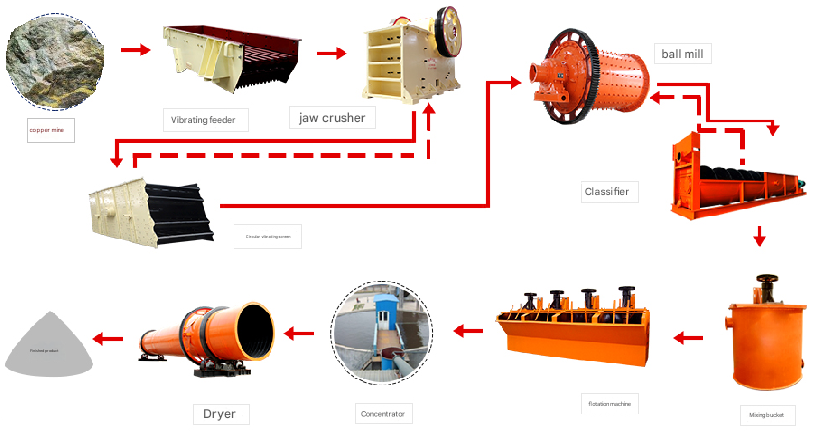
The flotation process of a collophosphate flotation plant includes crushing, grinding, flotation, drying, and concentrating. Large phosphate ore is first crushed in a crusher. After two stages of crushing, the phosphate ore enters a phosphate ball mill for grinding. After being ground to a qualified particle size, the phosphate ore is fed into a phosphate flotation machine using a feeding device. Agitation produces bubbles, selects fine phosphate ore, and removes impurities such as surrounding rock and mud. After drying in a dryer and concentrating in a concentrator, the fine phosphate ore is obtained.
The ore crushing process in the mechanical flotation process of a collophosphate flotation plant is described. The purpose of ore crushing is to separate finely embedded phosphate rock from other gangue particles, achieving the dissociation of the phosphate rock into individual pieces for subsequent separation. The ore crushing process includes crushing, screening, grinding, and classification. The conventional phosphate rock crushing process is a three-stage, closed-circuit process, where the phosphate rock undergoes coarse crushing, secondary crushing, and a screening stage.
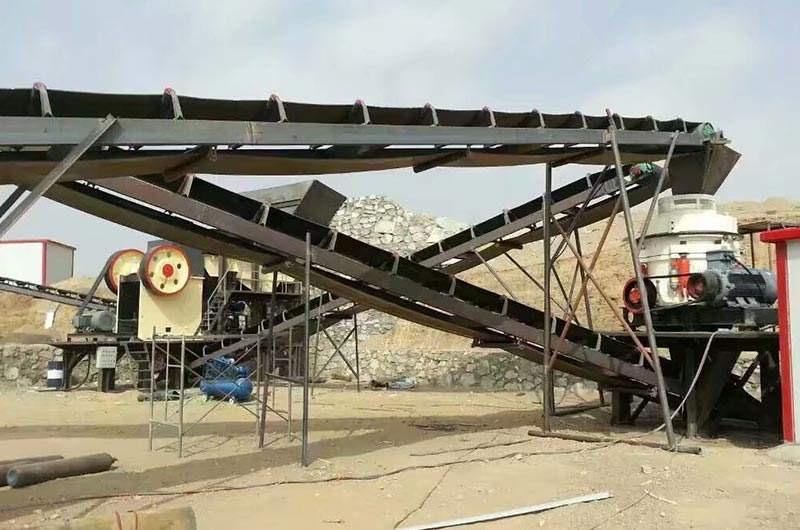
The ore separation process within the mechanical flotation process of a collophosphate flotation plant. The purpose of the ore separation process is to enrich the dissociated phosphate ore. Phosphate ore separation typically utilizes flotation, with common phosphate ore flotation processes including single reverse flotation, direct flotation, reverse flotation (direct reverse flotation), and double reverse flotation. Phosphate ore often contains recoverable associated metals such as iron ore. In such cases, magnetic separation and other processes can be added to the flotation process to recover these valuable associated metals. Common flotation principle processes include preferential flotation, mixed flotation, partial mixed flotation, and other floatable processes. For low-grade phosphate ore, a mixed flotation principle is often employed: phosphate ore and recovered valuable minerals are first floated out, and then the phosphate ore and valuable minerals are separated. This method saves flotation reagents, reduces the number of flotation equipment, and reduces flotation costs.
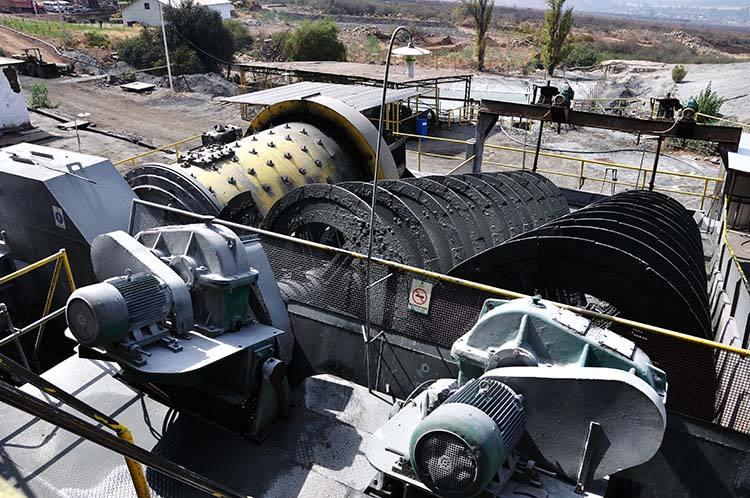
The dewatering process is part of the mechanical flotation process in a collophosphate flotation plant. The purpose of ore dewatering is to facilitate storage and transportation of phosphate rock and other products. Ore dewatering typically involves two steps: concentration and filtration. Phosphate rock is typically concentrated using a concentrator (thickener), while filtration typically uses a disc filter.
Collophanite is the common name for low- to medium-grade sedimentary phosphate rock, often characterized by "poor, fine, and impure" content. This type of phosphate ore is a phosphate mineral often cemented with fine particles such as dolomite-type carbonates, siliceous materials, and argillaceous minerals. Its high silicon and magnesium content makes separation challenging. Currently, common mechanical flotation processes for collophanite flotation plants include direct flotation, single reverse flotation, direct-reverse flotation, reverse-direct flotation, and double reverse flotation.
1. Collophanite Flotation Plant Mechanical Flotation Process - Collophanite Direct Flotation: Direct flotation of collophanite involves adding a specific inhibitor to the dissociated ore pulp to suppress gangue. A specific collector is then added to render the collophanite hydrophobic. Phosphate minerals are then separated by flotation using a frother. This method is primarily suitable for siliceous phosphate ores and sedimentary metamorphic siliceous-calcium phosphate rocks. It is more difficult to separate calcium-siliceous phosphate rocks with high carbonate gangue content. Flotation can easily result in high foam viscosity, difficulty settling the concentrate, and excessively high levels of impurities such as calcium and magnesium.
2. Collophanite Flotation Plant Machine Flotation Process - Collophanite Reverse Flotation Process: Collophanite reverse flotation generally uses sulfuric acid or phosphoric acid as a slurry pH adjuster and phosphate mineral depressant. A cationic collector is then used to float the silicate gangue minerals into the froth product in a weakly acidic medium, resulting in a phosphate concentrate product in the flotation cell. This method is particularly suitable for the flotation separation of aluminosilicate ores such as quartz, feldspar, and non-ferrous metal oxide ores.
3. Collophanite Flotation Plant Machine Flotation Process: Collophanite Direct-Reverse Flotation Process: Collophanite direct-reverse flotation first uses an anionic collector and gangue mineral depressant for direct flotation to remove phosphate minerals, then uses a cationic collector and silicate depressant for reverse flotation to remove silicate minerals (MgO impurities) from the phosphate concentrate. The product in the tank is phosphate concentrate. This method is primarily suitable for processing mixed calcium-magnesium collophanites with a high silicate content.
4. Collophanite Flotation Plant Machine Flotation Process: Collophanite Reverse-Direct Flotation Process: Collophanite reverse-direct flotation first uses a cationic collector and silicate mineral depressant for reverse flotation to remove silicate minerals, then uses an anionic collector and silicate gangue mineral depressant for forward flotation to remove phosphate minerals. This process is primarily suitable for mixed collophanites with a high carbonate content.
5. Collophanite Flotation Plant Machine Flotation Process - Collophanite Double Reverse Flotation Process: Collophanite double reverse flotation generally uses fatty acid salts as collectors for carbonate reverse flotation, enriching dolomite gangue minerals in the froth. Cationic collectors are then used for siliceous mineral reverse flotation, enriching quartz gangue minerals, ultimately retaining the phosphate concentrate in the tank. This method is primarily suitable for processing high-silicon-magnesium mixed phosphate rock (such as dolomite and quartz gangue).
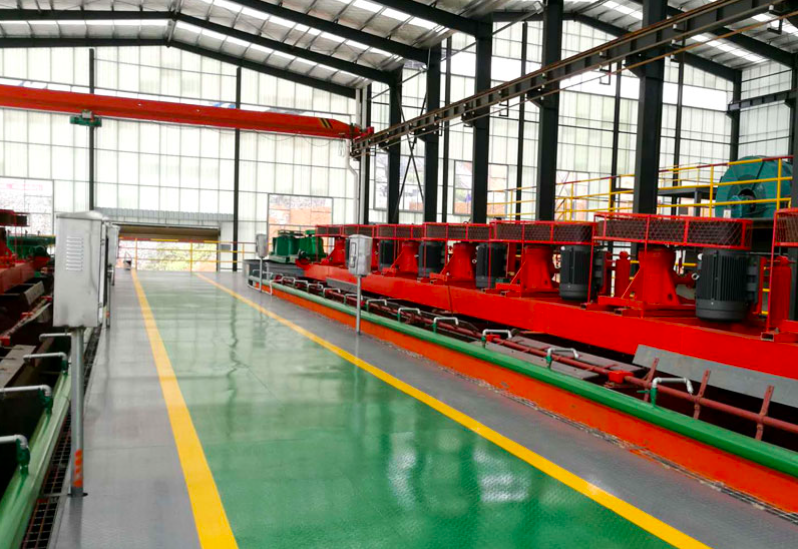
In addition to the aforementioned machine flotation processes for collophanite flotation plants, combined separation processes can be used for minerals that are difficult to obtain qualified concentrates through single flotation methods. These processes include gravity separation-flotation, magnetic separation-flotation, roasting-magnetic separation, and roasting-magnetic flocculation. As for which process to choose, we recommend conducting mineral processing trials first. Based on the test results, it is important to scientifically and rationally customize the appropriate process.
Features of the machine flotation process for collophanite flotation plants:
1. The production line is compact, reducing floor space, improving the flow of phosphate ore through various stages, and enhancing overall production line efficiency.
2. The phosphate flotation process features a higher level of automation, reducing labor costs during production, and effectively reducing both labor expenses and production time.
3. The finished phosphate ore is highly precise and pure, with significantly improved grade and high flotation recovery, without wasting phosphate ore resources.
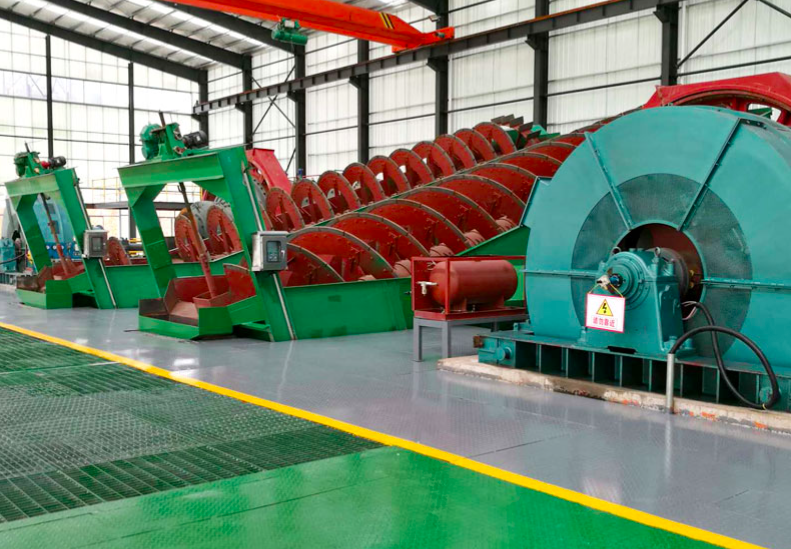
my country boasts abundant phosphate rock resources, ranking second in the world. However, my country's phosphate rock resources are primarily low-grade ores, with few high-grade ores, and the ore properties vary widely. Traditional collophanite flotation plant machine flotation processes include scrubbing and desludging, gravity separation, flotation, and combined gravity and magnetic flotation. Newer collophanite flotation plant machine flotation processes include microbial treatment, dry electrostatic separation, magnetic capping, and selective flocculation. Choosing the right phosphate beneficiation process can yield high-grade, high-recovery, and low-cost phosphate concentrate.
Faced with competition and challenges in the phosphate rock market, reducing the beneficiation costs of collophanite flotation plant machine flotation processes is almost the only solution for phosphate rock beneficiation plants. Reducing phosphate rock beneficiation costs has long been a pressing issue. "More crushing, less grinding" is an effective way to reduce costs for phosphate rock beneficiation plants. Crushing and grinding generally account for more than 60% of the cost of a phosphate beneficiation plant, and its energy consumption accounts for 60% to 70% of the entire phosphate beneficiation plant. Grinding energy consumption accounts for 80% to 90% of crushing and grinding energy consumption. Therefore, reducing grinding energy consumption is the key to reducing the total energy consumption of the entire phosphate ore beneficiation plant.
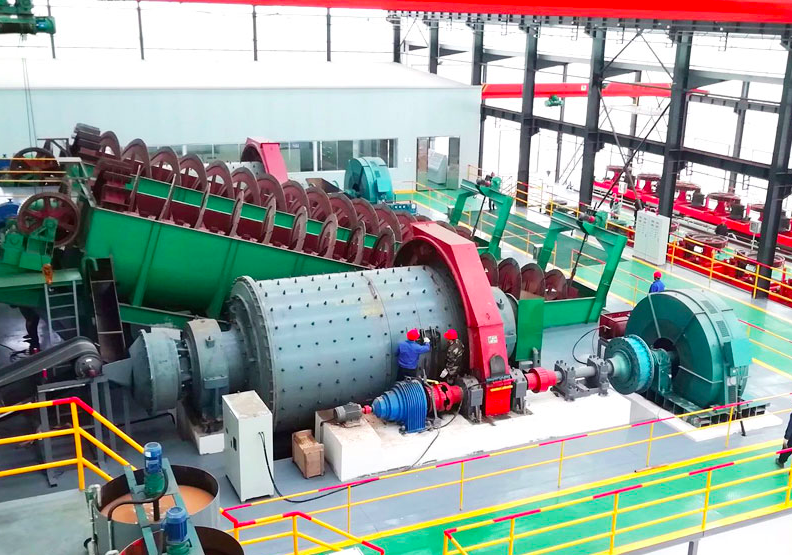
Adopting a "more crushing, less grinding" approach to the mechanical flotation process in collophanite flotation plants can effectively reduce energy consumption during the crushing and grinding process, thereby lowering phosphate beneficiation costs. Measures for this approach include: 1. Converting from open-circuit crushing to closed-circuit crushing; 2. Increasing the crushing process from two to three stages to reduce the feed particle size; 3. Improving the screening efficiency of screening equipment; and 4. Using high-efficiency crushing equipment (such as high-pressure roller mills) in the final crushing stage.
Adopting a rational mechanical flotation process in collophanite flotation plants is another effective way to reduce phosphate beneficiation costs. Commonly used phosphate beneficiation processes include gravity separation, flotation, and combined gravity-magnetic flotation. Gravity separation offers low costs and minimal environmental pollution, but the final concentrate has lower grade and recovery rates. Flotation is more expensive, but the final concentrate has higher grade and recovery rates. Combined gravity-magnetic flotation processes can often recover associated useful metals in addition to the phosphate rock, but the process is complex and the beneficiation costs are high. Therefore, after carefully weighing the benefits and costs of each process, it's crucial to select a reasonable phosphate ore beneficiation process.
In addition, selecting high-quality equipment with excellent beneficiation performance for the mechanical flotation process in a collophosphate ore flotation plant is an important way to reduce phosphate ore beneficiation costs. High-quality beneficiation equipment can increase the plant's annual operating rate, improve its beneficiation performance, reduce its energy consumption, and lower its maintenance rate, thereby lowering costs. Poor-quality equipment has the opposite effect. Therefore, selecting high-quality equipment plays a crucial role in reducing phosphate ore beneficiation costs.
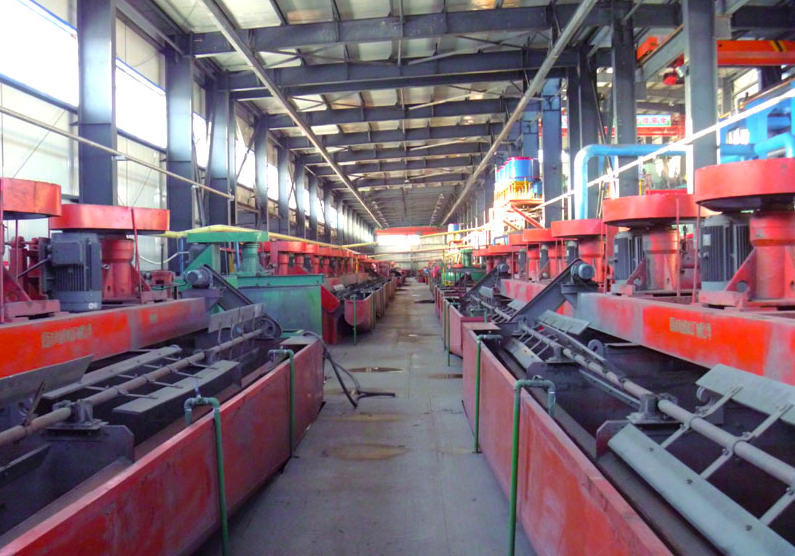
The selection of a mechanical flotation process for a collophosphate flotation plant primarily depends on the properties of the ore. The scrubbing and desludging process is suitable for processing highly weathered phosphate ores, but the grade and recovery of the phosphate concentrate are low. The heavy media separation process within gravity separation is less polluting and provides good performance for coarse-grained phosphate ores, but is not suitable for processing phosphate ores with interbedded fine particles. Flotation is the primary method for phosphate beneficiation and is suitable for processing complex and difficult-to-separate phosphate ores, with good flotation performance. The combined gravity-magnetic flotation process is suitable for phosphate ores containing useful semi-ferrous minerals, offering high ore utilization rates. However, the beneficiation process is complex and often requires extensive drug removal. Microbial treatment is suitable for processing complex, low-grade phosphate ores, providing good leaching results. However, the ore processing speed is slow, typically requiring several months. Newer phosphate beneficiation processes such as dry electrostatic separation, magnetic cover, and selective flocculation, while demonstrating good laboratory performance, are rarely used in industry. Therefore, they are generally not adopted or should be used with caution in industrial production.
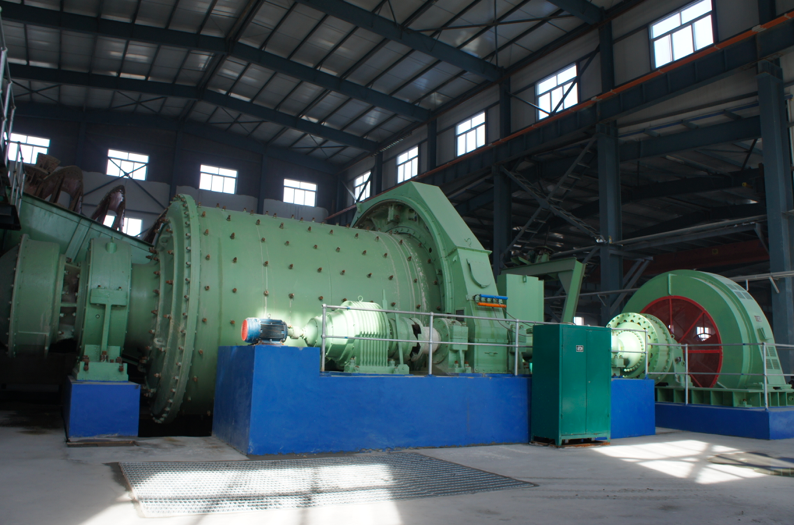
When choosing a flotation process for a collophanite flotation plant, one must consider the cost of the mineral processing. The more complex the flotation process, the higher the cost. Generally, flotation costs are higher than other mineral processing costs. When choosing a flotation process, hybrid flotation should be preferred to reduce reagent usage and the number of flotation equipment. When considering mineral processing costs, one should comprehensively consider fixed costs, current costs, and profitability to optimize the plant's profitability.
Through years of practice and continuous improvement, our company has continuously refined its flotation process for collophanite flotation plants and its phosphate ore beneficiation equipment, reaching international standards. Our mineral processing turnkey services include mineral processing trials, mine design, equipment customization, installation and commissioning, worker training, and achieving full production targets. This can significantly reduce clients' investment and maximize returns. Our crushing, grinding, flotation, and dewatering equipment meet international standards and are an ideal choice for many domestic and international mineral processing plants.
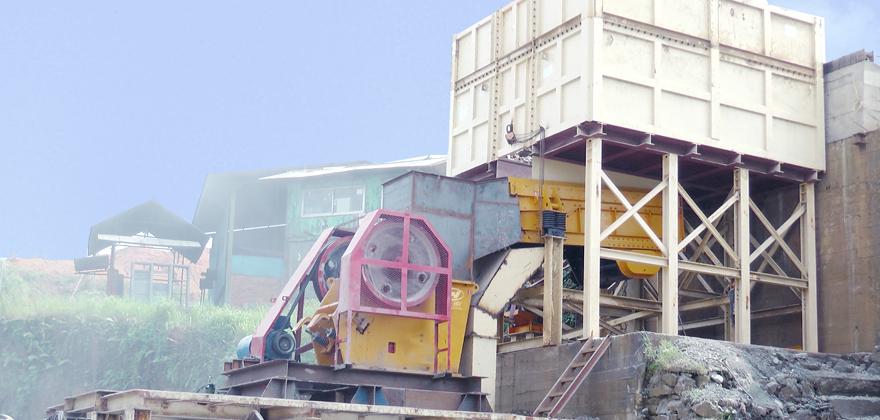
Our company provides EPC general contracting services for collophosphate mines. We have provided turnkey solutions for over 500 mines and have extensive experience in building collophosphate flotation plants. Our mineral processing turnkey services include: mineral processing testing, collophosphate flotation plant machine flotation process design, equipment customization, installation and commissioning, worker training, achieving production targets, and comprehensive mine operations management. With comprehensive capabilities, we can address all the challenges associated with building a phosphate ore processing plant.



