
Fluorspar powder flotation plant machine production process
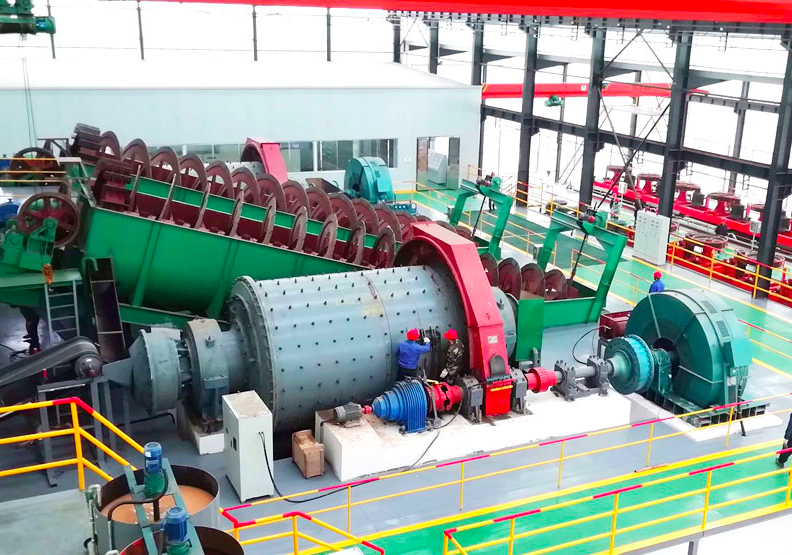
The fluorite flotation plant's production process involves crushing and screening, grinding and grading, and flotation and drying. The equipment used includes jaw crushers, ball mills, flotation machines, dryers, spiral classifiers, mixing tanks, concentrators, feeders, and conveyors. The flotation machine is a key piece of equipment in the entire beneficiation line, used to select the fluorite concentrate; other beneficiation equipment is also essential.
Currently, the main fluorite beneficiation processes include hand sorting, gravity (jigging) beneficiation, and flotation. Given the depletion of fluorite ore and the interpenetration of fluorite and gangue, flotation has become the primary process for separating fluorite from gangue minerals in fluorite powder flotation plants. Depending on the type of gangue mineral, fluorite can be divided into quartz-fluorite ores, calcite-fluorite ores, sulfide-fluorite ores, and barite-fluorite ores. Below, we will take a detailed look at the machine production processes for each type of fluorite powder flotation plant.
1. Machine Production Process for Quartz-Fluorite Fluorite Powder Flotation Plant:
Quartz-fluorite fluorite is primarily composed of fluorite (up to approximately 85%) and quartz, with small amounts of calcite, barite, and sulfides also present. During the production process of fluorite flotation plants, quartz-fluorite ores are typically ground for roughing, followed by multiple re-grindings for finer separations. The reagent system often uses sodium carbonate as a conditioning agent, adjusted to an alkaline state to prevent polyvalent cations in the water from activating the quartz. Fatty acids are used as collectors, and an appropriate amount of water glass is added to inhibit silicate gangue minerals. The amount of water glass is also carefully controlled (a small amount activates the fluorite, while an excessive amount inhibits it). Based on the characteristics of the useful mineral intercalation, quartz-fluorite ores can be primarily divided into two types: coarse-grained and fine-grained, each requiring different flotation separation processes. Coarse-grained interbedded ore: fatty acid collectors are often used, the slurry adjuster is sodium carbonate, and the quartz depressant is water glass. High-quality fluorite concentrate can be obtained through a one-coarse and multiple-fine process; fine-grained interbedded ore: the flotation agent is the same as that of coarse-grained interbedded quartz fluorite ore, but because the interbedded particle size of the target mineral is finer, intensified grinding is required, and a stage grinding and stage separation process is adopted.
2. Calcite-Fluorite Fluorite Flotation Plant Production Process:
Calcite-fluorite ores are primarily composed of fluorite and calcite (over 30%), sometimes containing small amounts of quartz. This can sometimes form quartz-calcite-fluorite ores, making them difficult to separate. The primary reason for the difficulty in separating these ores is that both calcite and fluorite are calcium-containing minerals with similar surface physical and chemical properties. When coexisting in solution, they are prone to interconversion. Choosing the right collector and inhibitor is crucial for separating fluorite from calcite. Fluorite flotation plant production processes require adjusting the slurry pH and combining it with a collector to achieve optimal separation. When the pH is between 8 and 9.5, water glass, acidified water glass, sodium hexametaphosphate, lignin sulfonate, dextrin, and tannins can be used alone or in combination to suppress calcite and achieve separation. In addition, for more complex fluorite ores containing more calcite, limestone, dolomite, etc., tannin extracts and lignin sulfonates can be used to suppress gangue minerals, and their flotation separation effect is better.
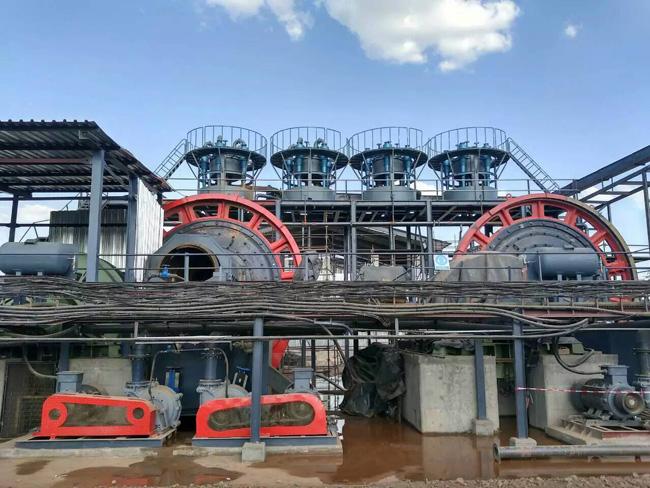
3. Sulfide Fluorite-Type Fluorite Powder Flotation Plant Process:
In actual production, flotation is the primary beneficiation technology for sulfide fluorite ores. Fluorite powder flotation plant processes primarily use xanthate collectors to preferentially float out the sulfide ore. Fluorite flotation tailings are then treated separately as fluorite ore and subjected to multiple concentration cycles using fatty acid reagents. Sometimes, a small amount of sulfide ore inhibitor (such as cyanide) is added to the fluorite flotation process to suppress residual sulfide and ensure the quality of the fluorite concentrate. Additionally, beneficiation technologies such as roasting and leaching can be used to extract valuable metals and decompose fluorite. These processes are relatively simple and can produce high-quality fluorite products while comprehensively recovering valuable metals.
4. Barite-Fluorite Fluorite Powder Flotation Plant Production Process
Barite-type fluorite ore primarily consists of barite and fluorite, with a barite content typically ranging from 10% to 40%, often accompanied by sulfide minerals such as pyrite, galena, and sphalerite. The beneficiation of this type of ore typically begins with mixed flotation to produce a barite-fluorite concentrate, followed by separation of the barite from the fluorite. Fluorite powder flotation plant production processes can be categorized into two types, depending on the order in which the barite and fluorite emerge. One involves suppressing the flotation of fluorite with barite, producing high-grade barite and fluorite concentrates. The other involves suppressing the flotation of barite with fluorite, producing a barite concentrate first. Fatty acid collectors and sodium silicate are then added to the tailings, followed by multiple (7-9) beneficiation passes to produce a fluorite concentrate. This method is simple and easy to operate, and can produce a qualified barite concentrate, but the fluorite grade is often low. In actual production, the separation of fluorite and barite mostly adopts the process of floating fluorite to suppress barite, with fatty acid flotation agents as fluorite collectors, and organic inhibitors such as caustic starch and dextrin combined with inorganic inhibitors such as sodium hexametaphosphate, sodium fluorosilicate, water glass, aluminum salts, and iron salts to achieve the purpose of separating fluorite and barite.
The above describes the production processes for four types of fluorite flotation plants. During fluorite flotation, the flotation reagent system and grinding fineness are crucial factors affecting flotation performance. These decisions should not be made blindly. It is recommended to conduct beneficiation trials first to fully understand the ore properties. After comprehensively considering factors such as the plant's actual conditions and investment budget, the final fluorite flotation process and reagent system should be determined to avoid financial losses.
Fluorite Flotation Plant Production Process: The raw ore first undergoes a closed-circuit grinding process consisting of a ball mill and a classifier. The grinding standard is to achieve a 55% content at 200 mesh. Fluorite powder reaching 200 mesh is then fed to the flotation cell. After a roughing and scavenging process, concentrate and tailings are obtained. The tailings are discharged directly into the tailings dam, while the concentrate is re-ground in the ball mill to completely break down the bonds between the fine-grained fluorite and quartz. The re-ground fluorite powder is then fed to the flotation cell for six rounds of concentrating. This process is suitable for ores with fine interspersed fluorite and quartz. The process utilizes a mature process involving ore crushing, coarse grinding, flotation, regrinding of the coarse concentrate, and six rounds of concentrating. The middlings are then sequentially returned. Flotation uses oleic acid as a collector, sodium carbonate as a conditioning agent, and water glass as a depressant. This process is based on extensive testing at our plant and actual production results from numerous domestic concentrators.
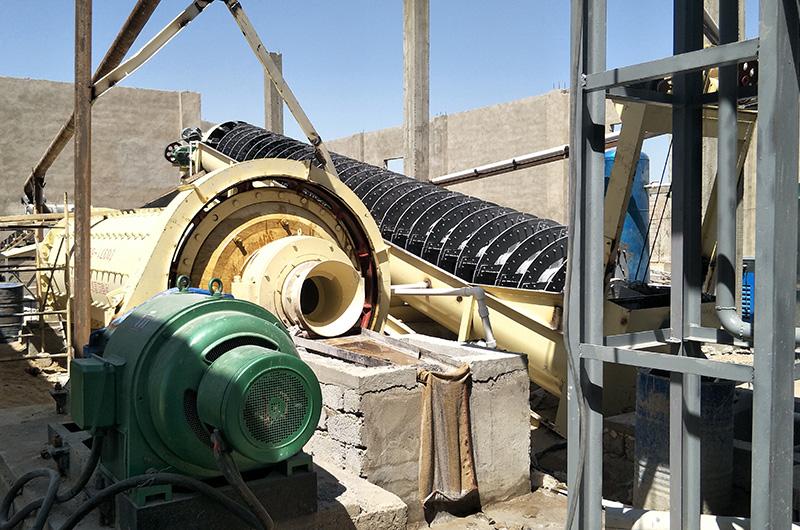
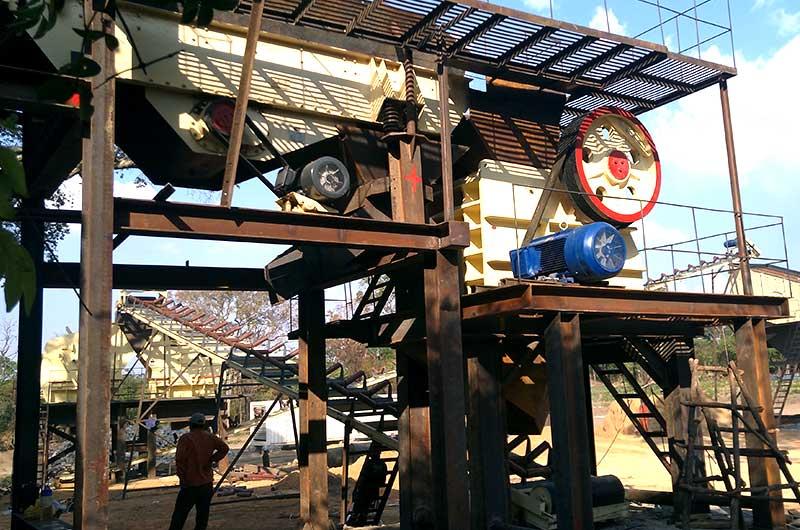
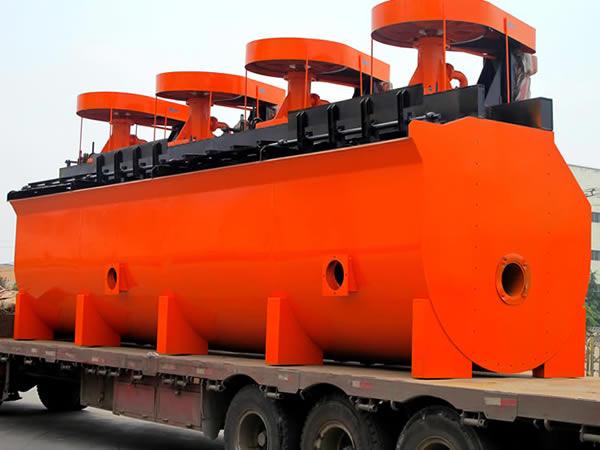
An example of a fluorite flotation plant's machine production process application: Crushing and screening: A jaw crusher is used for coarse crushing, a cone crusher for fine crushing, and a circular vibrating screen for screening. The crushed product particle size is -15mm. Grinding and classification: A grate ball mill is used for grinding, and a spiral classifier is used for classification. The grinding fineness is -200 mesh, accounting for 65%. Flotation and separation: A mature flotation process consisting of one roughing, one scavenging, and seven finishing operations is employed. SF flotation cells are used for roughing, scavenging, and finishing. Middlings are returned sequentially. The concentrate tailings are pumped to a dewatering system. Dewatering: A concentration and filtration dewatering process is used, resulting in a final concentrate with a moisture content of less than 20%. Dry tailings discharge is used, resulting in a final tailings moisture content of less than 20%. Concentrate drying: Fluorite concentrate requires drying. Based on site conditions, the second-phase drying system was retrofitted and expanded within the first-phase drying workshop. During drying, an indirect rotary drum dryer is used for drying. The dried products are discharged into the original screw conveyor and transported to the packaging and pneumatic conveying system.
Advantages of the Fluorite Flotation Plant's Machinery Production Process:
1. The Fluorite Flotation Plant's Machinery Production Process is Mature. The entire fluorite flotation process is streamlined, with each step tightly linked and streamlined. This process is scientifically sound and well-designed, having been developed through extensive testing and practice.
2. The Fluorite Flotation Plant's Machinery Production Process is Scientifically Configured. The entire process features a rational combination of primary and auxiliary equipment, with the selection of beneficiation equipment specifically tailored to the customer's site.
3. The Fluorite Flotation Plant's Machinery Production Process Investment is Reasonable. The investment in a complete set of fluorite flotation equipment is reasonable and modest, with a short payback period and promising investment prospects.
4. The Fluorite Flotation Plant's Machinery Production Process is Customizable. Fluorite ores vary in properties, and our company can customize the process flow to meet the needs of different customers.
Factors Affecting Fluorite Flotation Plant Processing Performance:
1. Slurry pH
During fluorite flotation plant production, the slurry pH significantly impacts final beneficiation performance. When using oleic acid as a collector, a pH of 8-11 yields excellent flotation performance, achieving recoveries of 80%-90%. A pH of 6 also yields excellent flotation performance. The pH value significantly impacts the flotation performance of gangue minerals in different fluorite ores, further impacting separation efficiency. For example, when using oleic acid as a collector, a pH of 8-9.5 yields excellent flotation performance for both fluorite and calcite.
2. Slurry Temperature
Fluorite flotation plants typically utilize carboxylic acid-based collectors. Due to the high freezing point of carboxylic acids, slurry temperature significantly influences the flotation process. Within a certain temperature range, increasing the temperature increases the solubility of carboxylic acids in the slurry, facilitating their dispersion and facilitating the full utilization of their collection performance. Oleic acid used in production is generally heated to 30°C.
3. Mineral Particle Size
The flotation behavior of the fluorite powder flotation plant machine production process varies significantly for fluorite ores of different particle sizes: larger, coarse-grained fluorite ores have stronger flotation selectivity, resulting in a higher concentrate grade but a relatively lower recovery rate. Medium-sized fluorite ores have both a relatively high concentrate grade and recovery rate. Smaller, fine-grained fluorite ores are more susceptible to loss, resulting in a relatively low concentrate grade and recovery rate.
4. Water Hardness for Flotation
Taking oleic acid, a common fluorite collector, as an example, the fluorite powder flotation plant machine production process also has certain requirements for the hardness of the flotation medium (water). Collection is best achieved when the water is soft. Therefore, when the water is hard, it is best to pre-soften it before entering the flotation process.
5. Flotation Reagents
Collectors
In addition to oleic acid, fluorspar flotation plant collectors include alkyl sulfates, alkylsulfonated succinylamines, sodium oleylamine sulfonate, and other sulfonates and amines.
Inhibitors
Water glass is the most commonly used inhibitor in fluorspar flotation plant production processes. To improve its selective inhibitory ability, water glass is mixed with soluble salts to form a combined inhibitor, or mixed with ammonium sulfate in a certain proportion to form acidic water glass.
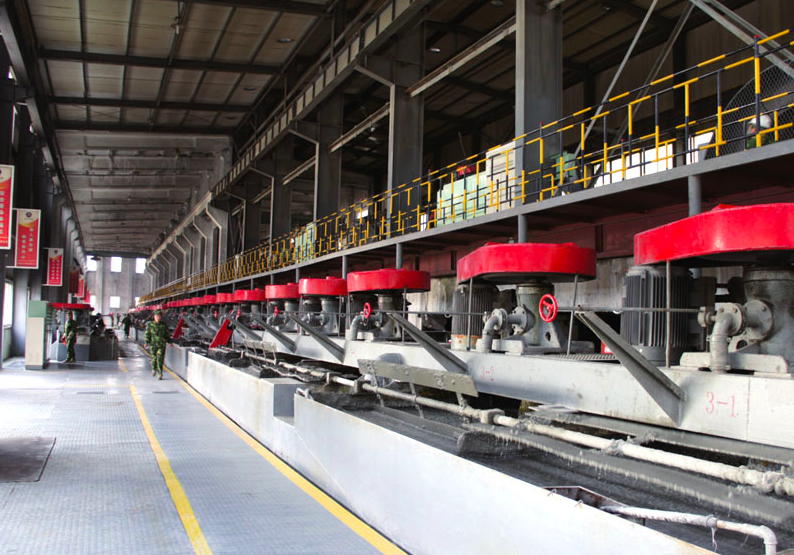
Different fluorite beneficiation processes require different fluorite beneficiation equipment. Since gravity separation requires less equipment, the price of gravity separation equipment is lower, resulting in lower overall investment. Fluorite powder flotation plants, on the other hand, require more equipment, resulting in higher prices for flotation-based fluorite beneficiation equipment. However, flotation is the primary method for obtaining high-quality fluorite ore powder. High-quality fluorite ore powder produced by flotation is primarily used in the fluorine chemical industry, requiring a calcium fluoride content of no less than 97%.
Our fluorite flotation machines are energy-efficient, high-yield, and environmentally friendly, requiring minimal investment and operating costs. They are environmentally friendly during beneficiation and are widely used in fluorite flotation processes. Our company offers a wide range of fluorite flotation machines, offering a comprehensive range of models. We can select the most suitable fluorite flotation machine for your specific production needs.



