
Gold ore beneficiation technology
Conventional fine-grained gold ore is easy to select and separate, and simple gold ore beneficiation techniques and reagents can ensure high gold recovery rates. At the same time, to conserve energy, conventional beneficiation processes should increasingly utilize enhanced processes to maximize resource utilization. Complex fine-grained gold ore beneficiation technology: For complex fine-grained gold ores, enhanced pretreatment and combined processes are needed to improve gold recovery. Enhanced pretreatment involves pre-treating the ore under the influence of various energy fields and microorganisms to expose trapped gold and increase gold recovery. In actual production, roasting and oxidation, biological pre-oxidation, and chemical oxidation are commonly used to pretreat fine-grained gold ore. Experimental results have shown that under optimal conditions, the roasting-cyanide leaching process can achieve a gold cyanide leaching rate of up to 92%. This process offers the advantages of low investment, simplicity, low energy consumption, and zero pollution.
Gold ore types are categorized in various ways. Based on the degree of oxidation, they can be divided into primary (sulfide) ores, partially oxidized (mixed) ores, and oxidized ores. Oxidized ores are characterized by the presence of iron oxide and other metallic oxide minerals, as well as muddy (clay) components. Based on my country's actual conditions and combined with gold ore beneficiation technical requirements, they can be further categorized as follows:
A. Sulfide-depleted gold ore beneficiation technology. This type of ore is mostly quartz vein-type, but also includes complex quartz vein-type and veinlet-disseminated types. It contains low sulfide content and is primarily composed of pyrite, sometimes accompanied by minerals such as copper, lead, zinc, tungsten, and molybdenum. The native gold in this type of ore is relatively large in particle size, making it the sole recoverable element. Other elements and minerals have no industrial value or are recovered only as by-products. High separation performance can be achieved using simple process flows such as single flotation or full-slime cyanidation.
B. Beneficiation Technology for Polysulfide Gold Ores. These ores contain high levels of pyrite or arsenopyrite, which, like gold, are also
targets for recovery. Gold grade is relatively low and varies little, and the native gold particles are relatively small and often encapsulated in pyrite. Separating gold from the sulfides by flotation is generally easy; however, further separation requires a complex integrated beneficiation and smelting process; otherwise, gold recovery targets will be limited.
C. Beneficiation Technology for Gold-Bearing Polymetallic Ores. In addition to gold, these ores may also contain several other metal minerals, including copper, copper-lead, lead-zinc-silver, and tungsten-antimony, all of which are valuable for individual mining. These ores are characterized by a significant amount of sulfides (10-20%); native gold closely associated with pyrite and, in addition, with other minerals such as copper and lead; uneven distribution of coarse and fine gold, with a wide range of particle sizes; and a wide variety of minerals suitable for comprehensive utilization. These characteristics dictate that these ores generally require a relatively complex beneficiation process.
D. Gold beneficiation technology for telluride-bearing gold ores. While gold is still mostly found in its native form, a significant portion is also present in tellurides. These ores are often derived from low-temperature hydrothermal deposits, with the gangue consisting of quartz, chalcedony quartz, and carbonate minerals.
E. Gold beneficiation technology for gold-bearing copper ores. This type of ore differs from the third type in that the gold grade is low, but it can be used as a major element for comprehensive utilization. The native gold in the ore is of medium particle size, and the gold exhibits a complex symbiotic relationship with other minerals. During beneficiation, gold is mostly concentrated in the copper concentrate, which is then recovered during copper smelting.
With the increasing depletion of high-grade gold ore reserves, the selection of medium- and low-grade, difficult-to-process gold ores has become a mainstream trend. Although gold has high mining value, its beneficiation technology is relatively complex and varies widely. Currently, gold ore beneficiation technologies include gravity separation, flotation, cyanide leaching, and thiourea leaching. Let's take a look at each of these gold ore beneficiation technologies.
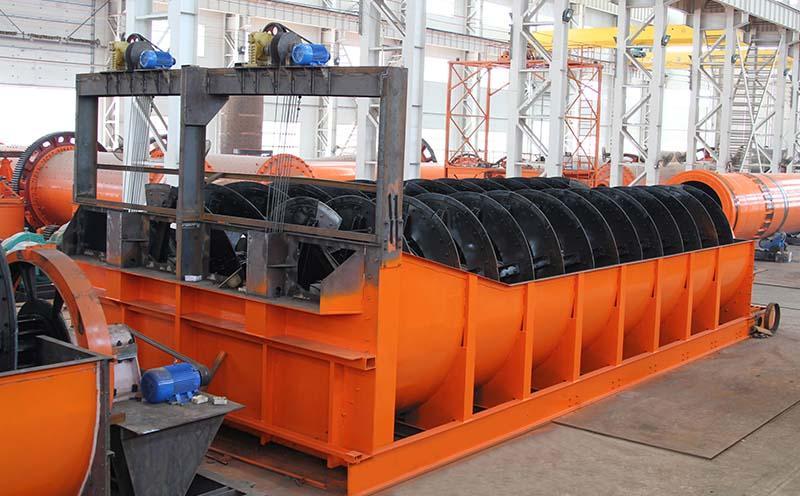
1. Gold Ore Beneficiation Technology - Detailed Explanation of Gold Ore Gravity Separation Technology: Gravity separation is a traditional beneficiation technology that utilizes the density difference between gold and other minerals to separate and concentrate the denser gold from the other minerals under conditions of monomer dissociation. It is generally used for the beneficiation of placer gold ores. In placer gold ores, gold is usually present as a single unit, which has a significant density difference from the gangue minerals. Therefore, gravity separation can effectively separate gold minerals, which is not only efficient but also economical. However, in vein gold mines, gravity separation is rarely used alone. It is mostly used as a part of combined mineral processing. Generally, in the grinding and classification circuit, a jig, spiral chute and shaking table are used to recover some coarse gold particles that have been dissociated in advance to facilitate subsequent flotation and cyanidation operations.
There are various gravity separation methods for gold ore beneficiation, including jig separation, shaking table separation, chute separation, spiral separation, centrifugal separation, and pneumatic separation. The three most common gravity separation methods are jig separation, shaking table separation, and chute separation.
1. Detailed Explanation of the Jigging Process for Gold Ore Beneficiation:
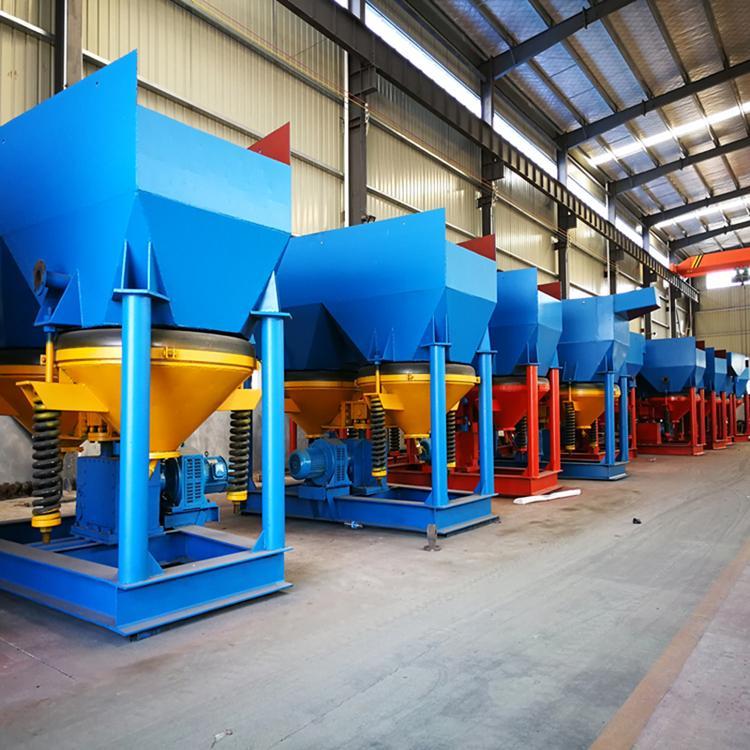
Jigging equipment is primarily a jig. The jig process involves mixing mineral particles of varying specific gravities and separating them into separate layers within a vertically moving, variable-speed medium flow. Minerals with lower specific gravities are deposited in the upper layer, while those with higher specific gravities are deposited in the lower layer. Mechanical and water flow are then used to separate the separated materials. Gold Ore Beneficiation Technology: Jigging Gold Separation Process Applicable Scope: Jigging is suitable for separating coarse mineral particles (mineral raw materials of any particle size except fine materials). For metal ore beneficiation, the upper limit of the particle size is 50mm, and the lower limit is 0.2-0.007mm. For placer gold beneficiation, the lower limit of the particle size can be as low as 0.04mm, provided that the specific gravity difference is ≥1.25 and the ore is dissociated.
Advantages of the Jigging Gold Separation Process: Simple operation, high equipment processing capacity, and the final product can be obtained in a single separation.
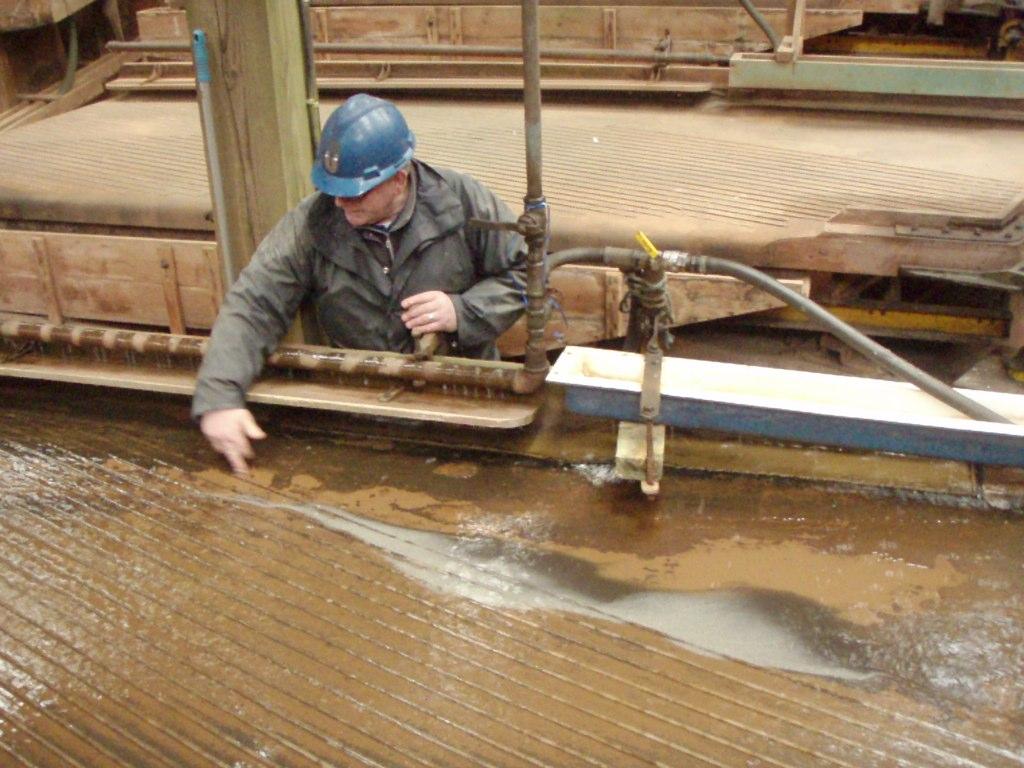
2. Gold Ore Beneficiation Technology: Shaking Table Gold Process
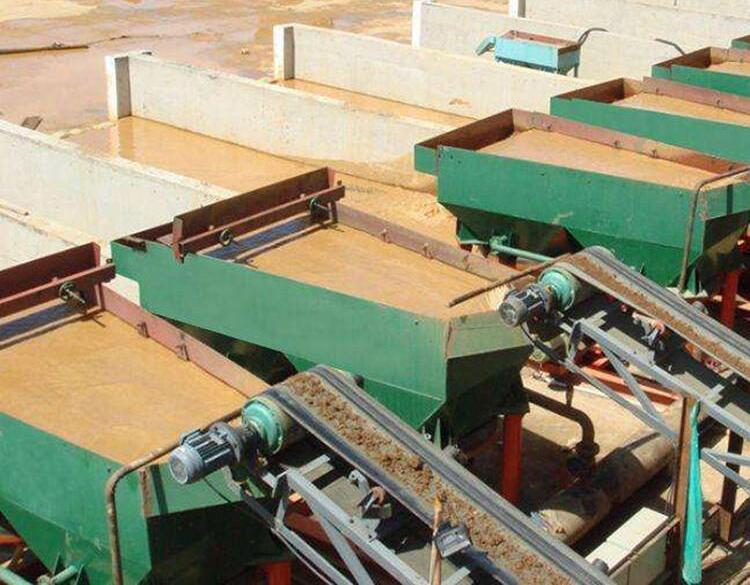
The main equipment in a shaking table gold process is a shaking table. It performs separation in a horizontal medium flow. A transmission mechanism drives the bed surface in longitudinal reciprocating motion, creating differential motion between the flow and the bed surface. During this reciprocating motion, the ore particles undergo stratification perpendicular to the bed surface and separation parallel to the bed surface, resulting in the discharge of materials of different particle sizes from different sections of the bed surface, achieving separation.
Gold Ore Beneficiation Technology: Shaking table gold process is applicable for separating finer-grained ores. Depending on the particle size of the ore, three types of beds are available: coarse sand bed, fine sand bed, and sludge bed. Coarse sand bed is suitable for separating particles less than 0.5 mm, fine sand bed is suitable for particles ranging from 0.5 to 0.074 mm, and sludge bed is suitable for particles from 0.074 to 0.037 mm.
Gold ore beneficiation technology advantages of shaking table gold selection process: the feed particle size range of shaking table gold selection is generally between 3~0.019mm, gold selection is stable and reliable, the ore belt distribution is clearly visible, the rich ore is higher than other beneficiation methods, it is easy to manage, and the required ore can be selected at one time.
3. Gold Ore Beneficiation Technology: Chute Gold Process
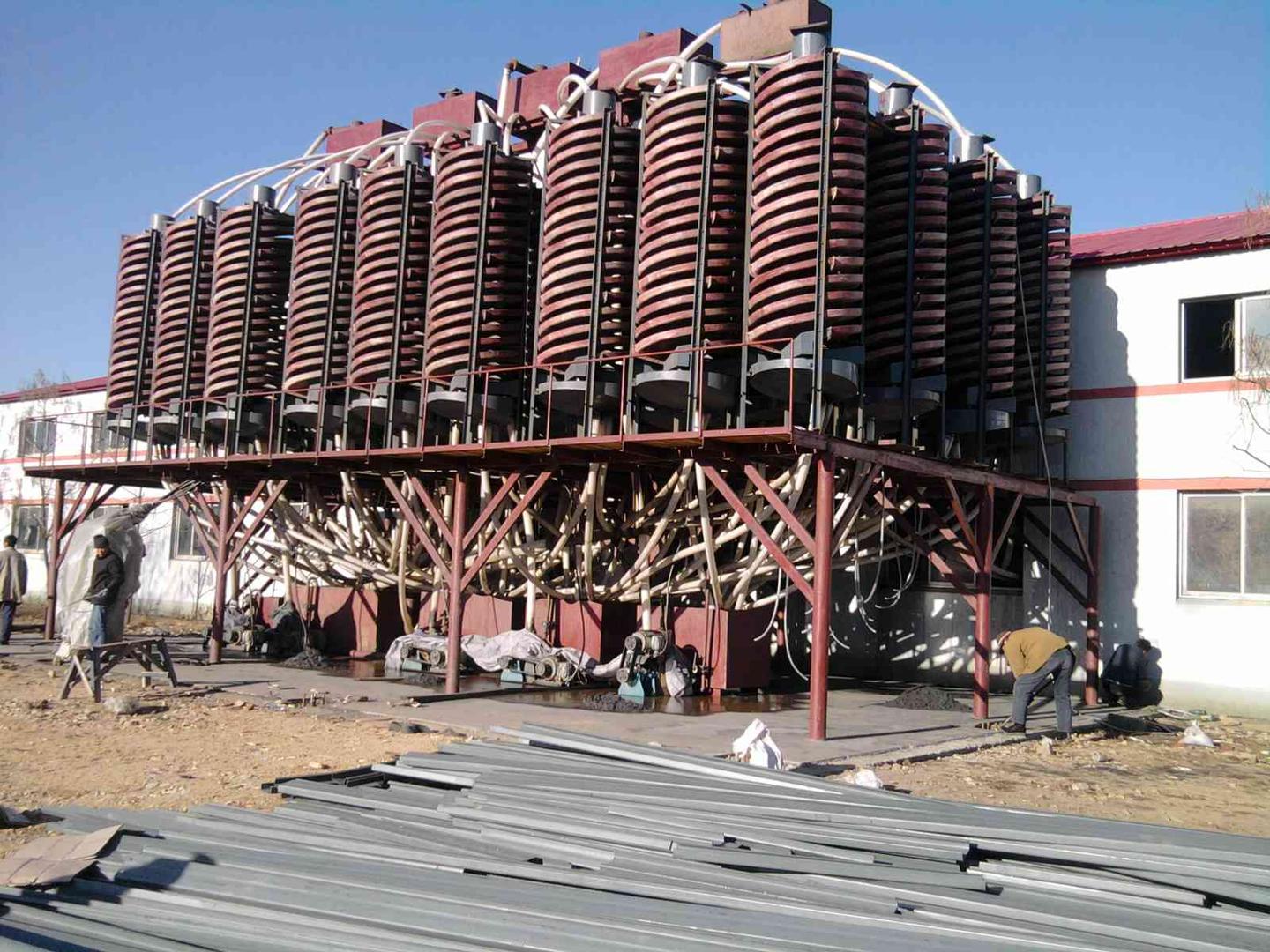
The primary equipment for gold ore beneficiation in a chute is the spiral chute, which utilizes an inclined water flow for separation. The combined forces of water flow, mineral gravity, and friction between the ore particles and the chute bottom cause the ore particles to settle in different zones within the chute according to their specific gravity. The lower-density ore particles are carried away by the water flow, leaving behind the heavier particles, completing the separation. The chute operates intermittently. When the concentrate at the bottom of the chute has settled to a mobile level, feeding is stopped, the concentrate is removed, and operation resumes.
Gold Ore Beneficiation Technology: Chute Gold Process Applications: The spiral chute method is suitable for processing fine-grained materials with low mud content, with a particle size range of 0.6-0.03mm.
Gold Ore Beneficiation Technology: The chute gold process has advantages: simple structure, high processing capacity, and low overall cost.
The above three gravity separation gold ore beneficiation technologies are only suitable for gold ores with dissociated monomers (placer gold). For vein gold minerals, gravity separation process is rarely used alone. It is generally combined with other processes, such as gravity-flotation combined gold extraction process. Gravity separation is used to assist gold extraction. Jigs, spiral chutes and shaking tables are used in the grinding and classification circuits to first recover coarse gold particles that are easy to dissociate, so as to create better separation conditions for subsequent flotation and cyanidation processes, and ultimately effectively improve gold mine indicators and total gold recovery rate.
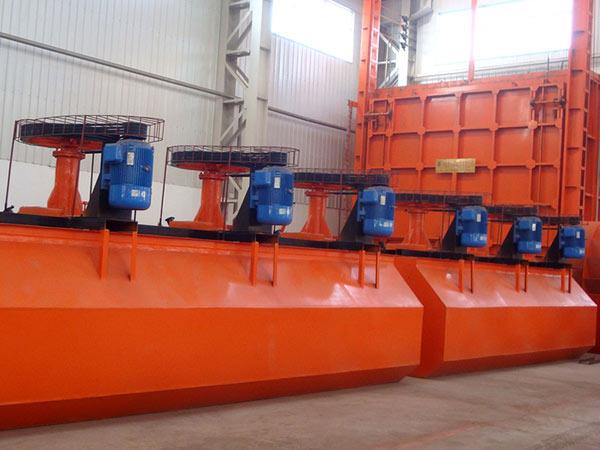
II. Gold Ore Beneficiation Technology - Detailed Explanation of Gold Ore Flotation Technology: Flotation gold separation is based on the differences in the physical and chemical properties of the gold ore surface and typically requires the assistance of flotation reagents. It is generally used for gold-bearing pyrite, gold-bearing copper, arsenic, lead, zinc, and other sulfide ores. It can achieve excellent separation results for fine-grained, disseminated gold ores and ores with complex compositions. Due to its high density, gold has good floatability. However, its small quantity does not form a stable mineralized froth and does not float well. Gold particles larger than 0.25 mm or quartzite gold ores without metallic sulfides are difficult to recover using flotation technology. In these cases, other mineral processing technologies can be used.
The flotation process of gold ore beneficiation technology mainly includes chemical addition, agitation, aeration, and flotation scraping. For gold ores containing a single gold mineral, with a relatively uniform particle size distribution and relatively coarse particle size, a single-stage grinding and flotation process is typically used. For gold ores with unevenly distributed coarse and fine gold particles, mercury plates or gravity separation equipment are typically placed in the grinding and classification circuit prior to flotation to recover the gold particles. These two processes are commonly used in gold concentrators. For gold ores with complex ore properties, flotation processes are also more complex. For example, stage grinding and stage separation processes, as well as mud and sand separation processes, are all used in practice. The flotation process for gold-bearing polymetallic ores is characterized by its complexity and diversity. Gold is typically concentrated in a specific mineral concentrate and sold as a by-product.
Gold Ore Beneficiation Technology - Gold Ore Flotation Technology Application: Flotation gold separation is suitable for processing gold-bearing sulfide ores with fine gold particles and good floatability. During the flotation process, the sulfide ore acts as a carrier for gold and is enriched in the sulfide concentrate. Flotation can also be used to process polymetallic gold-bearing sulfide ores and carbonaceous ores. In addition, for "refractory ores" that cannot be directly treated by amalgamation or cyanidation, a combined process including flotation is also required for treatment.
III. Gold Ore Beneficiation Technology - Detailed Explanation of Gold Cyanide Leaching Technology: Cyanide leaching, also known as the cyanidation process, primarily utilizes an oxygen-containing cyanide solution to leach gold and silver from ore or concentrate, then recovers the gold and silver from the leachate. It is generally used for the separation of small gold particles (1-7μm), ores with low mud content and resistance to mudification, as well as pyrrhotite, arsenopyrite, bismuthinite, and other metal minerals that readily form complexes with cyanide. Common cyanidation gold extraction technologies include percolation cyanidation, agitated cyanidation, carbon-in-slurry gold extraction, carbon-in-leach gold extraction, and heap leaching.
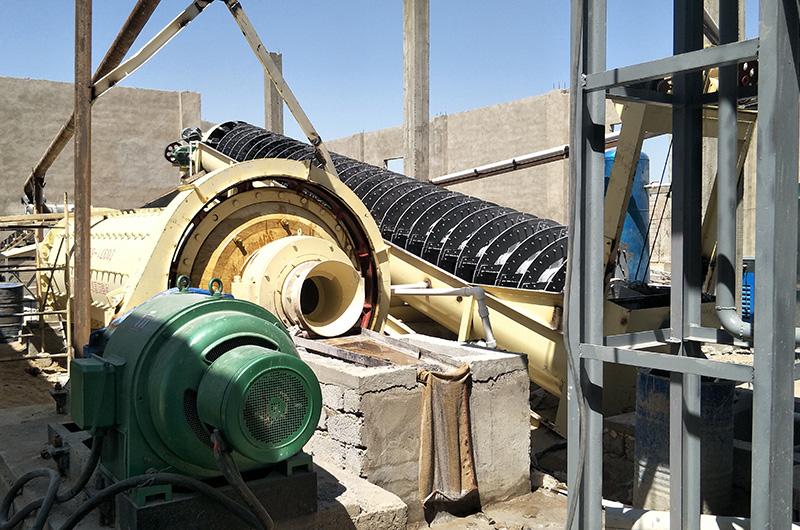
Gold ore beneficiation technology for extracting gold from cyanide leachate: Cyanide gold beneficiation processes can be divided into agitated cyanidation and percolation cyanidation. Agitation cyanidation is used to treat tailings after gravity separation and amalgamation, gold-bearing concentrate from flotation, or for whole-slime cyanidation; whereas percolation cyanidation is used to treat flotation tailings and heap leaching of low-grade gold-bearing ore.
Gold ore beneficiation technology for agitated cyanidation includes two main gold extraction process flows: one is the cyanidation-zinc exchange process (CCD and CCF), which recovers gold through continuous countercurrent washing and displacement precipitation with zinc powder (silk); the other is the filtration-free carbon-in-slurry process (CIP and CIL), which recovers gold directly from the cyanide slurry using activated carbon without filtration or washing.
1. Gold Ore Beneficiation Technology - Agitation Cyanide Gold Separation Process Steps:
The cyanide-zinc exchange process (CCD and CCF) primarily includes leaching raw material preparation, agitated cyanide leaching, countercurrent washing for solid-liquid separation, leachate purification and deoxidation, zinc powder (silk) exchange and pickling, and smelting and ingot production.
Solid-liquid separation (washing): Separates solid leach residue from gold-bearing precious liquor. Process: Multi-stage countercurrent washing. Equipment: Thickener, multi-layer thickener, filter press. Influencing factors: 3-5 washing stages, wash-to-water ratio of 4.
Purification: Removes fine suspended matter from precious liquor (affecting gold mud grade). Process: Vacuum filtration, filter press. Equipment: Plate and frame filter, tubular filter. > Target: Suspended matter <5g/m³.
Deoxidation: Removes oxygen from the precious solution (zinc oxide powder hinders replacement and reduces the gold mud grade). Process: Vacuum deoxidation. Equipment: Deoxidation tower. Targets: Vacuum degree -0.09 to -0.096 MPa; precious solution oxygen content <-0.5 mg/L.
Zinc powder addition: Add zinc powder to the precious solution. Simultaneously add lead nitrate. Equipment: Zinc powder disc feeder. Zinc powder parameters: Particle size -325 mesh (45 μm), pure zinc content >94%; Dosage: Zinc powder: 15-70 g/m³; Lead nitrate: 10% of the zinc powder.
Replacement: Replacement of gold and gold mud filtration. Process: Filter press. Equipment: Plate and frame filter press. Targets: Barren solution grade: <0.02 g/m³; Gold mud gold content: 8-15%; Gold mud moisture: 30-40%.
Gold ore beneficiation technology - agitation cyanidation gold separation process is applicable to ore with Ag:Au>5:1; solid-liquid separation is easy; commonly used for cyanidation of flotation concentrate.
2. Gold Ore Beneficiation Technology - Carbon-in-Pulp Gold Process Steps:
The carbon-in-pulp gold process (CIP and CIL) involves placing activated carbon into a cyanide slurry to adsorb dissolved gold onto the activated carbon, which is then extracted from the activated carbon. It primarily involves raw material preparation, agitated leaching with countercurrent carbon adsorption, gold-loaded carbon desorption, electrodeposition and electrolysis, smelting and ingot production, and carbon regeneration.
Carbon-in-Pulp Gold (CIP): Cyanide leaching is performed first, followed by the addition of activated carbon to adsorb the gold from the slurry.
Carbon-in-Pulp Gold (CIL): Activated carbon is added to the leaching tank, and leaching and adsorption occur simultaneously, i.e., leaching and adsorption occur simultaneously.
In the CIP process, leaching and adsorption are separate operations. During adsorption, leaching is essentially complete, and the size, number, and operating conditions of the adsorption tanks are determined by the adsorption parameters. In the CIL process, leaching and adsorption occur simultaneously. Generally speaking, leaching takes longer than adsorption, so the tank size, aeration, and dosing are determined by the leaching parameters. Since the adsorption rate is a function of the concentration of dissolved gold in the solution, in order to increase the concentration of dissolved gold in the front adsorption tank and increase the leaching time, it is usually necessary to add 1 to 2 stages of pre-leaching before leaching and adsorption.
3. Gold Ore Beneficiation Technology - Percolation Cyanide Gold Process Steps:
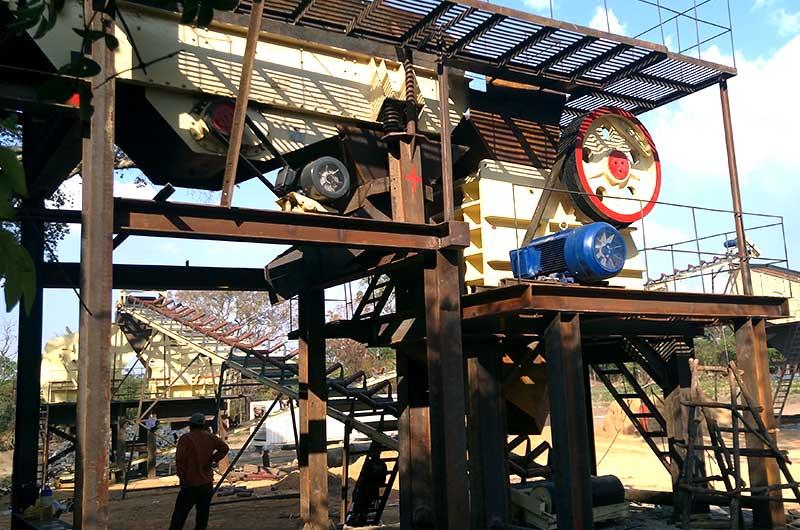
Percolation cyanide is a cyanide leaching process. It extracts gold from gold-bearing ores by percolating a cyanide solution through the ore layers. It is suitable for placer ores and loose, porous materials.
Percolation cyanide leaching includes two processes: tank leaching and heap leaching. The cyanide leachate is percolated and then treated with activated carbon adsorption or zinc powder (silk) displacement.
1. Gold Ore Beneficiation Technology - Tank Leaching Process
Percolation leaching is generally carried out in a percolation leaching tank, typically a wooden tank, iron tank, or cement tank. The tank bottom is horizontal or slightly inclined, and is circular, rectangular, or square. The tank has a false bottom made of perforated acid-resistant plate, covered with filter cloth, and covered with a grid with wooden or corrosion-resistant metal strips. During leaching, the ore is placed in the tank, the leaching agent is added above the tank, and the leachate flows out from the bottom of the false bottom. The false bottom is used to filter and support the ore.
The leaching time required in the percolation tank depends not only on the solvent's dissolution rate of the ore but also on the solvent's penetration rate into the material layer. The penetration rate depends primarily on factors such as the charge height, the material's porosity, the amount of silt, the viscosity of the leaching agent, and the material's characteristics.
2. Gold Ore Beneficiation Technology - Heap Leaching
Heap leaching involves transporting mined ore to a pre-prepared stockpile or directly onto stockpiled waste rock or low-grade ore. Cyanide leaching solution is then sprayed or percolated through the ore, causing the solution to percolate through the ore. The leaching solution is circulated multiple times, repeatedly spraying the ore heap. The leachate is then collected and subjected to activated carbon adsorption or zinc displacement. The lean solution is then returned to the heap for recycling.
Heap leaching sites are generally located on gently sloping mountainous terrain (natural slope 5-15°) near the mining site and with easy access to transportation. First, weeds and loose soil are cleared and compacted to create a foundation with a slope of approximately 5°. The foundation is elevated at the sides and slightly lower in the middle to facilitate the centralized flow of the leachate into the storage tank. A geomembrane is laid over the heap to prevent leakage. A 0.4-meter earthen embankment and a waterproof ditch are constructed around the heap to prevent rainwater from entering the site. Large, lean ore blocks are piled 0.3 meters thick before the ore is piled.
Advantages: Heap leaching cyanide offers low production costs, rapid commissioning, and adaptable scales, with each heap capable of handling tens of thousands of tons of ore. Heap leaching is performed after the ore is crushed to a desired particle size or pelletized.
4. Gold Ore Beneficiation Technology - Resin Slurry Gold Process
Ion exchange resins are used to adsorb gold from ore slurry. Currently, RIP is the most common method, while RIL is less mature. Anion exchange resins are used.
Compared to the carbon-in-slurry method, the resin method has the following advantages: large adsorption capacity, good resin wear resistance, resistance to organic contamination, flexible desorption conditions, and simple regeneration. Its disadvantages include poor adsorption selectivity.
Application: Applicable to both raw ores and concentrates.
IV. Gold Ore Beneficiation Technology - Thiourea Leaching Technology for Gold Ore:
Thiourea leaching is a gold extraction process that utilizes thiourea. As an organic compound, thiourea reacts well with transition metal ions in aqueous solution to form stable complex cations. It is generally suitable for leaching refractory minerals that have undergone pretreatment (such as copper, zinc, arsenic, and antimony). The thiourea-gold complex formed in the solution is essentially cationic, making it suitable for gold recovery using solvent extraction and ion exchange methods. It dissolves gold rapidly, over 4-5 times faster than cyanide leaching, and is non-toxic.
5. Gold Ore Beneficiation Technology - Detailed Explanation of Gold Ore Tailings Treatment Technology:
Currently, commonly used tailings treatment methods include tailings re-selection, tailings dewatering (dry tailings discharge), and tailings filling in goaf areas.
1. Gold Tailings Re-selection Process
Although the content of useful components in gold tailings is relatively low, the use of advanced technologies and rational processes for tailings re-selection can significantly recover these useful components, fully recycling resources, reducing final tailings production, and alleviating the environmental impact of tailings.
2. Gold Tailings Dry Discharge Process
During the gold ore beneficiation stage, the slurry often contains a large amount of water. Excessive water content in the tailings can easily lead to tailings dam failures. Therefore, tailings concentration and dewatering are also important steps in the beneficiation plant, and dry tailings discharge systems are often used.
3. Gold Tailings Goaf Filling
Gold tailings goaf filling utilizes processed tailings waste, which is then refilled into the mined area. This method protects the landscape and reduces tailings dam costs. Currently, the main methods for filling goaf with tailings include full tailings cemented filling and high-water-consolidated full tailings filling.
The above are several gold ore beneficiation technologies. Each gold ore type and properties vary, so the appropriate beneficiation technology must be tailored to the ore type. In the actual beneficiation process, selecting the appropriate gold beneficiation technology requires conducting beneficiation tests. Based on the test results, tailoring the appropriate process technology can improve recovery rates and achieve an ideal return on investment.



