
Phosphate rock beneficiation process
Traditional phosphate ore beneficiation processes include scrubbing and desludging, gravity separation, flotation, and combined gravity and magnetic flotation. Newer phosphate ore beneficiation processes include microbial treatment, dry electrostatic separation, magnetic capping, and selective flocculation. Choosing the right phosphate ore process can yield high-grade, high-recovery, and low-cost phosphate concentrate.
The selection of a phosphate ore beneficiation process depends primarily on the properties of the ore. The scrubbing and desludging process is suitable for processing highly weathered phosphate ores, but the grade and recovery of the phosphate concentrate are low. The heavy medium beneficiation process within gravity separation is less polluting and offers good performance for coarse-grained phosphate ores, but is not suitable for processing phosphate ores with interbedded fine particles. Flotation is the primary method for phosphate beneficiation and is suitable for processing complex and difficult-to-separate phosphate ores, with good flotation performance. The combined gravity-magnetic flotation process is suitable for phosphate ores containing useful semi-ferrous minerals, offering high ore utilization rates. However, the beneficiation process is complex and often requires extensive drug removal. Microbial treatment is suitable for processing complex, low-grade phosphate ores, providing good leaching results. However, the ore processing speed is slow, typically requiring several months. Newer phosphate beneficiation processes such as dry electrostatic separation, magnetic cover, and selective flocculation, while demonstrating good laboratory performance, are rarely used in industry. Therefore, they are generally not adopted or should be used with caution in industrial production.
The phosphate ore beneficiation process is suitable for phosphate ores with complex and diverse ore structures, complex mineral occurrence relationships, fine particle sizes, close intermingling relationships, widespread intermixing and coexistence, and difficulty in separating individual components.
The phosphate ore beneficiation process can be divided into three steps: phosphate ore crushing, phosphate ore sorting, and phosphate concentrate dehydration.
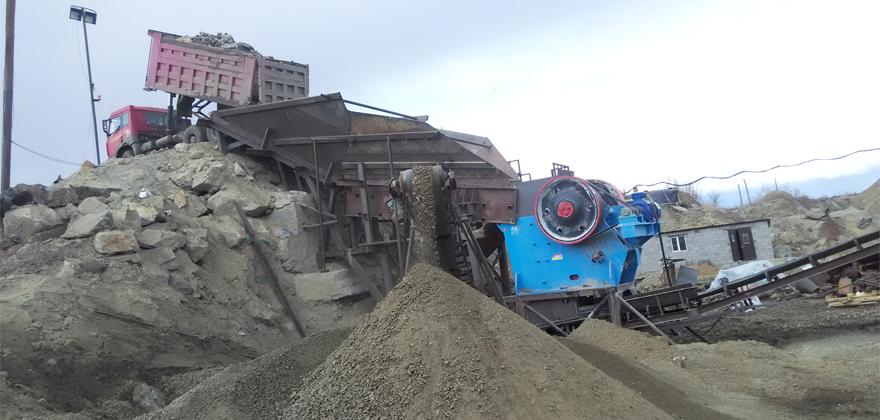
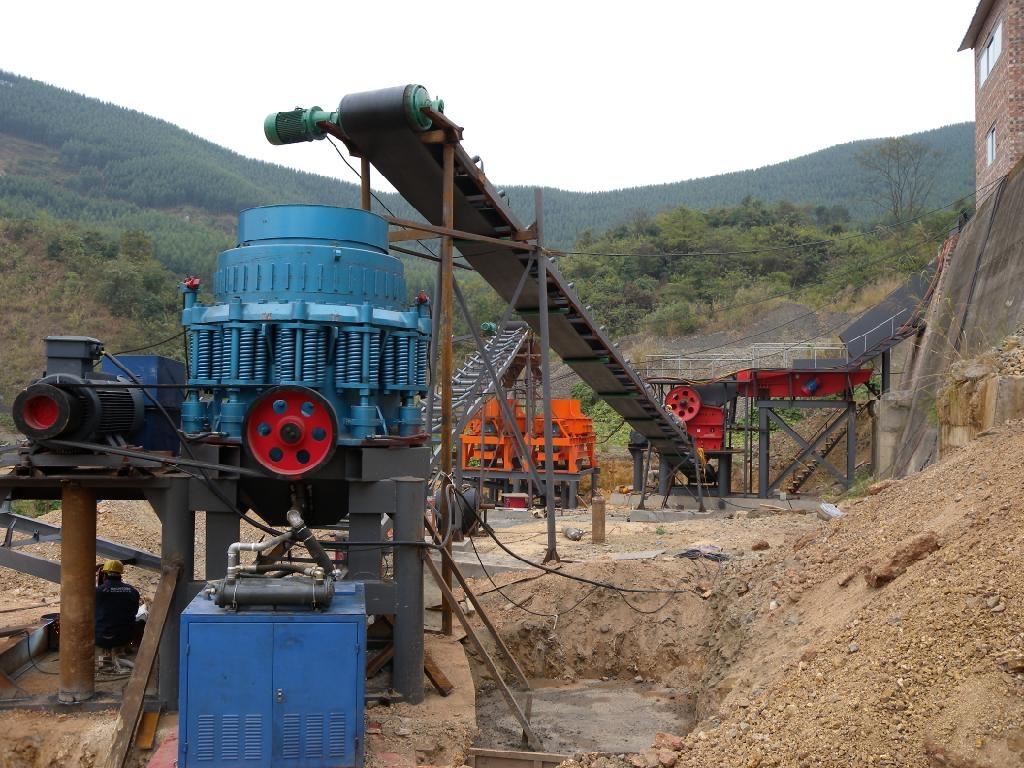
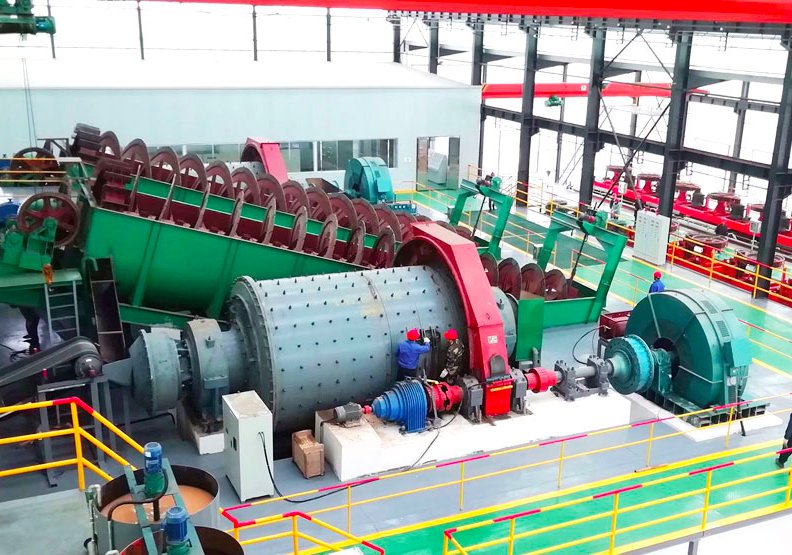
1. Ore crushing in the phosphate ore beneficiation process. The purpose of ore crushing is to separate finely interwoven phosphate ore from other gangue particles and achieve the separation of individual components for subsequent sorting. The ore crushing process includes crushing, screening, grinding, and classification. The conventional phosphate ore crushing process is a three-stage, closed-circuit process, where the phosphate ore undergoes coarse crushing, secondary crushing, and a screening stage. Crusher and ball mill are used to reduce the particle size of ore, so as to dissociate the phosphate minerals from the impurity minerals. The phosphate minerals and impurity minerals in phosphate ore are often cemented together to varying degrees. They can only be dissociated when they are ground to a certain particle size. The degree of grinding is determined by the particle size of the phosphate minerals and impurity minerals. This operation is often a basic step in phosphate ore enrichment.
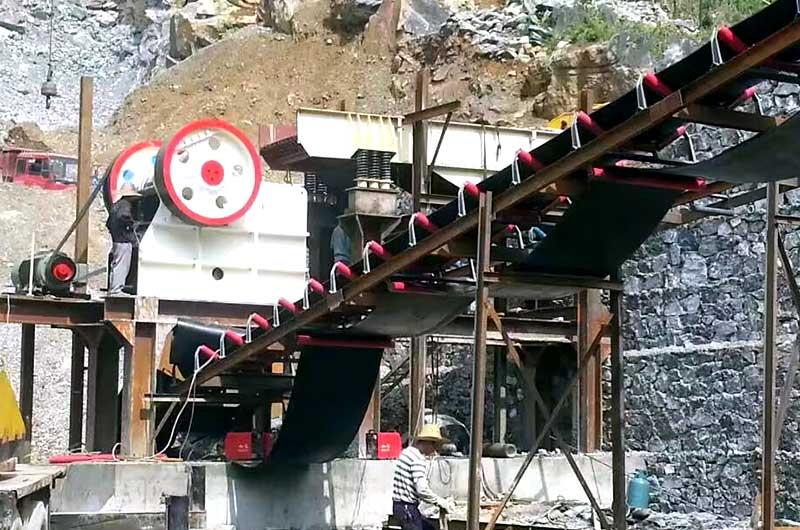
Second, the ore separation process within the phosphate ore beneficiation process. The goal of the ore separation process is to enrich the dissociated phosphate ore. Phosphate ore separation typically utilizes flotation. Common phosphate ore flotation processes include single reverse flotation, direct flotation, reverse flotation (direct reverse flotation), and double reverse flotation. Phosphate ore often contains recoverable associated metals such as iron ore. In such cases, magnetic separation and other processes can be added to the flotation process to recover these valuable associated metals. Common flotation principle processes include preferential flotation, mixed flotation, partial mixed flotation, and other flotation processes. For low-grade phosphate ore, the mixed flotation principle is often employed: phosphate ore and recovered valuable minerals are first floated out, and then the phosphate ore and valuable minerals are separated. This method saves flotation reagents, reduces the number of flotation equipment, and reduces flotation costs.
1. Phosphate Ore Beneficiation Process: Flotation: Utilizing the different surface properties of phosphate minerals and impurity minerals, flotation agents are used to float the phosphate minerals, achieving separation. This operation is called forward flotation. Another method is to float the impurity minerals while the phosphate minerals sink, known as reverse flotation. To make separation more efficient, inhibitors are often added to prevent certain minerals from floating. The phosphate slurry obtained from the flotation machine is thickened, filtered, and dehydrated to obtain concentrate.
2. Phosphate Ore Beneficiation Process: Magnetic separation is performed using a magnetic separator. A separator is used to remove magnetic impurities from phosphate rock.
3. Phosphate Ore Beneficiation Process: Photoelectric Separation: Utilizing the different colors of phosphate and impurity minerals, photoelectric elements are used to identify them and control a compressed air jet to separate the phosphate rock from the impurities.
4. Phosphate Ore Beneficiation Process: Calcination is used to remove organic matter, carbon dioxide, and some fluorine from the phosphate rock. The calcination temperature ranges from 400°C to 1°C depending on the purpose.
5. Phosphate Ore Beneficiation Process: Heavy Medium Separation: Utilizing the different densities of phosphate and impurity minerals, a medium with a density intermediate between the two is selected to cause one mineral to float while the other sinks, achieving separation. Phosphate ore enrichment processes vary depending on the specific circumstances. For example, the enrichment process for Florida phosphate ore in the United States includes wet screening and classification, desliming, and flotation. The enrichment process for Moroccan phosphate ore includes crushing and classification, water washing, wet screening, desliming, and dewatering.
III. Dehydration in the Phosphate Ore Beneficiation Process. The purpose of ore dehydration is to facilitate the storage and transportation of phosphate ore and other products. Ore dehydration typically involves two processes: concentration and filtration. Phosphate ore concentration typically utilizes a large concentrator (concentrator), while filtration typically utilizes a disc filter.
Phosphorus is a key raw material for the production of phosphate fertilizers, yellow phosphorus, phosphoric acid, phosphides, and other phosphate products. It is a non-renewable and non-substitutable resource. my country has significant phosphate ore reserves, but over 70% is low-grade, lean ore. Industrialization cannot rely solely on scrubbing processes; further separation and enrichment are required for utilization. Currently, the phosphate ore beneficiation process primarily concentrates low- and medium-grade phosphate ore using flotation. The flotation efficiency of phosphate ore depends on the interaction between mineral particles and bubbles in the aqueous medium, making flotation reagents particularly important.
Common flotation processes used in phosphate rock beneficiation include direct flotation, reverse flotation, direct flotation followed by reverse flotation, reverse flotation followed by direct flotation, and double reverse flotation.
1. Phosphate Rock Beneficiation Process - Direct Flotation: This process involves grinding the phosphate rock to dissociate the monomers. Water is then added to the slurry to a certain concentration. A specific collector is used to concentrate the useful phosphate minerals in the froth product. Specific agents are also used to suppress gangue minerals such as silicates and carbonates in the phosphate rock. Commonly used flotation agents include the "S," "L," "sulfonated phenol tar," and "F" series of suppressants. This phosphate rock beneficiation process is suitable for siliceous or calcic-siliceous phosphorite, endogenous apatite, and sedimentary phosphate rock. It offers a simple process flow, excellent impurity removal, and can effectively reduce the content of impurities such as Me and Fe. However, it consumes a lot of energy and results in high beneficiation costs.
2. Phosphate Ore Beneficiation Process - Phosphate Ore Reverse Flotation Process: This process generally uses inorganic acid to adjust the slurry pH to a certain range (pH = 4.0-5.0). In a weakly acidic medium, a specific collector is used to concentrate dolomite in the froth product, while the phosphate minerals remain in the tank. Commonly used flotation reagents include inorganic acid adjusters and modified fatty acid collectors. Fatty acids are modified by sulfation or by adding additives during the saponification process to improve their water solubility, temperature resistance, collectability, and selectivity. This phosphate ore beneficiation process is generally suitable for separating phosphate minerals from dolomite-based gangue minerals, achieving a dolomite gangue removal rate of 70%-80%. The process does not require heating and can be performed at low or room temperature, reducing energy consumption and costs. However, its applicability is limited, primarily targeting calcareous phosphate ores, and its separation efficiency for siliceous phosphate ores is poor.
3. Phosphate Ore Beneficiation Process - Phosphate Ore Direct Flotation followed by Reverse Flotation: This process first adjusts the slurry to a weak alkalinity using an inorganic base. A specific collector is then used to concentrate the useful phosphate minerals in a froth product, leaving the silicate gangue minerals in the tank for removal. The froth is the direct flotation concentrate. Inorganic acid is then added to adjust the slurry to a weak acidity. The direct flotation concentrate (with or without regrinding) is then slurried and enriched with a collector to remove carbonate impurities, leaving the useful phosphate minerals in the tank to produce the reverse flotation concentrate. The primary purpose of reverse flotation is to remove MgO impurities from the phosphate concentrate. Commonly used flotation reagents include inorganic bases and inorganic acids as adjusters, and XM-10, water glass, and sulfur-phosphorus mixed acid depressants. This phosphate ore beneficiation process is suitable for processing calcareous siliceous phosphate ores, yielding a higher grade phosphate concentrate than either direct or reverse flotation alone. The combination of forward and reverse flotation effectively improves the processing performance of the phosphate concentrate. However, the high reagent costs pose significant challenges to water recycling in the beneficiation plant.
4. Phosphate Ore Beneficiation Process - Phosphate Ore Reverse Flotation followed by Direct Flotation
This process first uses a collector to float out carbonate gangue in an acidic medium to produce a reverse flotation concentrate. The siliceous gangue is then disintegrated in a secondary grinding stage, and the phosphate minerals are floated out in an alkaline medium to produce a direct flotation concentrate. This process is suitable for low-grade siliceous-calcareous colloidal phosphates. It does not require heating and has low energy consumption, but the circulating water must be treated separately, which has a significant impact on production.
5. Phosphate Ore Beneficiation Process - Phosphate Ore Double Reverse Flotation: This process generally uses inorganic acid to adjust the slurry to a weak acidity. A fatty acid collector is then used to enrich a portion of the dolomite gangue. A fatty amine collector is then used to enrich the quartz minerals. The phosphate minerals in the tank form the final concentrate. Commonly used flotation reagents include inorganic acid adjusters, fatty acids, and fatty amine collectors. This phosphate rock beneficiation process is primarily suitable for processing mixed phosphate rock with low siliceous gangue and carbonate content. It is particularly effective in separating dolomite and quartz gangue minerals. It enables flotation at low and ambient temperatures, features a simple process, low energy consumption, a simple reagent system, and a limited number of reagent types. However, the amine collector used in this process is a cationic one, which produces viscous foam, poor selectivity, and is sensitive to slime. If the ore contains a high slime content, desliming is required, which further complicates the process.
The above is an introduction to commonly used phosphate rock flotation processes and flotation reagents. During phosphate rock beneficiation, the selection of a phosphate rock beneficiation process flowsheet must be determined based on the desired phosphate concentrate product performance and the properties of the original ore. Therefore, it is recommended to conduct beneficiation trials first. Based on the test results, the process flowsheet and flotation reagent system can be scientifically and rationally tailored to ensure optimal beneficiation performance and economic benefits.
The selection of a phosphate rock beneficiation process flowsheet must consider beneficiation costs. The more complex the beneficiation process, the higher the beneficiation costs. Generally, flotation costs are higher than other beneficiation costs. When selecting a flotation process flowsheet, hybrid flotation should be preferred to reduce reagent usage and the number of flotation equipment. When considering beneficiation costs, fixed costs, current costs, and revenue should be comprehensively considered to optimize the profitability of the beneficiation plant.
Faced with competition and challenges in the phosphate rock market, reducing phosphate rock beneficiation process costs is almost the only solution for phosphate rock beneficiation plants. Reducing phosphate rock beneficiation costs has long been a topic of intense research. "More crushing, less grinding" is an effective way to reduce costs in phosphate rock beneficiation plants. Crushing and grinding generally account for over 60% of a beneficiation plant's costs and 60-70% of its energy consumption. Grinding energy accounts for 80-90% of crushing and grinding energy consumption. Therefore, reducing grinding energy consumption is key to lowering the overall energy consumption of a phosphate rock beneficiation plant.
Practice has proven that adopting a "more crushing, less grinding" approach to phosphate rock beneficiation can effectively reduce energy consumption in the crushing and grinding stages, thereby lowering phosphate rock beneficiation costs. Measures for "more crushing, less grinding" include: 1. Converting from open-circuit crushing to closed-circuit crushing; 2. Switching from two-stage crushing to three-stage crushing to reduce the feed particle size; 3. Improving the screening efficiency of screening equipment; and 4. Using high-efficiency crushing equipment (such as high-pressure roller grinding) in the final crushing stage.
Adopting a rational phosphate ore beneficiation process is another effective way to reduce phosphate ore beneficiation costs. Commonly used phosphate ore beneficiation processes include gravity separation, flotation, and combined gravity-magnetic flotation. Gravity separation is low-cost and less polluting, but the final concentrate grade and recovery rate are lower. Flotation is costly, but the final concentrate grade and recovery rate are higher. The combined gravity-magnetic flotation process can often recover associated useful metals in addition to the phosphate ore, but the process is complex and the beneficiation cost is high. Therefore, after carefully weighing the benefits and costs of each process, a rational phosphate ore beneficiation process should be selected.
In addition, the use of high-quality equipment with excellent beneficiation performance in the phosphate ore beneficiation process is also an important way to reduce phosphate ore beneficiation costs. High-quality beneficiation equipment can increase the annual operating rate of the beneficiation plant, improve the beneficiation performance, reduce energy consumption, and reduce maintenance rates, thereby reducing beneficiation costs. Poor-quality production equipment has the opposite effect. Therefore, selecting high-quality equipment plays a vital role in reducing phosphate ore beneficiation costs.



