
Copper-nickel ore beneficiation process
There are two main types of flotation schemes in the copper-nickel ore beneficiation process: one is priority flotation; the other is mixed flotation. Priority flotation can be considered when the copper content in the ore is higher than the nickel and the mineral symbiosis is relatively simple. Its advantages: copper concentrate and nickel concentrate can be directly obtained. Its disadvantages: nickel minerals that are suppressed during copper flotation are not easy to activate, and the nickel recovery rate is low, so this method is rarely used. Copper-nickel mixed flotation is currently the most common scheme. Its advantages are: high nickel recovery rate and less flotation equipment. Copper-nickel mixed flotation is similar to copper-sulfur mixed flotation. Copper-nickel ore beneficiation process mixed flotation process Applicable conditions: It is used to select ores with lower copper content than nickel. The obtained copper-nickel mixed concentrate is directly smelted into high-grade nickel matte, and then after grinding and flotation, both copper and nickel products are obtained. The copper-nickel ore beneficiation process involves mixed flotation and separation flotation. Applicable conditions: After mixed flotation, the mixed concentrate is separated into a low-nickel copper concentrate and a copper-containing nickel concentrate. This nickel concentrate is then smelted into high-grade nickel matte, which is then subjected to flotation separation. The copper-nickel ore beneficiation process involves mixed flotation (partial) and partial nickel recovery from the mixed flotation tailings.
Copper-nickel sulfide ores are primarily magmatically separated. Nickel contents above 3% are rich ores suitable for direct smelting, while nickel contents below 3% require beneficiation. Ore containing less than 3% nickel is primarily accompanied by a large number of metallic and gangue minerals. Metallic minerals include pyrrhotite, pentlandite, and chalcopyrite, followed by magnetite, pyrite, ilmenite, chromite, melanocarp, covellite, chalcocite, bornite, and platinum-group minerals. Gangue minerals include olivine, pyroxene, plagioclase, talc, serpentine, chlorite, actinium, and mica, with some also containing quartz and carbonates. Copper in copper-nickel sulfide ores occurs primarily as chalcopyrite, while nickel primarily occurs as free nickel sulfides such as pentlandite, pentlandite, and pentlandite. In addition, most nickel is present as isomorphs in pyrrhotite. Generally speaking, sulfide copper-nickel ores are often separated by flotation. Due to the different ore types, mineral contents and associated precious metal contents, the flotation separation process adopted in the copper-nickel ore beneficiation process is also different, mainly including priority or semi-priority flotation separation process, mixed flotation separation process, rapid flotation process, etc.
1. Preferential Flotation Process for Copper-Nickel Sulfide Ores
Preferential flotation is primarily targeted at ores with high copper content, low nickel content, and simple properties. Preferential flotation of copper-nickel sulfide ores typically employs a "copper flotation and nickel suppression" process, which achieves copper-nickel separation by adding a nickel sulfide mineral depressant and a high-efficiency copper collector. This process offers the advantage of directly producing a low-nickel copper concentrate and a qualified nickel concentrate at a low cost. However, its disadvantage is that the pentlandite and pyrite that are suppressed during copper flotation are difficult to activate in subsequent flotation, resulting in low nickel recovery and a waste of nickel resources.
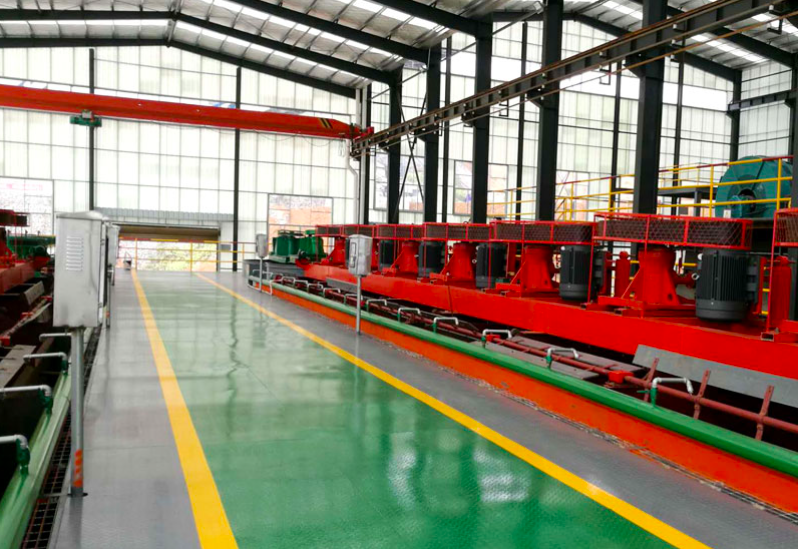
2. Copper-Nickel Sulfide Ore Mixed Flotation Process
The mixed flotation process for copper-nickel ore beneficiation involves first removing the copper and nickel minerals from the ore to obtain a copper-nickel mixed concentrate. The copper and nickel are then separated through flotation or smelting to produce high-grade nickel matte. This process is applicable to various copper-nickel sulfide ores.
1. Copper-Nickel Mixed Flotation Separation Process
The copper-nickel mixed flotation process, which involves flotation of the mixed concentrate with nickel suppression and copper flotation, is the most commonly used copper-nickel ore beneficiation process in copper-nickel sulfide concentrators. This process involves first flotating the mixed concentrate to obtain a copper-nickel mixed concentrate. After the mixed concentrate is re-grinded to remove the reagent, the copper concentrate and nickel concentrate are separated using a nickel suppression and copper flotation method.
2. High-Matte Nickel Regrinding and Flotation Separation Process
The high-matte nickel regrinding and flotation separation process for copper-nickel ore beneficiation involves first flotating a mixed copper-nickel concentrate. The mixed concentrate is then smelted in an electric furnace to form low-grade nickel matte, which is then converted into artificial high-grade nickel matte by converting it into a synthetic high-grade nickel matte ore. Finally, the high-grade nickel matte ore is regrinded and flotated for separation. This process is primarily used for ores with complex copper-nickel coexistence and extremely fine particle size, making direct flotation separation difficult. High-grade nickel matte is primarily composed of Ni3S2, Cu2S, copper-nickel-iron alloys, and minor amounts of platinum group elements. The iron content, sulfur content, and copper-nickel ratio of high-grade nickel matte are key factors influencing the subsequent flotation separation process.
Compared to layered smelting, electrolysis, and leaching, the high-matte nickel ore beneficiation process offers advantages such as a shorter process flow and lower energy consumption, resulting in lower separation costs and reduced intermetallic inclusions. However, flotation separation still has some difficult-to-solve shortcomings. The flotation separation of high-grade nickel matte is usually carried out under high alkaline conditions to inhibit nickel from floating copper. When the pH value of the slurry is too high, it will also have a certain inhibitory effect on Cu2S. In addition, in the preparation process of high-grade nickel matte, Ni3S2 and Cu2S are wrapped around each other, and the collector is mostly xanthate, which has poor selectivity for the two minerals. The mutual content of copper and nickel in the obtained concentrate is still not ideal.
III. Electrochemically Controlled Flotation Process for Copper-Nickel Sulfide Ore
Electrochemically controlled flotation in the copper-nickel ore beneficiation process uses chemical agents to modify the electrochemical properties of the flotation slurry, adjust the flotation properties of the minerals, and achieve flotation separation. In copper-nickel sulfide ore flotation, potential control methods include:
1. Controlling the oxidation of the copper-nickel sulfide mineral surface during grinding and flotation using oxidants;
2. Controlling the electrochemical properties of the copper-nickel sulfide mineral surface by adjusting the slurry pH to provide a suitable flotation slurry environment;
3. Adding chemical agents to prevent excessive oxidation of the copper-nickel sulfide minerals during flotation.
Potential controlled flotation can be categorized into two types based on implementation methods: chemical agent control and external electrode control. Both control methods are relatively mature, but each has its own advantages and disadvantages.
1. Copper-Nickel Ore Beneficiation Process - Chemical Agent Control Method
This method does not require major modifications to existing flotation equipment and offers excellent control effects. However, during aeration flotation, a large amount of oxygen enters the slurry system, making it difficult to maintain the slurry potential within the appropriate range. This increases the amount of redox agent used and negatively impacts subsequent flotation.
2. Copper-Nickel Ore Beneficiation Process - External Electrode Control Method
This method offers advantages such as simple and rapid operation, and does not increase the presence of unavoidable ions in the slurry. However, it requires modification of the existing flotation machine and the installation of electrodes, resulting in high installation and maintenance costs.
Regardless of the copper-nickel ore beneficiation process used, nickel must be prevented from entering the copper concentrate to avoid nickel loss during copper smelting. When the copper grade in the ore is higher than nickel, a preferential flotation process is used, first obtaining the copper concentrate, followed by flotation to obtain the nickel concentrate. When the copper grade in the ore is lower than nickel, a mixed flotation process is used, first obtaining the copper concentrate, followed by flotation to obtain the nickel concentrate. When the copper grade in the ore is lower than nickel, mixed flotation is used. The resulting copper-nickel mixed concentrate can be separated (or processed) in two ways: When the copper-nickel minerals are coarse and the two minerals are not closely intergrown, flotation can be used to separate them separately, obtaining copper concentrate and nickel concentrate, which are then sent for smelting separately. When the copper-nickel minerals are fine and the two minerals are closely intergrown, the mixed concentrate is first sent for smelting to produce high-grade nickel matte, after which the copper and nickel are separated by flotation. Sometimes, the floatability of some nickel minerals is too poor and they cannot float out in time during mixed flotation. In this case, they need to be recovered from the tailings of mixed flotation by flotation or other mineral processing methods and sorted separately.
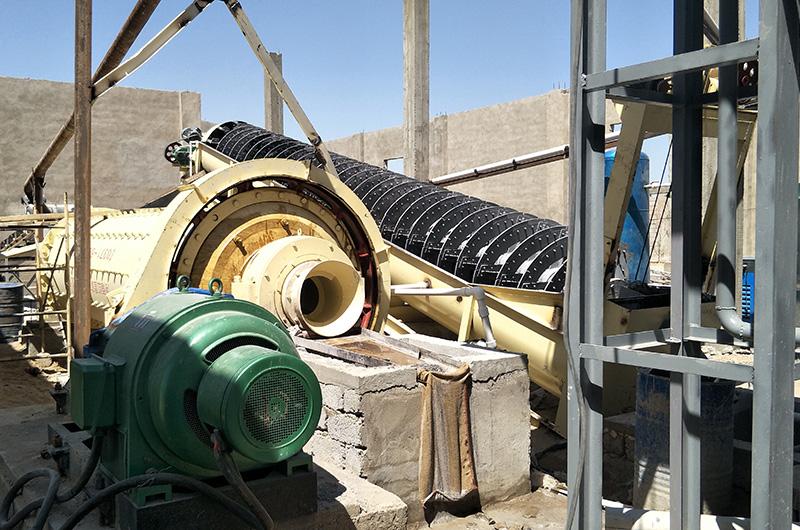
Basic Principles of the Copper-Nickel Ore Beneficiation Process: When flotating copper-nickel sulfide ores, collectors and frothers typically used for flotation of copper sulfide minerals are often used. A fundamental principle is to prefer copper to nickel concentrate over nickel to copper concentrate. This is because nickel in copper concentrate suffers significant losses during the smelting process, while copper in nickel concentrate can be recovered more completely. When the copper content in the ore is significantly higher than the nickel content, the copper can be separated into a separate concentrate. The advantage of this process is that it directly produces a copper concentrate with a lower nickel content.
The above is an introduction to the copper-nickel ore beneficiation process. In actual beneficiation plants, the properties of each graphite ore vary. To achieve an ideal return on investment, it is recommended to conduct beneficiation trials first and then customize a beneficiation process based on the test results to meet your specific needs.
Characteristics of the copper-nickel ore beneficiation process: 1. The optimal pH for nickel mineral flotation is a weakly acidic, neutral, or weakly alkaline medium. 2. High-grade xanthates such as butyl xanthate or amyl xanthate are used as collectors. 3. The flotation time of nickel-containing pyrrhotite is relatively long. 4. Nickel-containing minerals such as pyrrhotite and pyrite are susceptible to oxidation and mudification. Staged grinding is particularly important when the nickel distribution is uneven, and intensive graded grinding is necessary. Generally, after coarse grinding, the rougher tailings are discarded, and the mixed concentrate is graded and re-ground before beneficiation or copper-nickel separation. 5. Activation agent options for pyrrhotite: ① Na₂S + CuSO₄ ② Na₂SiF₆ + CuSO₄ ③ (COOH)₂ + CuSO₄ 5
Currently, copper-nickel sulfide ores are primarily smelted using pyrometallurgical methods. The beneficiation process for sulfide copper-nickel ore consists of material preparation (roasting) - smelting - blowing - refining (electrolysis). Because the mine is a serpentine ore with densely interwoven copper and nickel minerals, direct mechanical separation is difficult. Therefore, high-grade nickel matte flotation separation technology is used. The copper-nickel mixed concentrate is smelted in a converter to produce high-grade nickel matte, which is then crushed, ground, and flotated before being electrolyzed into the final product, electrolytic nickel.
Our company has a complete set of production equipment for cast iron, cast steel, metal processing and assembly. We integrate product research and development, have strong technical force, complete equipment, reasonable manufacturing process, excellent mother machine equipment, complete testing methods, complete quality assurance system and after-sales service department. Our products include vibrating screens, sand and gravel production lines, crushers, energy-saving ball mills, MQG tube mills, jaw crushers, impact crushers, hammer crushers, vertical compound crushers, high-efficiency impact crushers, roller crushers, 2PGC double-tooth roller crushers, cone crushers, impact crushers, vibrating screens, high-weir spiral classifiers, spiral ore washers, high-efficiency sand washers, magnetic separators, tailings reclaimers, double-ring pulsating high-gradient magnetic separators, dry separators, shaking tables, spiral chutes, jigs, mining agitators, flotation cells, aerated mechanical agitator flotation cells, flotation cells, disc feeders, pendulum feeders, trough feeders, feeders, electromagnetic vibrating feeders, bucket elevators, belt conveyors, screw conveyors, sand and gravel production lines, hydrocyclones, dry magnetic rollers, high-efficiency concentrators, high-frequency screens, physical concentrators, H-series rotary dryers, and rotary kilns. , disc granulator, finished product screen, ceramic ball mill, rod mill, gyw series cylindrical external filtration vacuum permanent magnet filter, gold grinding machine, FNX series high-efficiency inclined tube thickening (classification) box and other products can not only provide products for users, but also carry out technical transformation of old mines and old equipment for users.



