
Copper ore concentrator grinding and classification equipment and processing
As we all know, mineral processing operations consist of three stages: pre-selection, sorting, and post-selection. Preparatory work before sorting generally includes crushing and screening, grinding and grading, hand sorting, and ore washing. Grinding and grading, as a follow-up to crushing and screening, is also a crucial step in the pre-selection phase. Ball mills grind the ore to a desired fineness, and grading equipment separates qualified and unqualified products, completing the entire pre-selection process. So, in practical production, how should we choose the optimal grinding and grading equipment and number of grinding and grading stages for a copper ore beneficiation plant?
Grinding and classifying equipment in copper ore concentrators and within the grinding and classifying process is the most critical process before copper ore is selected. In real-world production, grinding is typically performed in almost all ore processing plants, with the exception of a few sand ores with high levels of useful mineral separation, which do not require grinding. Grinding equipment typically includes autogenous grinding mills, ball mills, and rod mills. Factors influencing grinding performance primarily include the properties of the material being ground and the mill's operating conditions. The grindability and particle size of the material determine these properties. Higher ore grindability results in higher grinding efficiency; coarser ore particle size results in longer grinding times and lower grinding efficiency. Regarding mill operating conditions, once a mill is selected, such as a ball mill, the ball filling rate, mill concentration, and classifier performance all contribute to grinding efficiency.
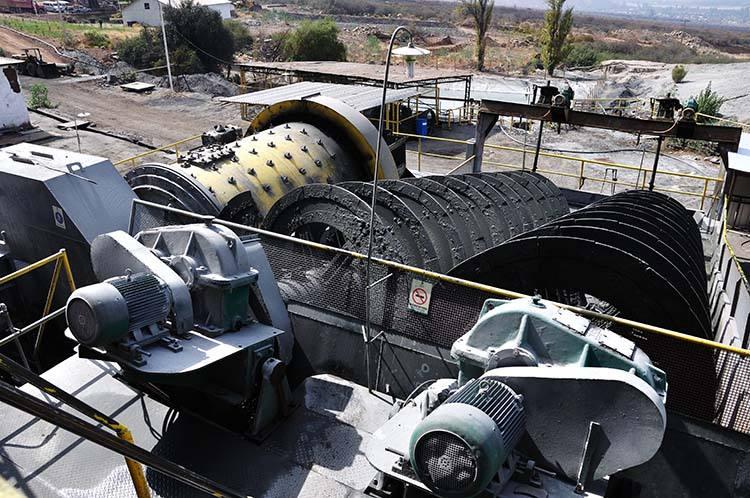
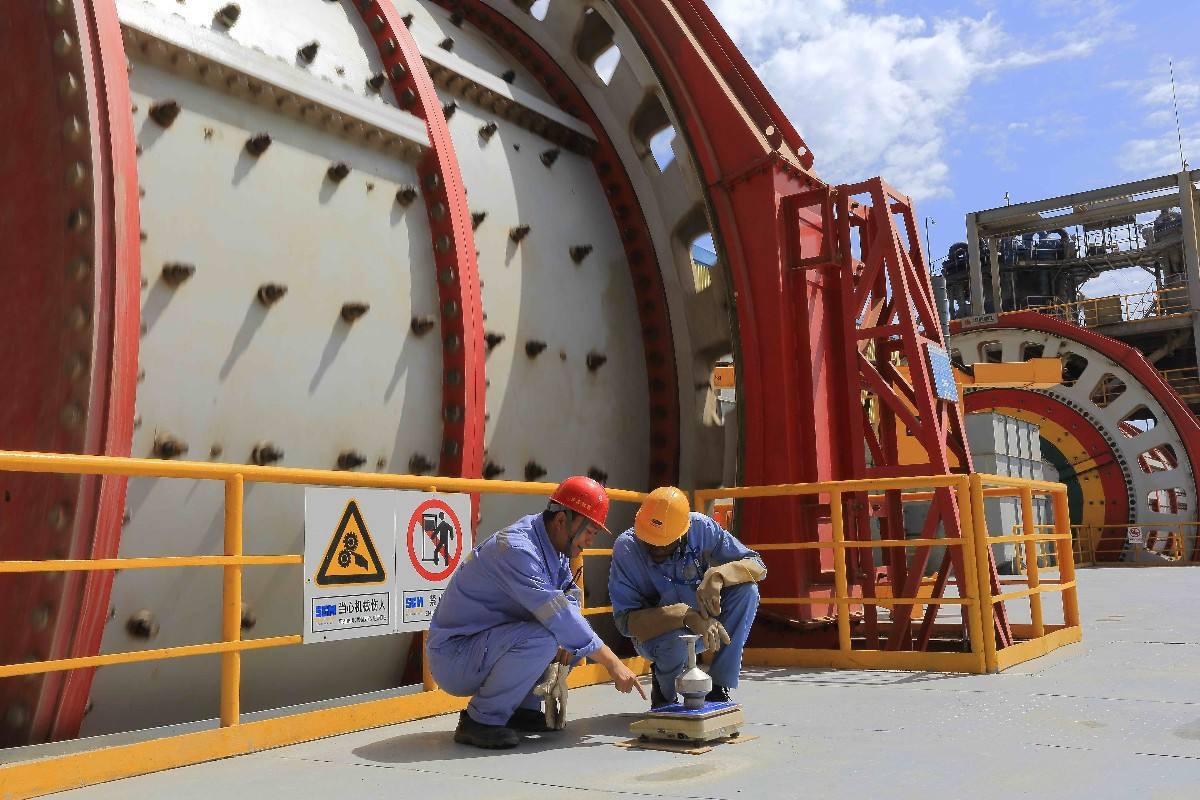
The working principle of a ball mill in a copper ore beneficiation plant's grinding and grading equipment: Material is fed uniformly from a feed device through a hollow feed shaft into the mill's first chamber. This chamber, lined with stepped or corrugated linings, contains steel balls of varying sizes. The centrifugal force generated by the rotating drum carries the balls to a certain height, where they fall, impacting and grinding the material.
The drum of a grate-type ball mill in a copper ore beneficiation plant's grinding and grading equipment is welded together from rolled steel plates approximately 18 to 36 mm thick. Cast steel flanges are welded to each end. The drum is fitted with a liner made of manganese steel, chrome steel, wear-resistant cast iron, or rubber. High-manganese steel is widely used, while rubber is still in the trial stage. The liner is approximately 50 to 130 mm thick, with a 10 to 14 mm gap between it and the drum shell. Plywood, asbestos pads, plastic electrodes, or rubber are used to cushion the impact of the steel balls on the drum.
Overflow-type ball mills, used in copper ore concentrators, discharge ore by gravity, as the ore pulp itself rises above the lower edge of the hollow shaft, eliminating the need for heavy gratings. Furthermore, to prevent small balls and coarse ore from being discharged along with the slurry, counter-spiral blades are embedded on the inner surface of the hollow shaft bushing.
In copper ore concentrators, grinding and classifying operations typically use cyclones or classifiers to separate ore particles. Depending on the height of the overflow weir, these types are categorized as low-weir, high-weir, and submerged. The grinding and classifying equipment and processes in copper ore concentrators utilize the "sedimentation principle." The length of the classifying liquid level is represented by L, the height of the overflow interface is h, the flow time of the ore particles at the overflow weir is t1, and the vertical settling time is th. When t1 > th for the copper ore particles, they will settle to the bottom of the trough as sand and then return to the mill for further grinding. When t1 < th, the particles will be ejected from the trough and enter the overflow. When t1 = th, the particles may enter the overflow, where they may become sand and are considered critical particles. Generally speaking, the main factors affecting grinding and classifying efficiency are the classification area, ore properties, classification concentration, and the classifier screw speed. The classification area and classifier screw speed are determined when the classifying equipment is selected. The influence of ore properties on classification efficiency mainly depends on the slurry viscosity. The higher the viscosity, the lower the classification processing capacity; the higher the classification concentration, the lower the sedimentation velocity and the coarser the overflow particle size; the classification concentration is not the lower the better, because when the concentration is very low, the overflow volume increases, the horizontal flow velocity increases, the coarse particles in the overflow increase, and the overflow particle size becomes coarser.
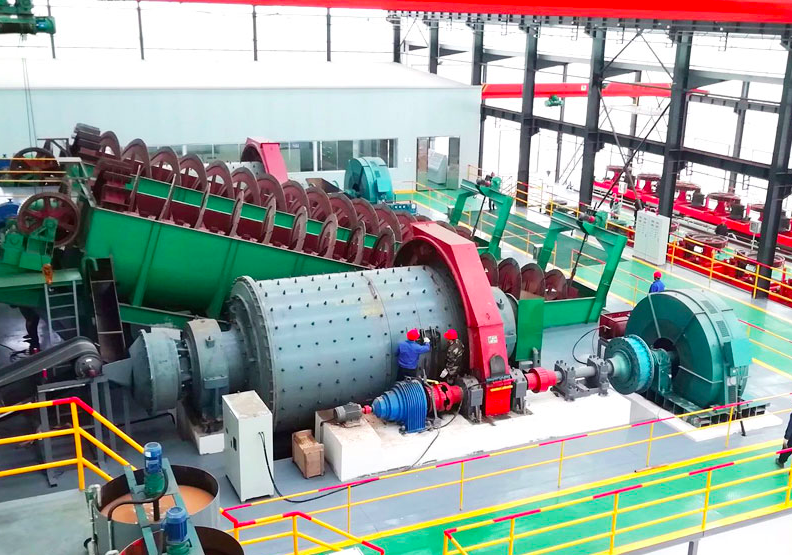
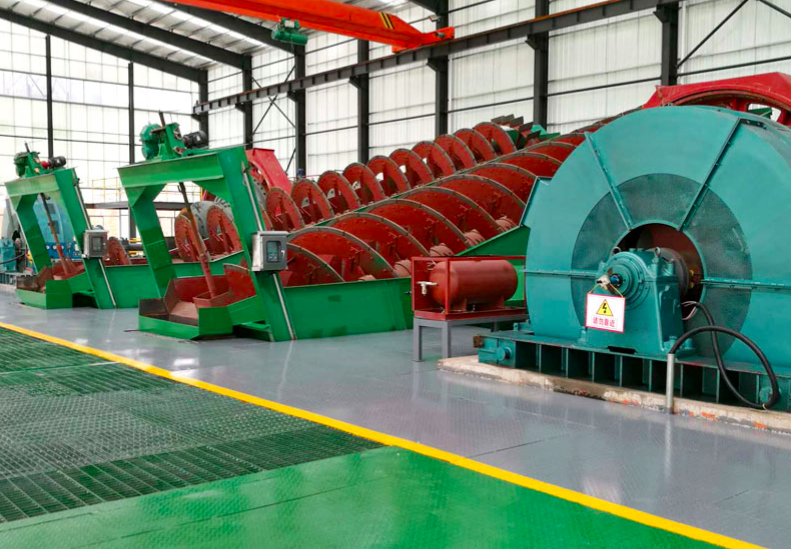
The spiral classifier in copper ore beneficiation plants operates on the principle that solid particles of varying size and specific gravity, resulting in different settling velocities in liquids, cause fine particles to float in the water and overflow, while coarse particles settle to the bottom. Spiral classifiers are used in conjunction with wet ball mills to perform both grinding and classification. Specifications are expressed by diameter and are categorized as single-spiral and double-spiral classifiers based on the number of spirals. Based on the liquid level, they are further divided into high-weir, submerged, and low-weir types.
The hydrocyclone in copper ore beneficiation plants features a cylindrical upper section and a conical lower section. An overflow pipe is inserted in the center of the cylinder, and a tangential inlet pipe extends outward from the upper section. Hydrocyclones have been used in Chinese beneficiation plants for many years, primarily for fine-particle classification, slurry concentration, and desludging and dewatering.
How to correctly select the grinding and grading equipment for copper ore beneficiation plants? The reasonable grinding and grading process for copper ore beneficiation plants is mainly determined by the following factors: (1) The distribution characteristics of useful minerals and gangue minerals; (2) The hardness and density of useful ores and gangue; (3) The degree of mudification and oxidation of useful ores and gangue; (4) The content and value of useful minerals in the raw ore; (5) The requirements of production practice for the concentrate particle size.
2. How to determine the grinding and classification equipment and grinding and classification process for a copper ore concentrator?
The grinding and classification equipment and grinding and classification process for a copper ore concentrator are primarily determined by the plant's scale, ore grindability, useful mineral crystal size, feed size, and product size. Generally, when the upper limit of the product particle size is greater than 0.15mm, a single-stage grinding and classification process is often used; when the upper limit of the product particle size is less than 0.15mm, a two-stage grinding and classification process is often used. In special cases, when the feed particle size is large (upper limit 25mm or greater), the ore is difficult to grind, the production scale is large, and the product particle size is coarse, a two-stage grinding and classification process may also be considered. If the ore is soft and easy to grind, and the production scale is small, a single-stage grinding and classification process may also be used, even if the upper limit of the product particle size is less than 0.15mm. The ball mill and classifier are used together to form the entire grinding and classification process. The number of grinding stages can be determined based on specific circumstances and technical and economic comparisons. In production practice, most mineral processing plants adopt a one-stage or two-stage grinding and classification process. Three-stage or more grinding and classification processes are rarely used.
3. What are the common single-stage grinding and classification processes for grinding and classification equipment in copper ore beneficiation plants?
The common single-stage grinding and classification processes for grinding and classification equipment in copper ore beneficiation plants mainly include the following three forms:
(1) A single-stage closed-circuit grinding process that only includes inspection classification, which is currently widely used in non-ferrous metal and ferrous metal beneficiation plants.
(2) A single-stage closed-circuit grinding process that combines pre-classification and inspection classification.
(3) A single-stage closed-circuit grinding process with controlled classification. Generally, there are two categories: one is overflow control classification, which is suitable for obtaining very fine products in single-stage grinding, or stage selection, or when hydrocyclone classification is required and over-coarse particles need to be removed in the mechanical classifier; the other is return sand control classification, which aims to reduce the content of qualified products in the return sand and prevent over-grinding.
4. What are the two-stage grinding and classification processes commonly used in copper ore beneficiation plants? The two-stage grinding and classification processes commonly used in copper ore beneficiation plants mainly include the following three forms: (1) Two-stage one-closed-circuit grinding and classification process, which is suitable for beneficiation plants with large feed particle size and large production scale. (2) Two-stage two-closed-circuit grinding and classification process, which is commonly used in large and medium-sized beneficiation plants with product particle size requirements less than 0.15mm. (3) Stage selection two-stage two-closed-circuit grinding and classification process, which is suitable for the situation where a considerable amount of useful minerals in the first-stage grinding product have been separated into monomers, which can reduce grinding costs and improve metal recovery rate.
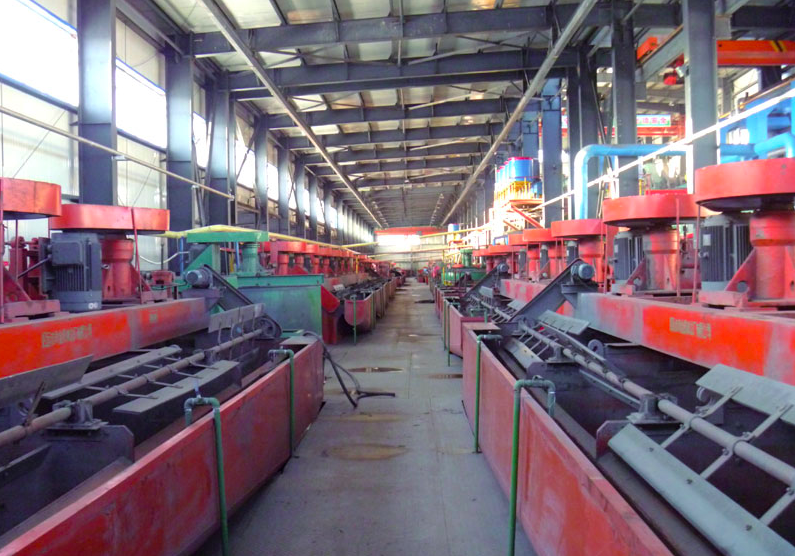
For copper ore beneficiation, a single-stage or two-stage grinding process is often used in copper ore beneficiation plants. The use of two or more stages is typically determined by the requirements for stage selection.
Comparing single-stage and two-stage processes, the primary advantages of single-stage grinding include less equipment, lower investment, and simpler operation. Downtime in one grinding stage prevents the other from being affected, leading to minimal downtime losses. However, the mill's wide feed size range makes proper ball loading difficult, making it difficult to obtain a fine final product and reducing grinding efficiency. When the required maximum final product particle size is 0.2-0.15 mm (i.e., 60%-79% - 200 mesh), a single-stage grinding process is generally used. Small plants can also use a single-stage grinding process to simplify processes and equipment configuration, when a grinding fineness of 80%-200 mesh is required.
The outstanding advantage of two-stage grinding in copper ore concentrators is that it produces a finer product, enabling coarse and fine grinding in separate grinding stages, making it particularly suitable for staged processing. In large and medium-sized plants, when grinding finenesses less than 0.15 mm (80%-200 mesh) are required, two-stage grinding is more economical, resulting in a more uniform product particle size distribution and less over-crushing. Depending on the connection method between the first-stage mill and the classifier, the two-stage grinding process can be divided into three types: open-circuit in the first stage; fully closed-circuit in the second stage; and partially closed-circuit in the first stage, with the second stage always closed.
In practical application, the selection of grinding and grading equipment and processes for copper ore concentrators requires comprehensive consideration of multiple factors, including ore properties, separation requirements, production conditions, and investment budget. It is recommended that prior to construction, a qualified manufacturer with ore processing testing qualifications conduct a test study. Based on the scientific test results, a reasonable grinding and grading process be determined to achieve greater economic benefits.
Optimal control of ore feed to grinding and grading equipment in copper ore concentrators. To achieve optimal control of mill feed, the first requirement is to accurately determine the mill load level—the volume occupied by the material in the mill, also known as the fill rate. In practical optimization, mill power and grinding noise are primarily used to determine changes in the mill fill rate. These two signals are used to monitor the mill in real time. Second, the ore properties must be accurately determined. In mill classification, the coarseness of the ore particles is closely related to the mill load. The automated control system can analyze the mill load trends to optimally distribute ore particles of different properties, thereby improving mill efficiency. Third, the optimal ore yield must be determined. An electronic scale can be installed on the grinding mill to automatically adjust the ore feeding equipment to normal working state by adjusting the ore quantity before starting the system, so as to avoid ore agglomeration caused by long shutdown.
Optimizing the control of grinding concentration in the grinding and classifying equipment of a copper ore beneficiation plant. The most important factor affecting mill efficiency is the mill classification concentration. To optimize the automation system, it is necessary to monitor the overflow concentration of the classifier to determine the mill water content and return sand volume. The return sand moisture content measured by the instrumentation can be used to intelligently determine the discharge concentration, which is now approximately equal to the grinding concentration. For further optimization, an online concentration detection device using a radioactive source (Cs-137) can be installed in the overflow circuit of the ball mill used for milling and flotation. This device utilizes gamma rays transmitted through a pipe to detect the measured medium. A detector on the other side of the pipe receives the remaining radiation, which is processed by a signal processor, displayed on a display, and converted into a standard 4-20 mA output. This allows for more accurate and flexible control of the grinding concentration.
Optimizing the control of the overflow particle size of the grinding and classifying equipment of a copper ore beneficiation plant. To achieve optimal control of the overflow particle size in the grinding and classifying machine, the automation system will detect the amount of discharge water in the classifier to complete the control of the return sand amount. The automation system will implement precise detection through model analysis of mill power, grinding sound, classifier power, return sand water and discharge water to achieve the optimal classification requirements of the overflow particle size. In the optimization of the automation system, an ultrasonic particle size detector can be used to detect the overflow particle size and control the particle size at a fixed level, thereby achieving the purpose of stable control of the overflow particle size. In summary, in the grinding and classifying operation of the copper ore concentrator, in order to achieve the optimization of multiple processes of the automation control system, it is necessary to focus on the optimized control of the mill feed, mill classification concentration and mill classification overflow particle size, increase the mill processing capacity, reduce the system energy consumption, and thus ensure the improvement of the grinding and classification production efficiency.
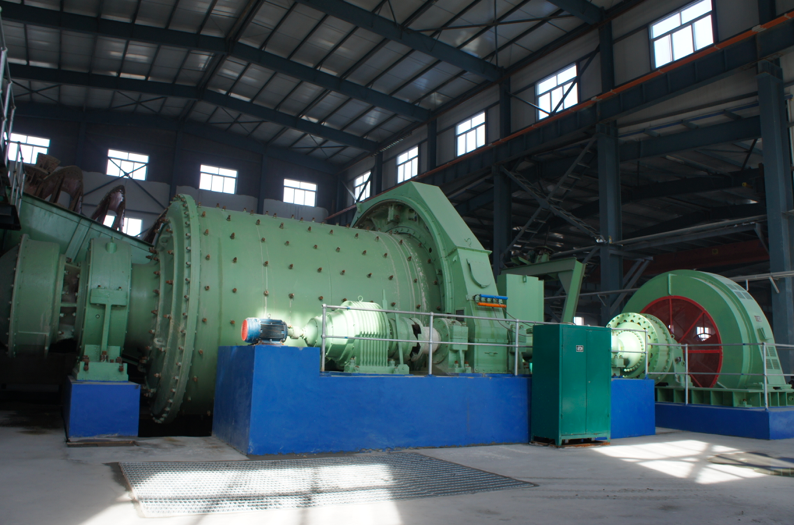
Sorting of sulfide copper ore According to the properties of the ore, different copper ore dressing plant grinding and classification equipment and grinding and classification processes are used: (1) For processing copper ore with extremely fine copper minerals, stage grinding, stage flotation or multi-stage grinding and centralized flotation processes are used. (2) For processing high-sulfur copper-zinc ore, a two-stage grinding and equal flotation process is used to select copper-zinc mixed concentrate. The tailings are added with copper sulfate for flotation to obtain zinc-sulfur mixed concentrate, which is then separated separately to obtain copper concentrate, zinc concentrate and sulfur concentrate; (3) For processing copper ore with a large amount of pyrite, a one-stage grinding and copper-sulfur mixed flotation process is used. The mixed coarse concentrate is then re-grinded and copper and sulfur are separated; (4) For processing copper ore containing low-grade molybdenum, a one-stage grinding and mixed flotation process is generally used to select copper-molybdenum mixed concentrate. The mixed concentrate is then re-grinded and copper and molybdenum are separated; (5) For processing ore with a large amount of ore mud and a large difference in mud and sand floatability, a mud and sand separation process is used. For mixed copper ores containing copper oxide minerals such as azurite and malachite, the grinding and classification equipment and grinding and classification process in the copper ore concentrator first flots the copper sulfide minerals. After the tailings are sulfided with a sulfiding agent, the copper oxide minerals are then flotated.
Commonly used copper ore dressing plant grinding and classification equipment and grinding and classification processes for copper oxide ore processing technology (1) Acid leaching-precipitation-flotation process is suitable for processing copper oxide ores with high copper sulfate content; (2) Heap leaching is used to process copper oxide ores on the upper part of the open-pit mine body. The process is: spray the ore pile with sulfuric acid, replace the leaching liquid with scrap steel, and obtain precipitated copper after concentration and drying; (3) Separation method (one-stage segregation and two-stage segregation) is used to process difficult-to-select copper oxide ores with high bound copper content; (4) Leaching-extraction-electrodeposition method (Figure 4) is suitable for processing low-grade copper oxide ores and mixed copper ores; (5) Bacterial leaching method is suitable for processing copper ore resources with low grade, complex copper mineral occurrence conditions, and which cannot be reasonably utilized by the mining industry, such as copper-containing waste rock.
The grinding and classification equipment and grinding and classification process in copper ore concentrators primarily consists of crushing, ball milling, classification, flotation, and concentrating. For rare and precious polymetallic ores such as nickel, cobalt, molybdenum, and gold, the rougher copper concentrate can be further flotated to separate nickel, cobalt, molybdenum, and gold concentrates. Flotation of disseminated copper ore generally follows a relatively simple process: a single stage of grinding, with a fineness of approximately 50% to 70% below 200 mesh, followed by one roughing round, two to three concentrating rounds, and one to two scavenging rounds. If the disseminated copper ore has a relatively fine particle size, a staged grinding process may be considered. Concentrators processing bornite generally employ a staged grinding process, with the rougher concentrate regrinding and then concentrating. This is essentially a mixed-preferential flotation process. After a first stage of rough grinding, roughing, and scavenging, the rougher concentrate is regrinded and then concentrating to produce high-grade copper and sulfur concentrates. The coarse grinding fineness of -200 mesh accounts for approximately 45% to 50%, while the regrind fineness of -200 mesh accounts for approximately 90% to 95%. In dense copper ores, due to the dense coexistence of chalcopyrite and pyrite, pyrite is often activated by secondary copper minerals, resulting in a high pyrite content, making it difficult to suppress and sort. The sorting process requires the simultaneous production of copper concentrate and sulfur concentrate. The tailings after copper sorting are typically sulfur concentrate. If the gangue content in the ore exceeds 20% to 25%, further sorting is required to obtain sulfur concentrate. Two-stage or stage grinding is often used to process dense copper ores, requiring a finer grinding fineness. The dosage of reagents is also high, with xanthate dosages exceeding 100g/t of ore and lime at least 8-10kg/t of ore.
my country boasts a vast territory and abundant copper resources. In copper ore beneficiation operations, grinding and grading equipment in copper ore beneficiation plants is a critical component of the plant's production process. The ability to control the grinding and grading process is a major factor influencing the plant's resource utilization and profitability. Automating the grinding and grading equipment and processes in copper ore beneficiation plants not only stabilizes the overflow particle size but also improves the copper ore grade, ensuring stable and smooth production. Ore beneficiation grinding and grading has long been a focus of discussion and research among engineers. Grinding and grading is a primary task in many copper beneficiation operations. Before the 1950s, grinding and grading operations in my country were primarily performed by design. As labor intensity increased, maintaining stable production became difficult. With the advancement of technology and the advancement of grinding machinery and equipment, grinding and grading in copper beneficiation plants has gradually become automated, ensuring timely and reliable system operation and addressing the long-standing shortcomings of manual operation processes in copper beneficiation plants, such as low efficiency and lack of transparency.



