
Quartz sand purification process
The quartz sand purification process primarily includes roughing, crushing, water quenching, pulverization, classification, scrubbing, chemical acid leaching, flotation (both with and without fluorine), gravity separation, magnetic separation, and microbial leaching. In actual production, multiple methods are often combined to improve quartz sand grade and yield, while fully utilizing resources.
Principle of quartz sand purification process: The raw silica ore is washed to remove mud and sand in a ore washer, and after coarse crushing in a crusher, the qualified quartz material is put into a roasting furnace and roasted at 850℃-980℃ for 6 hours. After roasting, the quartz material is dragged into clean water for water quenching, and then manually sorted to remove impurities and sent to a crusher for crushing and screening. The quartz sand that passes through the screen is then sent to a magnetic separator. After magnetic separation, the quartz sand is put into an acid tank equipped with HCl and HF mixed acid and soaked for one week. It is then subjected to flotation, dehydration, baking, cooling, and packaging to produce high-purity quartz sand.
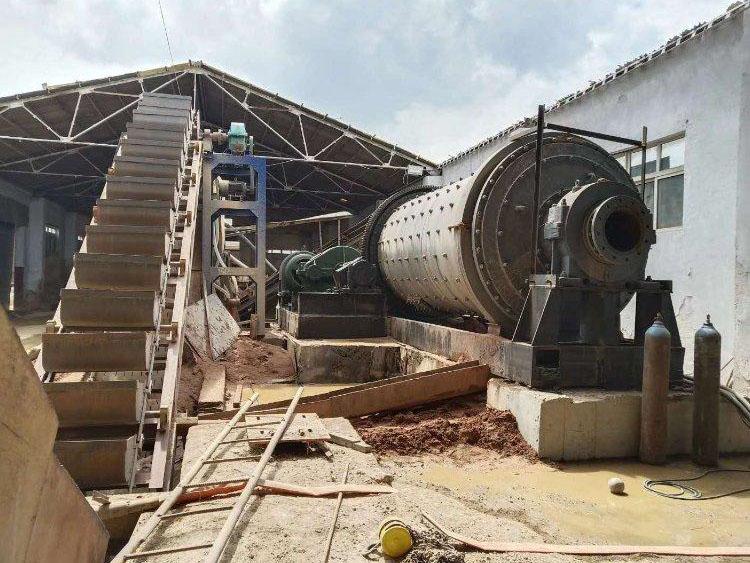
Detailed Process Flow for Quartz Sand Purification:
1. Roughing: Removes visible impurities and foreign matter from various types of quartz ore.
2. Crushing: Uses specialized crushers to crush the quartz ore into particles ranging from 1 to 20 mm in size. After mining larger ores such as vein quartz or quartzite, the ore is first separated from the raw ore to remove particles with lower grayness and higher purity. These particles are then crushed in a jaw crusher or cone crusher. A circuit consisting of a circular vibrating screen and crushing equipment ensures the particle size of the crushed product. The crushed product is then processed in a sand making machine, ultimately producing quartz sand of a desired particle size.
3. Water Quenching: The calcined quartz particles are rapidly cooled in cold water to remove internal bubbles, water marks, and encapsulated impurities, thereby cracking the mineral. Quartz calcination and water quenching, also known as thermal crushing, involves the transformation of quartz's crystal form (α-quartz → β-quartz → β-tridymite) during high-temperature calcination. This causes the crystal to expand in size, exacerbating existing defects. During water quenching, the crystal suddenly shrinks in size, rapidly increasing internal stress at the defects and causing the crystal to fracture at these locations. This fracture exposes inclusions and impurities from the original quartz's cracks to the particle surface, making them easier to remove during acid treatment.
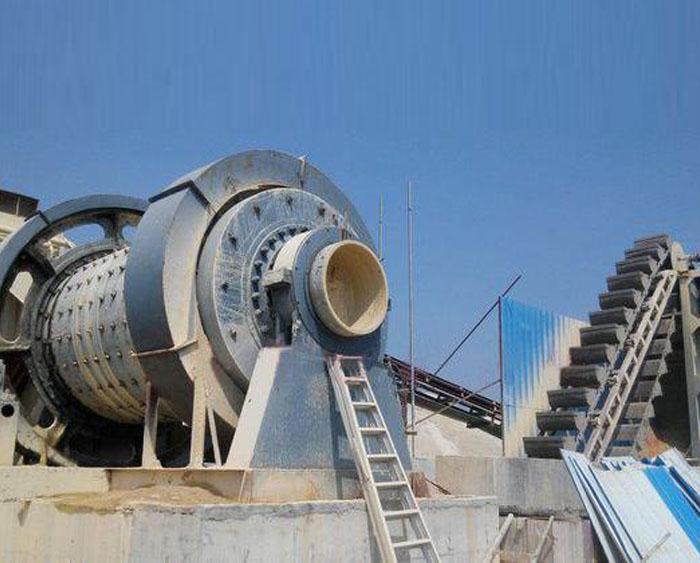
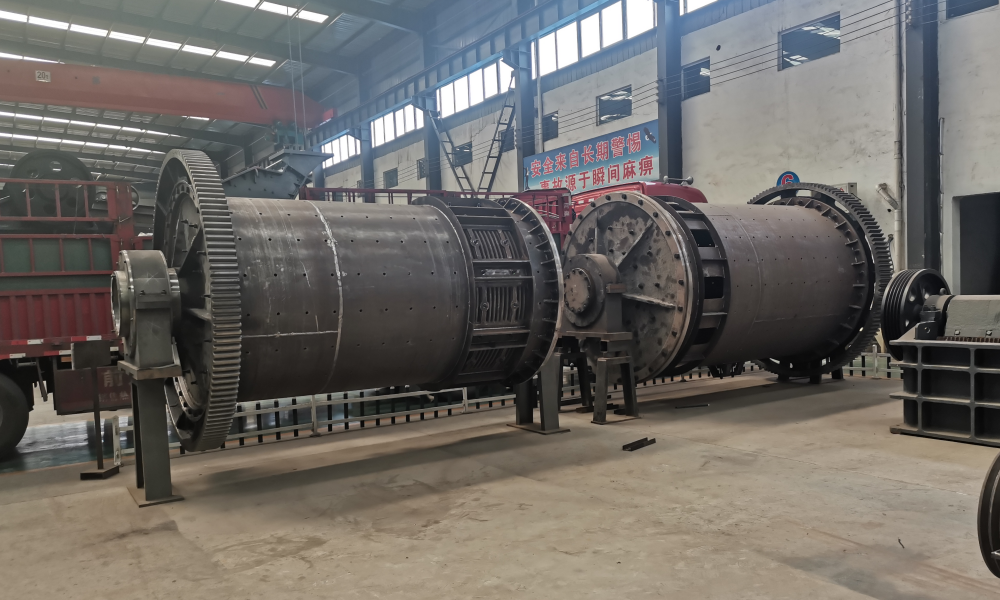
4. Pulverization: The raw material is wet or dry ground to produce ultrafine quartz sand with a particle size of 5-50μm. Quartz sand grinding typically utilizes a two-stage grinding process, either a single-stage grinding process or a grate ball mill plus an overflow ball mill. The second stage of grinding is closed-circuited with a spiral classifier or hydrocyclone to ensure fineness. To address the shortcomings of traditional grinding mills, such as rapid wear and high energy consumption, large-scale mining equipment manufacturers such as Xinhai have implemented a series of ball mill upgrades. These include adopting new wear-resistant rubber liners, replacing rolling bearings with sliding bearings, and increasing mill size. These measures have not only improved mill operation efficiency but also extended equipment life, creating economic benefits for the company.
5. Magnetic Separation: High-gradient magnetic separation equipment with a magnetic field strength of 50-15,000 gauss is used to remove magnetic minerals such as limonite, hematite, mica, garnet, pyrite, and ilmenite from the ore. The process generally involves at least two stages of magnetic separation. The leading stage primarily removes strongly magnetic materials from the ore to prevent adverse effects on subsequent operations. The second stage primarily removes weakly and extremely weakly magnetic minerals from the ore. This leading stage typically utilizes a permanent magnet drum separator with a magnetic field strength of approximately 6,000-8,000 gauss. The second stage of magnetic separation generally uses a permanent magnet high-gradient magnetic separator or an electromagnetic induction magnetic separator. The former is more popular in the market due to its low energy consumption, light weight, higher magnetic field gradient, and relatively low investment. Some believe that magnetic separation is solely for iron reduction, but this is not the case. Practice has proven that magnetic separation can, to a certain extent, reduce the content of impurities such as aluminum, potassium, and sodium. Furthermore, some impurities that magnetic separation can remove cannot be removed by acid washing or flotation. Magnetic separation is an essential step in the production of high-purity quartz.
6. Classification: Classification equipment is used to separate the raw materials into various particle size ranges according to standards. In subsequent processing, these products are processed separately according to their particle size ranges. Classification equipment can be divided into screening machines and airflow classifiers. The selection depends on the production volume and the required particle size range.
7. Calcination: Using a specialized roasting furnace, the raw quartz ore particles are roasted at 300°C-1500°C for 2-5 hours. Chlorination roasting is the primary method for removing quartz lattice impurities, and different chlorinating agents have significant differences in their interaction and effectiveness with lattice impurities. (Please contact us for more detailed information on specific results.)
8. Water Crushing: The calcined quartz particles are quickly cooled in room temperature hot water to dissolve the soluble substances produced by calcination. The water is then heated for 0.5-2 hours to increase the solubility of these soluble substances.
9. Flotation: A flotation agent is added to the quartz sand powder after water crushing to remove impurities with a specific gravity less than 1. This primarily removes non-magnetic impurities such as feldspar and pure muscovite.
10. Deionized Water Washing: Deionized water is used to wash away any remaining flotation agent and quartz. Impurities on the sand surface;
11. Drying: After washing with deionized water, the quartz sand is first air-dried (drying in the sun) to remove large amounts of water. It is then dried in specialized drying equipment and heated to 100-200°C.
12. Acid Leaching: The dried quartz sand is placed in an immersion tank. Under dry, high-temperature conditions, the acid used for leaching (sulfuric acid, hydrochloric acid, nitric acid, or hydrofluoric acid) is quickly added at a concentration of 5%-20%. Stirring is performed at a constant temperature of 30-100°C for 2-24 hours to remove trace metallic and non-metallic impurities from the fine quartz sand powder. Acid leaching is one of the important processes in the purification of high-purity quartz sand. It is a necessary process whether it is used to prepare quartz glass for electric light sources or quartz raw materials for photovoltaic and semiconductor devices. Acid leaching is mainly used to remove metal oxides and some silicate minerals soluble in acid, as well as trace impurities such as soluble aluminum and iron in the ore. After roasting, water quenching, sorting, and strong magnetic separation, most oxides and impurity minerals have been removed, but some oxides and impurity minerals are still in the grain boundaries, microcracks and crystals, which are difficult to remove. Therefore, long-term acid leaching is used to remove the metal oxides and some silicate minerals soluble in acid. To remove these impurities, the process may be adjusted appropriately based on the ore's characteristics to achieve the desired result, such as using a two-stage pickling process or initial acid leaching. In short, to produce high-purity quartz, every possible method and method should be utilized. Some processes incorporate ultrasonic treatments to ensure the effectiveness of the pickling process.
13. Deionized Water Washing: After acid leaching, the raw material is washed with deionized water to remove any acid and other impurities until neutral.
14. Drying and Packaging: The raw material is dried using specialized drying equipment and vacuum-packed in a cleanroom to produce the finished product.
In actual production, quartz sand purification processes can be divided into dry and wet purification processes. Dry beneficiation produces lower-quality products, primarily used as building materials. Wet beneficiation, on the other hand, is a complex process that yields high-quality products. It can be said that all high-quality quartz sand is produced through wet beneficiation. Common purification processes for high-purity quartz sand include water washing, graded desludging, scrubbing, magnetic separation, flotation, and acid leaching with microbial leaching. Electrostatic separation and thermal chlorination are also further advanced processes for quartz sand.
Quartz Sand Purification Process: Introduction to Common Quartz Sand Purification Methods: Quartz sand beneficiation and purification involves removing small or trace impurities from quartz sand to produce refined quartz sand. Currently, common quartz sand beneficiation and purification methods primarily fall into two categories: physical and chemical. Physical methods include water washing and graded desliming, scrubbing, magnetic separation, and flotation; chemical methods primarily include acid leaching.
I. Quartz Sand Purification Process - Introduction to Quartz Sand Water Washing and Graded Desliming:
The SiO2 grade in quartz decreases as the quartz particle size decreases, while the grade of impurity minerals such as iron and aluminum increases. This phenomenon is particularly pronounced in quartz containing a high concentration of clay minerals. Therefore, prior to selection, water separation of the raw quartz ore using equipment such as spiral scrubbers, drum screens, hydrocyclones, desliming buckets, and hydraulic classifiers is essential and highly effective. As a pretreatment method before ore selection, water washing and classification desliming have been used early and widely, but their removal effect on thin film iron and adhesive impurity minerals present on the quartz surface is not significant.
II. Quartz Sand Purification Process - Introduction to the Quartz Sand Scrubbing Method:
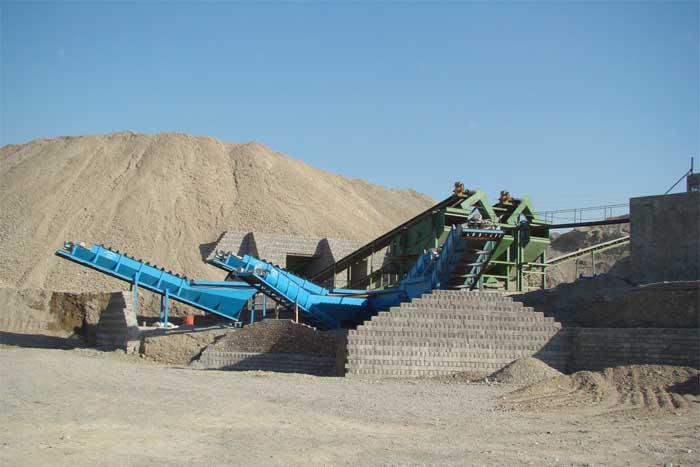
The scrubbing method primarily utilizes mechanical force and the abrasive forces between sand particles to remove thin film iron, adhesive, and clay impurities from the surface of the quartz sand. It also further breaks down unorganized mineral aggregates, and then undergoes classification to further purify the quartz sand. Currently, there are two main methods for quartz sand scrubbing: rod scrubbing and mechanical scrubbing. For mechanical scrubbing, the main factors affecting scrubbing effectiveness are the structural characteristics and configuration of the scrubbing machine, followed by process factors such as scrubbing time and scrubbing concentration. Research has shown that scrubbing concentrations between 50% and 60% are most effective for quartz sand ore, but this also increases the difficulty of quartz ore beneficiation and purification. In principle, the scrubbing time should be limited to achieving initial product quality requirements and should not be too long. Excessive scrubbing time increases equipment wear, energy consumption, and the cost of ore beneficiation and purification. For some quartz ores, mechanical scrubbing and erasing effects are not ideal. Rod grinding can be used for scrubbing. If necessary, chemicals can be added to increase the electric repulsion between the impurity minerals and the surface of the quartz particles, thereby enhancing the separation effect between the impurity minerals and the quartz particles.
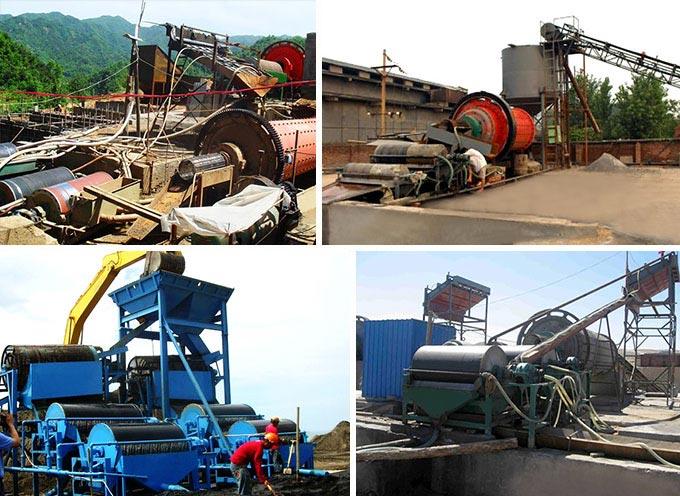
III. Quartz Sand Purification Process - Introduction to Quartz Sand Magnetic Separation:
Magnetic separation can minimize the removal of weakly magnetic impurities, including intergrown particles, such as hematite, limonite, and biotite. High-intensity magnetic separation typically utilizes a wet high-intensity magnetic separator or a high-gradient magnetic separator. Generally speaking, quartz impurities primarily composed of weakly magnetic impurities such as limonite, hematite, and biotite can be separated using a wet high-intensity magnetic separator at a magnetic field strength of 10,000 Oe or higher. For strongly magnetic minerals primarily composed of magnetite, weak or medium magnetic separators offer better separation results. Research has shown that the number of magnetic separations and magnetic field strength significantly influence the effectiveness of magnetic separation for iron removal. As the number of magnetic separations increases, the iron content gradually decreases. While a certain magnetic field strength can remove most iron, even significantly higher magnetic field strengths do not significantly change the iron removal rate. Furthermore, the finer the quartz sand particle size, the better the iron removal efficiency. This is because fine-grained quartz sand contains a higher concentration of iron impurities. When the raw quartz sand contains a lot of impurity minerals, it is impossible to purify the quartz sand into high-purity sand by only scrubbing, desludging and magnetic separation.
IV. Quartz Sand Purification Process - Introduction to Quartz Sand Flotation:
Flotation primarily removes non-magnetic impurities such as feldspar and mica from quartz sand. Quartz sand flotation methods primarily include fluoride-containing flotation and fluoride-free flotation. Fluoride-containing flotation utilizes a cationic collector and hydrofluoric acid activator within an acidic pH range. However, its disadvantage is that fluoride-containing wastewater poses a serious environmental risk and requires treatment before discharge. Fluoride-free flotation utilizes the structural differences between quartz and feldspar, rationally adjusting the ratio and dosage of a mixed anionic and cationic collector. By utilizing their different zeta potentials, feldspar is preferentially floated out, achieving separation. Generally speaking, after scrubbing, desludging, magnetic separation, and flotation, the purity of quartz can reach 99.3%-99.9%, essentially meeting industrial sand requirements.
V. Quartz Sand Purification Process - Introduction to Quartz Sand Acid Leaching:
Acid leaching utilizes the fact that quartz is insoluble in acid (except HF), while other impurity minerals can be dissolved by acid, thereby further purifying quartz. Commonly used acids for acid leaching include sulfuric acid, hydrochloric acid, nitric acid, and hydrofluoric acid, and reducing agents include sulfurous acid and its salts. Research has found that these acids are effective in removing non-metallic impurities from quartz. However, the type and concentration of acid significantly influence the removal of different metallic impurities. It is generally believed that various dilute acids are effective in removing Fe and Al, while more concentrated sulfuric acid, aqua regia, or HF are most effective in removing Ti and Cr. A mixture of these acids is typically used for acid leaching to remove impurity minerals. Due to the dissolution of HF on quartz, the HF concentration is generally not allowed to exceed 10%. In addition to the acid concentration, the acid dosage, leaching time, temperature, and slurry agitation can also affect the quartz acid leaching effect. The control of various factors in acid leaching should be based on the final grade requirements of quartz, and the acid concentration, temperature and dosage should be reduced as much as possible, and the acid leaching time should be shortened to achieve quartz purification at a lower mineral processing cost.
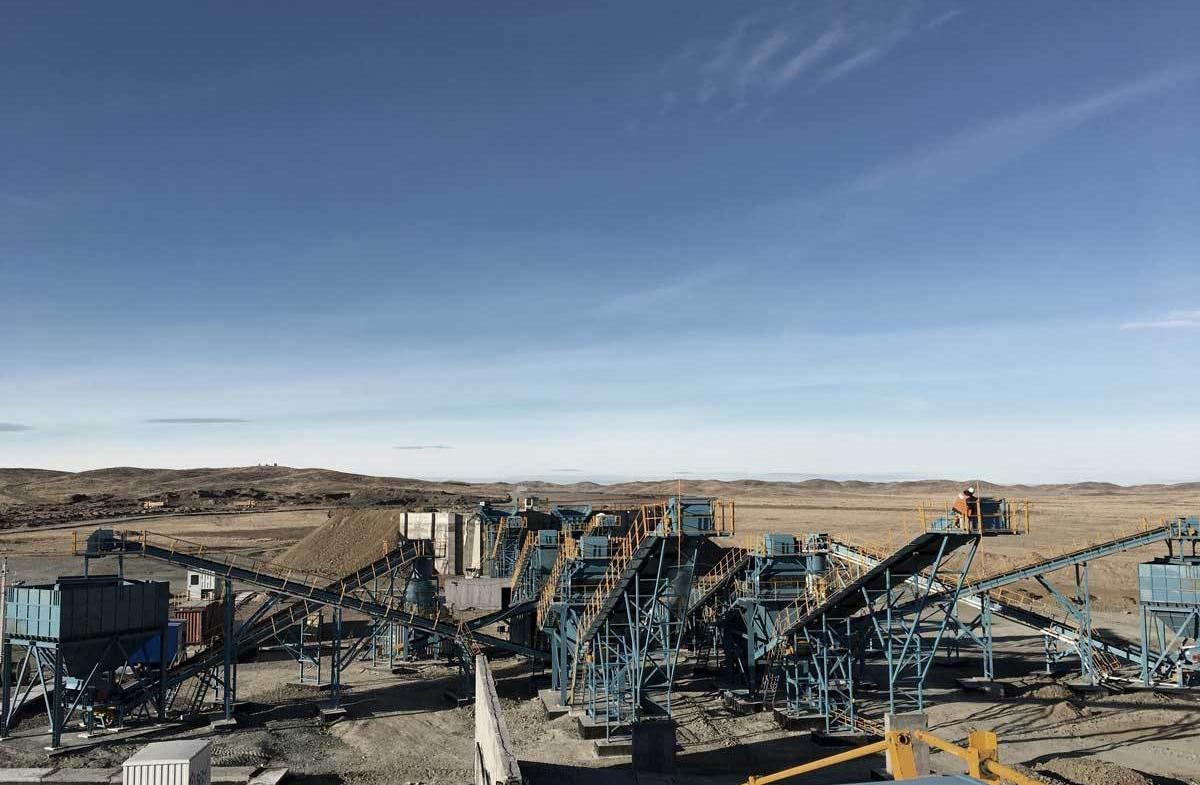
Common quartz sand purification processes used in quartz sand processing plants include:
1. Quartz sand scrubbing, classification, and desludging. During the weathering and sedimentation process, large amounts of clay minerals and iron form cement or adhesion minerals on the quartz surface. Scrubbing, classification, and desludging are used to remove clay impurities, argillaceous iron, and some film-forming iron.
2. Quartz sand scrubbing, desludging, and magnetic separation purification. Generally speaking, weakly magnetic minerals such as limonite, tourmaline, hematite, and biotite, which are common impurities in quartz sand, can only be removed through magnetic separation. In actual production, wet high-intensity magnetic separation is often used for separation, with a magnetic field strength of approximately 13,000 oersteds.
3. Quartz sand rod scrubbing, desludging, magnetic separation, and flotation purification. The rod mill scrubbing process not only enhances the scrubbing effect, but also, due to the presence of appropriate steel rods, changes the particle size composition of the raw sand, providing a mineralogical basis for further quartz sand separation. Flotation is used to reduce feldspar, and hydrofluoric acid flotation is commonly used abroad.
4. Quartz Sand Rod Milling - Desliming - Magnetic Separation - Flotation - Acid Leaching Process. After scrubbing, magnetic separation, and flotation separation, the raw quartz sand ore is essentially free of numerous impurity mineral particles. The silica purity generally reaches 99.5-99.9%, which is sufficient for most industrial uses. However, to further refine it into ultra-high-purity quartz sand, impurities attached to the quartz particles in the form of spots and inclusions must be acid-leached. Depending on the specific impurity minerals required for different industrial applications, acid leaching with mixed acids of varying concentrations and ratios is used.
5. Quartz Sand Enhanced Chemical-Enhanced Scrubbing - Graded Desliming - Magnetic Separation Process. By improving the structure of existing scrubbing equipment, more than 80% of impure iron and aluminum can be removed through efficient and powerful scrubbing with chemical addition and graded desludging. Magnetic separation mainly removes iron-containing impurities. After processing through this process, high-quality refined quartz sand with SiO2 ≥ 99.8%, FeO3 ≤ 0.023%, and Al2O3 ≤ 0.05% can be obtained, meeting the requirements for first-class optical glass sand.
In the actual mineral processing process, the choice of quartz sand purification process is often determined by a variety of factors, including the properties of the quartz sand ore, the conditions of the processing plant, and the investment budget. It is recommended that when making a selection, first understand the quartz sand itself and select a targeted process based on the mineral processing test report to achieve ideal technical and economic benefits.



