
Copper-cobalt mining equipment
Copper-cobalt mining equipment | Copper-cobalt mining machinery is a complete set of mineral processing equipment that separates copper-cobalt minerals from gangue to the greatest extent possible, thereby obtaining high-grade copper-cobalt ore concentrate; the equipment recovers the coexisting copper-cobalt ores as separate concentrates as possible, removes harmful impurities, and comprehensively recovers them, thereby making economical and rational use of copper-cobalt mineral resources.
Copper-cobalt mining equipment | Copper-cobalt mining machinery primarily includes copper-cobalt ore crushing equipment, copper-cobalt ore grinding equipment, copper-cobalt ore screening equipment, copper-cobalt ore mixing equipment, copper-cobalt ore flotation equipment, and copper-cobalt ore drying equipment. Different equipment processes should be developed for different ore types. Therefore, the equipment process can reflect the process characteristics of the ore being processed. Ore dressing plant processes should be promptly improved based on changes in ore properties and the adoption of new processes to improve technical and economic indicators.
1. Copper-Cobalt Ore Crushing Equipment: Coarse Jaw Crusher, Fine Jaw Crusher, etc.
2. Copper-Cobalt Ore Grinding Equipment: Ball Mills, Dry Ball Mills, Wet Ball Mills, Grate Mills, Ball Mills, etc.
3. Copper-Cobalt Ore Screening Equipment: Spiral Classifiers, High-Frequency Screens, Linear Screens, etc., often used in conjunction with ball mills to form a closed circuit.
4. Copper-Cobalt Ore Mixing Equipment: Cobalt ore beneficiation plants commonly use a mining mixing drum. Its main function is to agitate the slurry and add water and reagents before flotation.
5. Copper-Cobalt Ore Flotation Equipment: XJK flotation cells, Sf flotation cells, etc.
6. Copper-Cobalt Ore Drying Equipment: Drum dryers, thickeners, dehydrators, etc. Drying equipment is often used to dehydrate copper concentrate.
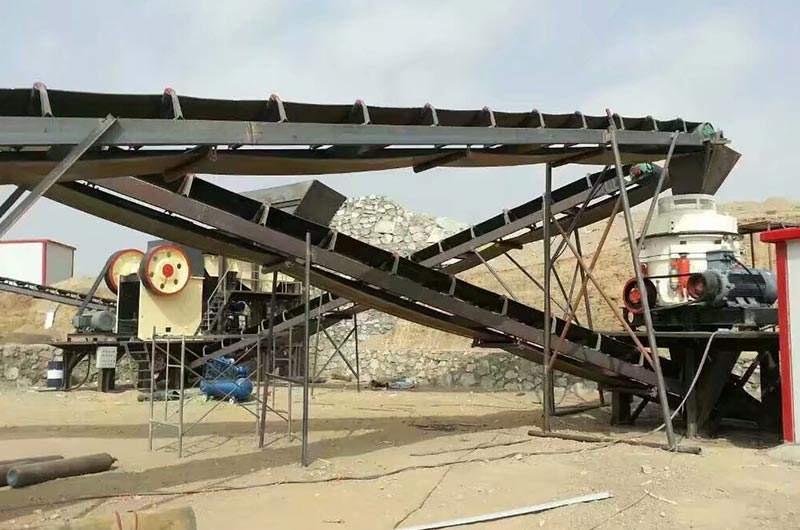
Copper-cobalt mining equipment | Copper-cobalt mining machinery - Copper-cobalt ore crushing production line: The copper-cobalt ore in the silo is evenly fed into the jaw crusher by a vibrating feeder for primary crushing. The stone after primary crushing is sent to the cone crusher for secondary crushing via a belt conveyor. The copper-cobalt ore after secondary crushing is sent to the vibrating screen by the conveyor for screening. After crushing, the material that does not meet the particle size requirements is sent back to the cone crusher for secondary crushing. The material that meets the particle size requirements is sent to the vibrating screen, vibrated and screened into different specifications according to the particle size, and then sent to the corresponding finished product area by the conveyor.
Copper-Cobalt Mining Equipment | Copper-Cobalt Mining Machinery - Copper-Cobalt Grinding and Classification Production Line: A grinding mill and classifier are used together to form the grinding and classification process. Grinding large ore to the required fineness is generally carried out in stages, with each stage completing only a portion of the grinding process. These stages are called grinding stages. Copper-Cobalt ore concentrators typically use a one- or two-stage grinding process, rarely employing more than three stages. The number of grinding stages depends primarily on the scale of the mine, the grindability of the ore, the crystal size of the useful minerals, the feed size, and the final product size. Generally, a one-stage grinding process is suitable for ore with an upper limit of greater than 0.15 mm; a two-stage grinding process is recommended for ore with an upper limit of less than 0.15 mm. The appropriate number of grinding stages should be determined based on specific circumstances and after technical and economic comparisons.
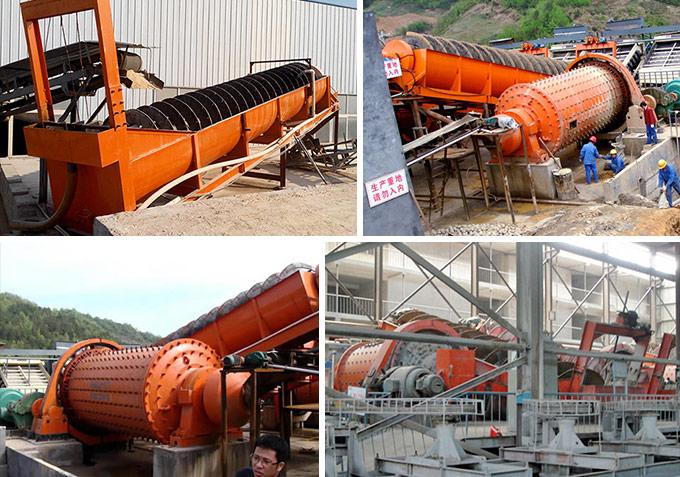
The fine grinding effect of a wet ball mill primarily depends on the grinding and cracking effect of the grinding media during its circular motion. However, the fineness of a wet ball mill is affected by the grinding concentration, and therefore also by the original ore particle size, the grinding concentration, and the ball loading rate. When the properties of the original ore change, if coarse particles increase, the feed rate should be kept constant, and the post-water should be reduced to increase the grinding concentration to maintain the fineness. If fine particles increase, the post-water should be increased and the feed rate should be appropriately adjusted to reduce over-damage. Under the conditions of maintaining constant ore properties and media conditions, within a certain range, ball mill fineness generally increases with increasing grinding concentration, while conversely, fineness decreases. Ultimately, ball mill fineness is controlled by adjusting the feed water rate to adjust the grinding concentration. In addition to being affected by the amount of sand return, wet ball mill fineness should also be appropriately reduced by reducing the grinding concentration and increasing the discharge rate to reduce over-damage. When the amount of returned sand is reduced and the original ore is coarser, the grinding concentration in the ball mill before the return water should be reduced.
Copper-Cobalt Mining Equipment | Copper-Cobalt Mining Machinery - Copper-Cobalt Flotation Concentration Unit: The flotation cell is a key device for flotation. After the slurry is fully aerated and agitated, the useful minerals are concentrated, completing the flotation operation. The selection and operation of flotation reagents are crucial steps in the process to achieve optimal beneficiation results. Compared with other beneficiation methods, flotation is economical, reasonable, and highly effective. Note: This process is designed according to a standard process flow and can be optimized to meet the customer's annual production volume and requirements.
Copper-Cobalt Mining Equipment | Copper-Cobalt Mining Machinery. The flotation process of a copper-cobalt flotation cell is broadly divided into three independent yet closely interconnected flotation stages: roughing, scavenging, and concentrating. The froth products from the concentrating and roughing zones are generally sent to the concentrating zone for one or more enrichment and concentrating steps. The selected froth forms the final flotation concentrate. Managing the amount of middlings scraped from the scavenging zone and the tailings from the concentrating zone is a crucial issue in the flotation process. Controlling the optimal amount of middlings is crucial for the entire flotation operation. Controlling the amount of middlings circulating depends on factors such as whether the flotation cell is full and unable to flow, whether the flotation cell exhibits poor fluidity, and whether the slurry level in the flotation cell is high. Secondly, empirical analysis should be used to determine whether this is caused by factors such as upper and lower operations and fluctuating process conditions. The return rate of middlings per vessel is controlled at 40-80%. The last row of froth is generally best when it has a lighter metallic sheen, indicating distinct mineral separation layers. Lustrous froth in the dead corners of the flotation cell indicates proper adjustment of flotation reagents and other process conditions, contributing to tailing reduction. It's difficult to determine the grade of flotation concentrate using panning methods; optimally, the froth layer in the concentrator should be kept at a thickness of 200-300mm or greater. Scraping slurry into the concentrate during concentrating operations is strictly prohibited, as this will result in a high-grade concentrate.
In the design of a copper-cobalt ore concentrator, the selection and calculation of copper-cobalt mining equipment and machinery for the beneficiation process are determined based on the material throughput and corresponding product quality specified in the design process flow, taking into account the material's mechanical and physical properties, particle size composition, equipment performance and manufacturing quality, production quotas of similar enterprises, and the concentrator's work system.
Principles for selecting copper-cobalt mining equipment and machinery:
1. The selected equipment must be suitable for the concentrator's production capacity, the operational characteristics of the designed process flow, and local conditions.
2. The selected equipment must be both technologically advanced and reliable, ensuring production while allowing for flexibility and ease of operation and maintenance.
3. Equipment should be selected based on the scale of the concentrator, with large-scale equipment being the most feasible to conserve floor space, reduce investment, and improve labor productivity.
4. The selection of key equipment should be based on research and comparison of multiple technical and economic options. Technical and economic comparison indicators for key equipment include equipment weight, installed power, equipment investment, and the area and volume of the workshop where the equipment can be installed.
5. When selecting key equipment, consider the selection of auxiliary equipment as well. The selection and appropriateness of auxiliary equipment during the design process are crucial to the smooth progress of the trial run and commissioning. Thorough consideration should be given to avoid modifications or replacements during the trial run, which could impact the official commissioning date.
6. When selecting equipment within each series, similar equipment should be kept as similar as possible to facilitate maintenance and component replacement, while also reducing spare parts inventory.
The main process of copper-cobalt mine equipment | copper-cobalt mine machinery beneficiation process adopts flotation-magnetic combined process. Before the copper-cobalt ore flotation process, a rapid pre-decarbonization flotation process is used to remove carbonaceous minerals, reducing the impact of carbonaceous materials on subsequent flotation operations and concentrate quality. The decarbonized tailings are first subjected to one roughing, three concentrating, and three scavenging to recover copper-cobalt sulfide. The copper-cobalt sulfide flotation tailings are then subjected to one roughing, three concentrating, and three scavenging to recover copper-cobalt oxide. The flotation tailings and carbonaceous materials are combined and subjected to one roughing, one concentrating, and strong magnetic separation to further recover copper-cobalt ore. The concentrate product adopts a two-stage dehydration process of thickening + filtration.
Copper-cobalt mine equipment | Copper-cobalt mine machinery should consider the following when selecting the flotation process:
(1) First, determine the internal structure of the flotation process and the principle process of flotation.
(2) Requirements for flotation product indicators. When the flotation slime has poor floatability and the flotation quality indicators are very high, a more complex flotation process should be adopted. .
(3) As the flotation process becomes more complex, the more times the product undergoes sorting, the better the product quality will be. However, as the flotation process becomes more complex, it significantly affects other economic indicators, such as reduced flotation machine yield, increased reagent consumption, water consumption, and electricity consumption. (4) The more complex the flotation process, the more the intermediate products are processed, making operation and management more complicated and difficult. If the intermediate products are not recycled or further processed in the same unit, there will be more difficulties in equipment configuration and product transportation. The recycling of intermediate products increases the crushing effect of coal slime, which is detrimental to flotation and filtration.
The specific operation process for copper-cobalt mining equipment and machinery is as follows:
1. Before starting copper-cobalt mining equipment and machinery, a detailed inspection must be conducted. According to the production process requirements, check that all pipeline gates are properly closed, that all water pipes and slurry pipes are unobstructed, and that all reducers and fuel tanks have sufficient and high-quality oil, that the oil lines are unobstructed, and that the foam scrapers are in good working order. Prepare to add appropriate reagents based on the properties of the ore. Then, turn the machine one by one, starting from the rear and moving forward according to the slurry flow sequence. Start by opening the water pipes, then feed the ore.
2. After the copper-cobalt mining equipment and machinery are operating normally, ensure that the slurry surface is stable and the amount of foam scraped out is appropriately controlled to ensure effective scraping. Be careful to prevent slurry pipe blockage, foam layer folding, and sludging. Regularly inspect the equipment's operation. After the operation is completed, the flotation machine is stopped. During normal parking, the flotation machine must be kept without load. To avoid clogging of the feed pipe, the clean water pipe should be opened first to drain the slurry before the machine is stopped. In the case of sudden accident parking, the slurry does not need to be drained for a short period of time, but the impact of the accident will last longer, so the slurry in the tank should be discharged.
A copper-cobalt mine is a vein-disseminated copper-cobalt mine. The mineral composition of the ore is relatively simple. Except for cobalt-containing pyrite, chalcopyrite and some pyrrhotite, there are few other metal minerals. Non-metallic minerals include quartz, calcite, sericite, etc. The average grade of the selected ore contains 4% sulfur, 0.8% copper and 0.02% cobalt. The oxidation rate is low, and it is a low-sulfur and easy-to-select ore. The ore processing plant adopts a process of preferentially flotating copper, dehydrating the copper tailings through a thickener, and then selecting cobalt (pyrrhotite) to recover copper and cobalt. Copper-cobalt mine equipment | The characteristics of mechanical flotation of copper-cobalt mines are: (1) The copper flotation cycle adopts a separate selection process, that is, the coarse concentrate floated out of the first two troughs of roughing is separately selected once to obtain the final copper concentrate, and the coarse concentrate floated out later is selected twice to obtain the final concentrate. (2) The selective collector ether aminothioester (collector 234) and the foaming agent phenylethyl ester oil are used to separate copper-cobalt pyrite. Compared with the original xanthate and pyridine formula, the cobalt recovery rate is increased by about 10% while maintaining the copper index, and the lime consumption is reduced from 4 kg/t to 2-3 kg/t. Sulfuric acid activation is not required for cobalt selection.
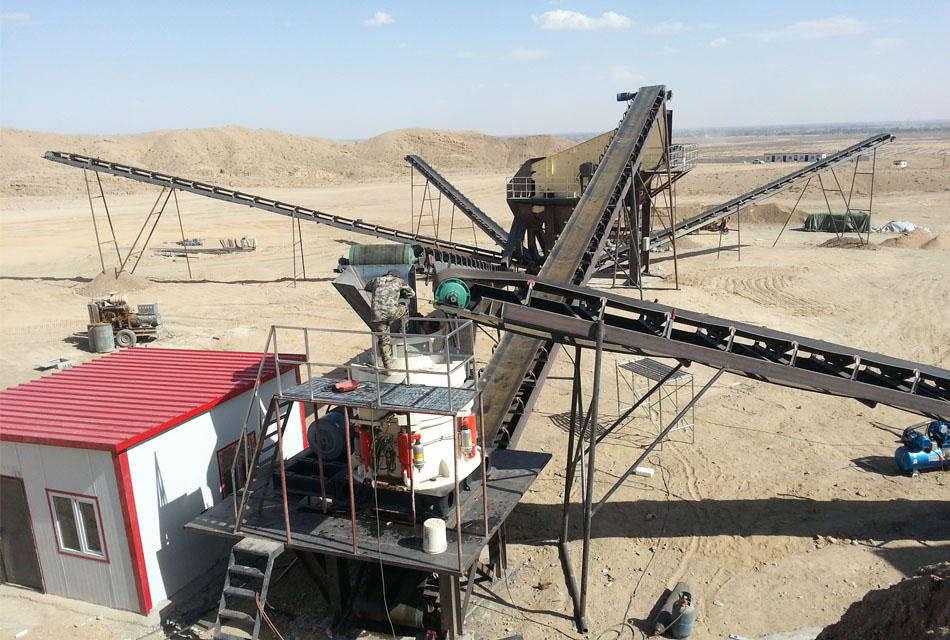
Based on the ore properties and beneficiation test results of a copper-cobalt mine in the Democratic Republic of the Congo, and drawing on the successful experience of similar mines, our company designed a beneficiation process and copper-cobalt mining equipment suitable for this mine. We also conducted selection research on coarse grinding and flotation equipment tailored to the specific conditions of the mine. The beneficiation plant's production results demonstrate that beneficiation indicators have essentially met design targets.



