
Lithium mining equipment
Lithium Mining Equipment | Lithium mining machinery is primarily divided into feeding equipment, primary crushing equipment, fine crushing equipment, screening equipment, conveying equipment, grinding equipment, classifying equipment, mixing equipment, flotation equipment, gravity separation equipment, magnetic separation equipment, thickening equipment, and filtration equipment.
Lithium Mining Equipment | Lithium mining machinery primarily includes vibrating feeders, jaw crushers, cone crushers, vibrating screens, belt conveyors, energy-saving ball mills, spiral classifiers, mixing drums, flotation machines, magnetic separators, jigs, spiral chutes, thickeners, disc filters, water pumps, and slurry pumps.
Lithium Mining Equipment | Mechanical beneficiation methods for lithium ore include hand separation, flotation, chemical or combined chemical-flotation separation, thermal separation, radioactive separation, and particle flotation. The first three are the most commonly used. Flotation is the primary beneficiation method for conventional pegmatite-type spodumene.
Lithium Mining Equipment | Mechanical flotation is currently the predominant method for lithium ore separation. All industrially valuable lithium ores can be enriched through flotation, especially fine-grained disseminated lithium ores. Common lithium flotation methods include direct flotation and reverse flotation.
Lithium Mining Equipment | Lithium Mining Machinery's direct flotation method involves adding a strong base to the ore after it has been ground (try to avoid over-grinding, which can lead to mudification). After desludging with high concentration, vigorous agitation, and multiple scrubbing steps in an alkaline medium, oleic acid and its soap salts are added as collectors to directly float out the lithium concentrate, leaving the gangue minerals in the slurry. This process requires no inhibitors.
Lithium Mining Equipment | Lithium Mining Machinery's reverse flotation method uses lime to create an alkaline environment. Starch, dextrin, and other agents are added to inhibit the floating of the lithium ore. Cationic collectors are used to bring silicate gangue minerals to the surface of the slurry. The product in the flotation cell is the lithium concentrate. If the lithium ore contains iron, a frother (such as HF or resinate) can be added to further remove impurities such as iron.
Lithium Mining Equipment | Lithium Mining Machinery Heavy Medium Separation: Generally, the specific gravity difference between lithium ore and gangue minerals is no more than 0.2-0.5 g/m³, making it unsuitable for gravity separation using shaking tables or jigs. Therefore, heavy medium separation is used to separate lithium ore into heavy mineral products and gangue minerals into light products. After washing and desludging, the lithium ore is mixed with heavy medium (heavy medium comes in two types: heavy liquid and heavy suspension, primarily heavy suspension) and fed into a heavy medium cyclone at a pressure of 0.05-0.20 MPa. The heavy product is then removed by a desludging screen to become lithium concentrate, while the light product is removed by a desludging screen to become tailings, primarily composed of gangue minerals such as quartz, feldspar, and biotite.
Lithium Mining Equipment | Lithium Mining Mechanical Magnetic Separation is typically used for lithium ores containing iron impurities. The magnetic separation method is selected based on the magnetic strength of the iron in the ore. Primarily targeting iron-lithium ores, this method can effectively improve the quality of lithium concentrate, ultimately yielding higher-grade lithium concentrate.
Lithium Mining Equipment | Lithium Mining Mechanochemical Separation is suitable for extracting lithium salts from salt lake lithium ores. The process involves evaporating brine on a drying yard, precipitating sodium and potassium salts, and raising the lithium chloride concentration to approximately 6%. This brine is then fed into a factory, where the soda process converts the lithium chloride into a solid lithium carbonate product.
Lithium Mining Equipment | Lithium Mining Combined Separation Method: Lithium ores often contain complex associated components in nature, making it difficult to obtain qualified lithium concentrate using a single beneficiation method. When necessary, combined processes such as flotation-magnetic separation, flotation-gravity separation-magnetic separation, and flotation-chemical treatment can be used. Taking the flotation-magnetic separation process as an example, the lithium concentrate obtained by flotation sometimes contains a high iron content. To obtain low-iron spodumene and improve the product grade of spodumene concentrate, magnetic separation can be used as a supplementary measure to improve the quality of lithium concentrate. Commonly used magnetic separation equipment includes vertical ring pulsating high-gradient magnetic separators and wet high-intensity magnetic separators.
Lithium Mining Equipment | Working Principle of Lithium Mining Machinery: Lithium ore is initially crushed in a jaw crusher. Once crushed to a suitable fineness, it is evenly fed via an elevator and feeder to a ball mill, where it is crushed and ground. The fine ore milled by the ball mill enters the next process: classification. A spiral classifier cleans and classifies the ore mixture, leveraging the principle that solid particles with different specific gravities settle at different rates in liquids. The cleaned and classified mineral mixture then passes through a magnetic separator, where magnetic and mechanical forces separate the magnetic materials in the mixture due to the different specific magnetic susceptibilities of the various minerals. After initial separation in the magnetic separator, the mineral particles are fed to a flotation cell, where different reagents are added based on the mineral's characteristics to separate the desired mineral from the rest. Once the desired mineral is separated, it must be initially concentrated in a concentrator due to its high water content, and then dried in a dryer to produce the dry lithium ore.
The production process for lithium mining equipment and lithium mining machinery essentially involves grinding the ore to preferentially float spodumene. After high-concentration, vigorous agitation, and multiple washing and desludging steps in an alkaline slurry, fatty acids or their soaps are added as collectors for direct flotation of the spodumene. After three rounds of concentration, a spodumene concentrate with a grade of 5-6% Li₂O and a recovery rate of 70%-75% is obtained.
In the crushing and screening stage of the lithium mining equipment and lithium mining machinery flotation production line, the raw ore is transported by ore car to a rectangular ore bin for storage. It is then fed via an electric vibrating feeder into a jaw crusher for primary crushing. The crushed product is conveyed by a belt conveyor to a self-centering vibrating screen for screening. The oversize product is then conveyed by a belt back to a cone crusher for secondary crushing. The cone crusher and jaw crusher products are conveyed by the same belt conveyor to the vibrating screen. The undersize product is then conveyed by a belt conveyor to a cone storage bin for storage.
Lithium Mining Equipment | Lithium Mining Mechanical Flotation Production Line Process During the Grinding and Classification Stage: Ore in the ore bin is fed into a ball mill for grinding via an electric vibrating feeder. The grinding product is then sent to a spiral classifier for classification. The classifier underflow returns to the ball mill for regrinding, and the overflow is piped to a secondary ball mill for fine grinding. The secondary grinding product enters a hydrocyclone for classification, and the underflow returns to the secondary ball mill for regrinding. The overflow is piped to a mixing tank for mixing.
Lithium Mining Equipment | Lithium Mining Mechanical Flotation Production Line Process During the Beneficiation Stage: The agitated product enters a flotation cell for flotation. The slurry undergoes primary roughing, secondary concentrating, and primary scavenging to produce a concentrate. During the beneficiation process, the roughing concentrate and primary concentrating tailings are returned to the roughing flotation cell for further separation, and the secondary concentrating tailings slurry is returned to the primary concentrating flotation cell for further separation.
Lithium Mining Equipment | Concentrate Dewatering in a Lithium Mining Mechanical Flotation Production Line: The concentrate is conveyed to a deep-cone multi-cone high-efficiency thickener for thickening. The overflow is returned to production for reuse. The concentrated underflow enters a plate filter press for filtration, and the filter cake is conveyed by a belt conveyor to a concentrate bin for storage.
Lithium Mining Equipment | Tailings Treatment in a Lithium Mining Mechanical Flotation Production Line: The tailings slurry is pumped to a thickening cyclone for thickening. The overflow is conveyed to a tailings high-efficiency thickener for further thickening. The thickener overflow is returned for reuse. The underflow, along with the underflow from the thickening cyclone, is conveyed to a high-efficiency multi-frequency dewatering screen for filtration. The filtrate is returned to the tailings slurry, and the filter cake is conveyed by a belt conveyor to form a tailings pile.
Lithium Mining Equipment | Lithium Mining Machinery Flotation Equipment consists of jaw crusher, ball mill, classifier, magnetic separator, flotation machine, thickener and dryer and other main equipment, together with feeder, elevator and conveyor, it can form a complete mineral processing production line (flotation process), which has the advantages of low energy, high processing capacity and economic rationality.
Lithium Mining Equipment | Lithium Mining Mechanical Flotation Equipment can be divided into four categories according to its different aeration and stirring methods:
I. Mechanical stirring flotation machine It is further divided into stirring self-priming flotation machine and aeration-stirring flotation machine. (1) Stirring self-priming flotation machine
A flotation machine that stirs the slurry by rotating impellers, uses the locally formed negative pressure area to suck air from the atmosphere outside the tank, and generates bubbles by turbulent crushing.
(2) Aeration-stirring flotation machine A flotation machine that stirs the slurry by low-pressure aeration and rotating impellers to generate dispersed bubbles.
II. Aeration flotation machine and flotation column A flotation machine in which air is dispersed into bubbles in the slurry through a nozzle or porous medium at a certain pressure.
III. Induced aeration flotation machine A flotation machine that uses a high-speed jet of slurry to induce or entrain air, and then releases it in the form of reduced pressure to precipitate air from the slurry to generate microbubbles.
4. Air precipitation flotation machine: This machine relies on the principle of pressure release to allow air to precipitate from the slurry onto the surface of the hydrophobic mineral particles, thereby achieving bubble mineralization.
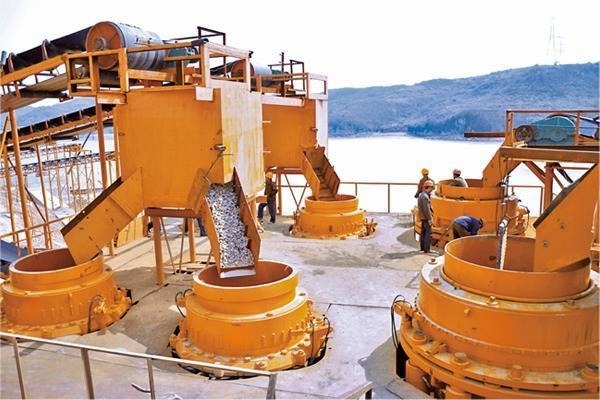
Key Advantages and Features of Lithium Mining Equipment and Machinery:
1. High Level of Automation: Lithium mining equipment and machinery utilize advanced electronic control systems, reducing users' production management workload, improving the automation level of the entire production line, reducing production time and management costs, and increasing production returns.
2. Water Conservation: The flotation beneficiation process recycles water resources, reducing wastewater discharge during production, saving water costs and minimizing the impact of wastewater on the environment.
3. Rational Layout: The compact structure and rational layout of lithium mining equipment and machinery effectively reduce production floor space and lower users' land investment costs.
4. High Energy Savings: The company's lithium mining equipment and machinery boast high energy efficiency. The flotation machine, the core equipment of the entire production line, can achieve energy savings of up to 60%, effectively increasing users' production returns and reducing electricity consumption.
Lithium Mining Equipment | There are two key aspects to the mechanical beneficiation process of lithium ore. The first is the choice of collector. Since spodumene is a lithium aluminum silicate mineral with properties very similar to potassium-sodium feldspar (potassium and sodium aluminum silicate minerals), and lithium, potassium, and sodium belong to the first main group of the periodic table, resulting in minimal differences between their mineral surfaces. Therefore, the selectivity of the collector for spodumene is particularly important. There are also many types of collectors for spodumene. For example, there are plant-based and animal-based fatty acids, and low-freezing-point and high-freezing-point fatty acids, which also correspond to fatty acids with different iodine values and saponification values. Our research institute has screened and compared a large number of collectors and added additives to achieve high selectivity for spodumene. This reduces the amount of middlings recycled, which promotes stable closed-circuit indicators. The second key aspect is the equipment. Spodumene beneficiation equipment differs from other minerals. Spodumene is typically coarse-particled and requires high-concentration and intense stirring. Therefore, each stirring system should occupy as much of the equipment floor space as possible.
Lithium Mining Equipment | Lithium Mining Machinery The mineral raw materials for producing lithium are mainly spodumene (containing Li2O5.8%~8.1%), lepidolite (containing Li2O3.2%~6.45%), lepidolite (containing Li2O7.1%~10.1%), petalite (containing Li2O2.9%~4.8%) and ferrolithium mica (containing Li2O1.1%~5%), among which the first three minerals are the most important.
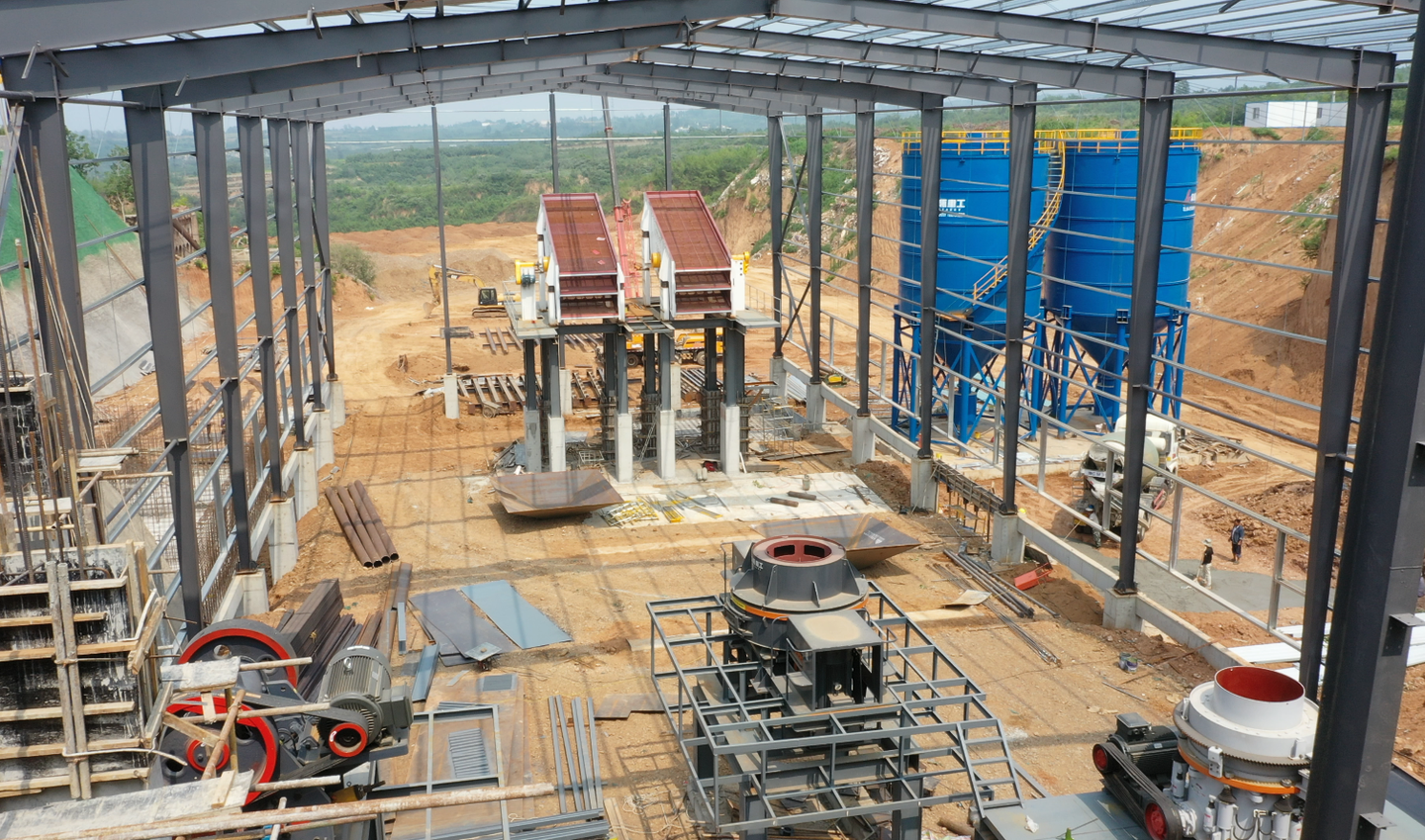
Our company mainly produces and manufactures more than 1,200 types of rotary kilns, ball mills, vertical roller mills, roller presses, ultrafine mills, heavy hammer crushers, European crushers, cone crushers, pebble sand making machines, mobile crushing stations, mineral processing equipment, cement equipment, ceramsite sand equipment, and sand and gravel equipment. Our company develops and manufactures roasting and calcining equipment for the extraction of zinc oxide, magnesium, lead and other non-ferrous metals and non-metallic kaolin and diatomaceous earth for the non-ferrous and non-metallic specialty industries. These equipment have been on the market for more than 20 years and are highly favored by domestic and foreign customers.



