
Tin mining equipment
Tin Mining Equipment | Mechanical beneficiation of tin mines typically utilizes gravity separation, a process driven by the greater density of tin ore compared to associated minerals. However, tin ore is often associated with iron oxide minerals such as magnetite and hematite, making gravity separation alone incapable of completely separating the ore. Therefore, magnetic separation and flotation are also used in tin beneficiation.
Due to the high specific gravity of tin ore, gravity separation is the primary method for tin ore separation, supplemented by flotation, magnetic separation, electrostatic separation, roasting, volatilization, and leaching. Dense medium separation is a common gravity separation method used in tin concentrators. Dense medium separation is primarily used for ore pre-selection, specifically for the separation of coarse concentrates. Commonly used tin mining equipment and machinery include shaking tables, jigs, spiral concentrators, centrifugal concentrators, and belt chutes. Currently, shaking tables are the primary equipment in tin concentrators, processing fine-grained cassiterite ranging from 2 to 0.037 mm. Shaking tables offer a high concentration ratio, allowing them to select high-grade concentrate while also allowing for the removal of final tailings.
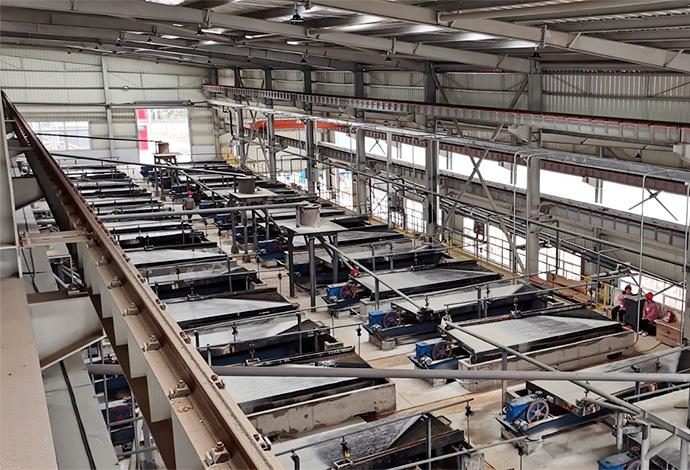
Tin mining equipment | Tin mining machinery application areas: various tin minerals, such as pyroxene tin lead ore, antimony tin lead ore, cylindrical tin ore, sometimes black sulfur silver tin ore, black boron tin ore, Malayan stone, cassiterite, magnesia tin ore, etc.
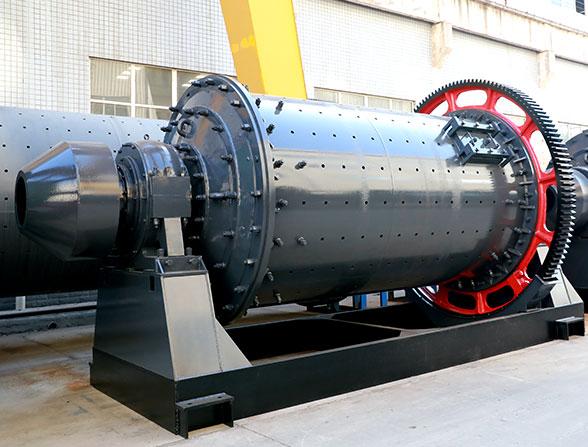
The process flow for mechanical ore beneficiation using tin mining equipment is as follows:
1. Tin Mining Equipment | Tin Mining Mechanical Ore Washing and Desliming Process: The first step is primarily for raw materials with high mud content and strong cementation. Such raw materials must be washed and deslimed before crushing. A trough-type ore washer is used for washing, while a Hengchang classifier and Hengchang hydrocyclone are used for desliming.
2. Tin Mining Equipment | Tin Mining Mechanical Crushing and Screening Process: A jaw crusher and hammer crusher are used to crush the raw ore into a particle size of less than 20mm. The ore is then separated into two fractions: 0-4mm and 4-20mm using a Hengchang vibrating screen.
III. Tin Mining Equipment | Tin Mining Mechanical Pre-selection Process: After crushing and screening, the ore enters the pre-selection stage. First, the ore is pre-selected using a heavy medium cyclone, followed by a grinding stage. After grinding, the ore is further sorted using a jig and vibrating screen. The screen size is controlled at 2mm. The -2mm concentrate is separated using a Hengchang shaker, and the +2mm becomes tailings.
IV. Tin Mining Equipment | Tin Mining Mechanical Flotation Process: The flotation stage consists of two steps: mixed flotation and separate flotation. First, the concentrate separated by the jig and Hengchang shaker is mixed and floated. The separated concentrate is then subjected to lead and zinc separation flotation. The tailings are separated using a Hengchang shaker to obtain qualified tin concentrate.
V. Tin Mining Equipment | Tin Mining Mechanical Process: The ore sludge enters the cyclone, and the overflow is then passed through a hydrocyclone to remove fine sludge. The settled sand is concentrated, desulfurized by flotation, and then cassiterite is flotated.
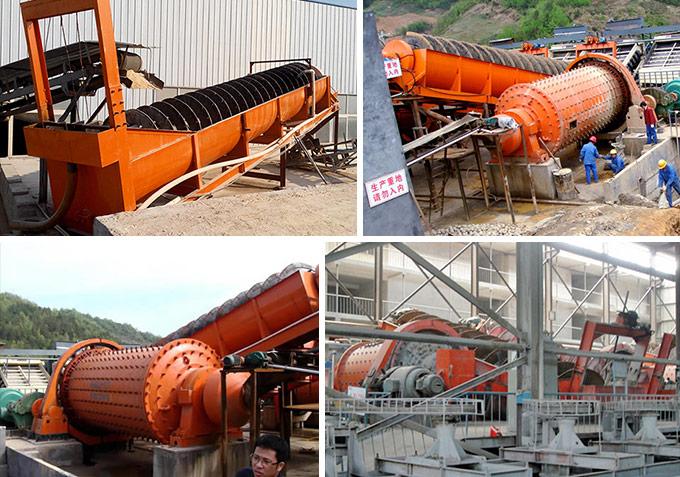
Tin mining equipment and machinery are determined based on the type of tin ore and the beneficiation process. Different types of tin ore require corresponding equipment to achieve optimal beneficiation and economic performance. Our company has been dedicated to the research, development, and manufacturing of beneficiation equipment for many years. Here, we provide a brief introduction to tin mining equipment and machinery for your reference!
1. Tin Mining Equipment and Machinery - Introduction to Beneficiation Equipment for Alluvial Tin Ore:
The beneficiation of alluvial tin ore is relatively simple. Screening and gravity separation processes can achieve good beneficiation performance. However, the specific beneficiation process and equipment configuration for each type of alluvial tin ore must be determined based on the specific conditions. For alluvial tin ore with a high degree of monomer dissociation, a drum screen is generally sufficient to remove large, non-tin-containing waste rock. The fine sand then enters a jig for separation, achieving excellent beneficiation performance. For the beneficiation of placer tin ores with low monomer dissociation degree, it is often necessary to rod grind the jig gravity separation coarse concentrate to break the structure of the intergrowth and dissociate the tin mineral monomers, which are then recovered by the jig gravity separation method to improve the concentrate grade and the recovery rate of the entire process.
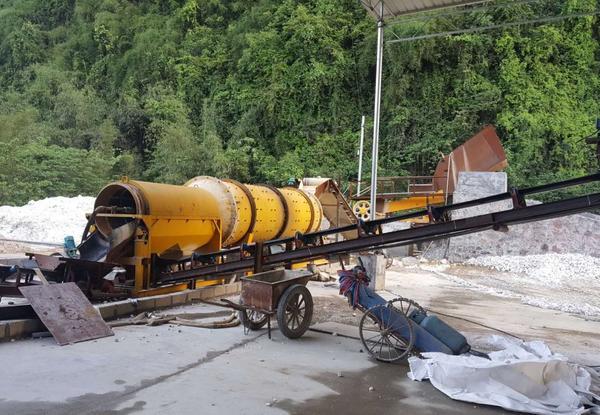
Tin Mining Equipment | Tin Mining Machinery Process for Sand and Tin Ore Processing: Raw tin ore is fed by a loader into a drum washer for washing. Due to the high content of sticky clay in the ore, this clay envelops the tin ore and waste rock, preventing them from breaking down and hindering the gravity separation process. Washing is essential for this difficult-to-wash ore. The drum washer is highly effective for this type of refractory ore and separates the washed product into two fractions. Particles above 8mm are fed into a fine crusher for further crushing, keeping the particle size within the effective selection range for the gravity separation process. Particles smaller than 8mm are conveyed by a screw conveyor to a silo where they are mixed with the crushed material. An automatic feeder below the silo evenly feeds the material into a jig. As the core equipment in the gravity separation process, the jig separates cassiterite from waste rock, obtaining high-purity cassiterite while discarding the tin-free waste rock, achieving the goal of mineral processing and purification. Since the concentrate and tailings of the jig are discharged from the machine along with a large amount of water, the tailings need to be dehydrated before they can be stored, while the concentrate goes directly into the concentrate pool and can be dug out after natural sedimentation. Of course, we can also dehydrate the concentrate and tailings of the jig separately according to the specific requirements of the customer.
2. Tin Mining Equipment | Tin Mining Machinery - Introduction to Primary Vein Tin Ore Beneficiation Equipment:
Primary vein tin ore beneficiation is still primarily based on gravity separation. However, as mines become increasingly depleted and the particle size of cassiterite continues to decrease, flotation and selective flocculation methods have gradually emerged. These new processes and methods have disrupted the single gravity separation method, but gravity separation remains one of the most important methods for tin ore beneficiation. Primary vein tin beneficiation equipment primarily includes rod mills, jigs, shaking tables, and flotation machines. Different equipment types are configured according to the specific beneficiation process, playing a crucial role in tin ore beneficiation.
Tin Mining Equipment | Principle of Mechanical Gravity Separation in Tin Mining: Gravity separation essentially consists of a process of loosening, stratification, and separation. The bulk ore layer (called the bed) within the separation equipment is loosened by fluid buoyancy, dynamic forces, or other mechanical forces. The goal is to cause particles of different densities (or sizes) to shift and shift in layers. In gravity separation, this is to achieve density stratification. Therefore, the fluid's loosening action must comply with the requirement for particle stratification. This distinguishes gravity separation from other two-phase flow processes. Different fluid loosening methods also affect the stratification results. Gravity separation theory, in simple terms, explores the relationship between loosening and stratification. The stratified ore is then mechanically discharged, achieving separation. Therefore, loosening can be considered a condition, stratification is the goal, and separation is the result. The various gravity separation processes described above are the means to achieve this process.
Tin Mining Equipment | There are two main types of equipment used for mechanical gravity separation of tin ore: the jig and the shaking table. Both types of gravity separation equipment are used for both placer and vein tin ores. Jigs have a large feed size, a wide range of feed sizes, a large processing capacity, and a high recovery rate. They can be used for both roughing and concentrating tin ore, making them widely used in tin beneficiation. Shaking tables have a small feed size and a narrow feed size, and are better at recovering fine-grained tin minerals, but their processing capacity is relatively low. They are generally used as concentrating equipment for tin ore beneficiation.
Tin mining equipment | Tin mining machinery, represented by shaking tables, is available in three types: coarse sand, fine sand, and grooved sand. Our company can also adjust certain parameters of the shaking tables based on the type and characteristics of the ore. These shaking tables feature high processing capacity, high recovery rates, clear ore zoning on the surface, and suitability for sorting difficult-to-separate ores. This equipment is used in major tin concentrators. For coarse-grained separation, the coarse sand shaking table offers unique advantages. It generates high transmission inertia, resulting in optimal bed motion characteristics, which strengthens loose stratification within the frame, thereby enhancing sorting results and improving equipment processing capacity.
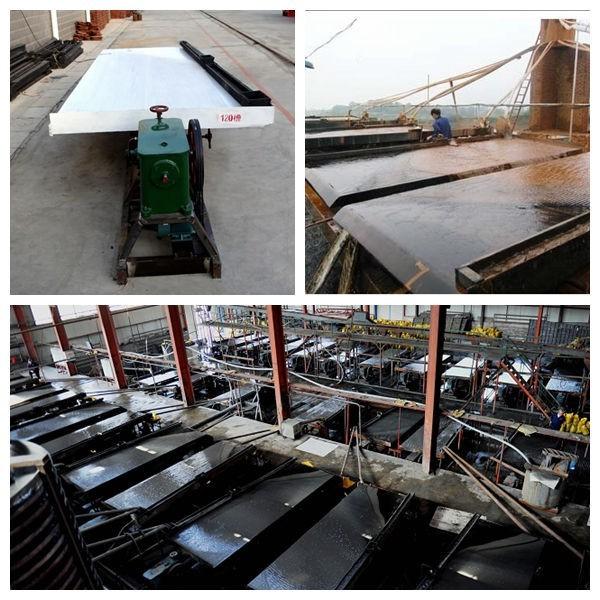
The selection of tin mining equipment and machinery depends on the type and characteristics of the tin ore, not on a one-size-fits-all basis. For alluvial tin ores, a jig can be directly used as gravity separation equipment. For vein tin ores, coarse-grained vein tin ores can directly produce a final concentrate using a jig. However, fine-grained vein tin ores often require a two-step gravity separation process. The first step uses a jig for gravity separation to increase throughput and recovery, followed by a shaking table for final concentrate. Choosing the right equipment for gravity separation is crucial for improving tin ore beneficiation performance.
Tin mining equipment and machinery combine beneficiation methods to address complex and difficult-to-separate ores and improve the recovery of useful components. These methods utilize an optimal combination of various physical separation methods (such as gravity separation, flotation, magnetic separation, and electrostatic separation) or physical and chemical separation methods (separation and metallurgy). Tin ore dressing equipment includes gravity separation-flotation, flotation-gravity separation, flotation-magnetic separation, magnetic separation-flotation, magnetic separation-gravity separation, gravity separation-flotation-gravity separation, flotation-gravity separation, flotation-gravity separation, gravity separation-flotation-magnetic separation-flotation-electrical separation, and combined selection and smelting processes. Due to the increasing demand for metals and the gradual depletion of easily-selected ore resources, the amount of complex and difficult-to-select ores will increase. A single mineral processing method cannot adapt to such a large amount of complex ores. A combined process must be applied to achieve separation and obtain better technical and economic indicators.
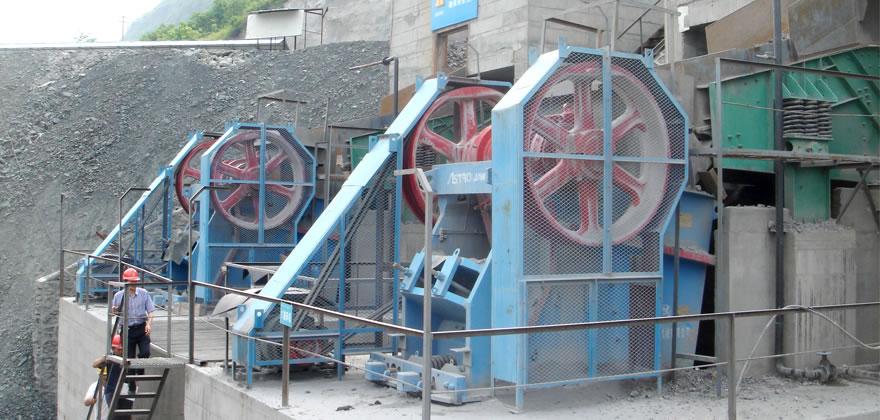
Tin mining equipment | Tin mining machinery selects different combined processes for separation according to the differences in physical and chemical properties of the ore (such as ore embedded particle size, density, magnetic permeability, electrical conductivity, floatability, redox and leachability, etc.), as well as the level of technical and economic indicators.
(1) Tin mining equipment | Tin mining machinery takes advantage of the differences in ore properties to discard some waste rock and tailings in advance, improve the selection grade, and reduce production costs. For example, wolframite is separated by hand, sorting, jigging or heavy medium separation. Placer tin ore uses spiral concentrators, jigging or cone concentrators. Vein tin ore and stibnite are separated by heavy medium and jigging. Manganese ore is separated by hand and washed. Iron ore is separated by magnetic pulleys, etc.
(2) Tin mining equipment | Tin mining machinery achieves the best combination according to the different mineral properties. For example, limonite uses a strong magnetic separation-flotation process; Anshan-type hematite and magnetite use a weak magnetic separation-gravity separation or magnetic separation-gravity separation-flotation process. Hematite-pseudo-hematite uses a magnetic separation-gravity separation process. Tungsten, molybdenum, and bismuth polymetallic ores use a flotation-gravity separation process; cassiterite polymetallic sulfide ores use a gravity separation-flotation-gravity separation-flotation process.
(3) Tin Mining Equipment | Tin Mining Machinery effectively utilizes the properties of various minerals to improve product quality and obtain qualified products. For example, the separation of minerals such as cassiterite and titanium zirconium uses the difference in magnetic permeability and density between cassiterite and ilmenite, and generally adopts a magnetic separation-gravity separation process; the separation of cassiterite and zircon uses a gravity separation-electrical separation-flotation-gravity separation combined process due to their differences in electrical conductivity, density and floatability; the separation of tungsten and magnetic sulfide minerals (pyrrhotite) uses a gravity separation-magnetic separation process based on the difference in density and magnetism. Process; The separation of tungsten, copper, and tin minerals uses a gravity separation-flotation-granular flotation-magnetic separation process due to their different densities and flotabilities; the separation of black tungsten, tin, bismuth, and scheelite minerals uses a gravity separation followed by a magnetic separation based on the differences in density, magnetism, and electrical conductivity. For ore with a high tin content, the ore is first subjected to gravity separation followed by a magnetic separation to separate black tungsten concentrate and tin concentrate, and then to separate cassiterite through gravity separation, electrostatic separation, and granular flotation; the separation of scheelite and bismuth ore uses a gravity separation-magnetic separation-electrostatic separation-granular flotation combined process; high sulfur and low tin ores use a gravity separation-granular flotation-magnetic separation process.
(4) Tin ore mining equipment | Tin ore mining machinery uses a comprehensive recovery of useful minerals based on the characteristics of various minerals in the composite ore. When copper is contained in the iron ore, a flotation-strong magnetic separation process can be used; vanadium-titanium magnetite is first subjected to weak magnetic separation to recover iron, and the magnetic tail is subjected to strong magnetic separation-gravity separation. The combined selection-electrostatic separation process recovers titanium, sulfur, and cobalt. When the iron ore contains high levels of copper and cobalt, a flotation-magnetic separation process is used; otherwise, a magnetic separation-flotation process is used. For pegmatite granite tantalum-niobium iron ore, a gravity separation-magnetic separation-electrostatic separation process is used to recover tantalum-niobium ore, spodumene, and beryl. For tantalum-niobium-manganese fine-crystal granite, a gravity separation-flotation process is used to recover tantalum-niobium ore and lepidolite. (5) Tin ore mining equipment | When tin ore mining machinery cannot be separated according to the differences in physical and chemical properties, a combined selection and smelting process is used. For example, for low-grade tin concentrate, a gravity separation-fuming process is used; for tin-iron refractory ore, a gravity separation-flotation-magnetic separation-high-temperature chlorination-leaching selection and smelting process is used; for refractory cassiterite or middling ore, a low-temperature sulfurization roasting process is used to convert the cassiterite into sulfide before flotation, or separation roasting is performed after flotation and gravity separation to recover metallic tin. For example, gold (silver) ore generally uses a combined selection and smelting process.
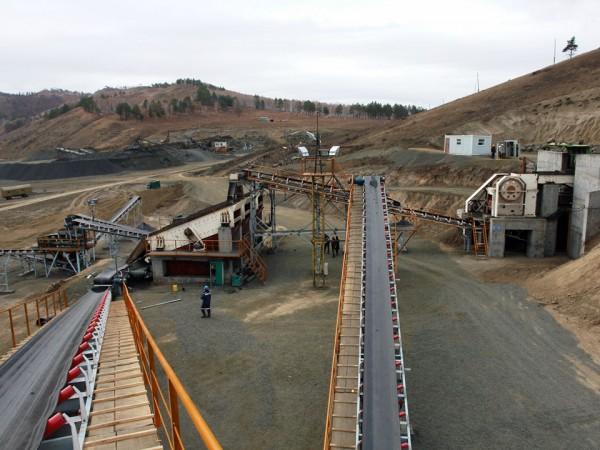
Our company is a large-scale mining service provider specializing in tin mining equipment and machinery manufacturing, mineral analysis, beneficiation process design, equipment selection, and equipment installation and commissioning. Our company occupies 50,000 square meters, with workshops exceeding 20,000 square meters. We have 12 years of experience in beneficiation equipment manufacturing and employ a wide range of large-scale modern machining equipment. We also employ professional mechanical manufacturing and beneficiation engineers, as well as a dedicated equipment installation team. Our core business areas include ore washing equipment, screening equipment, crushing and grinding equipment, flotation equipment, gravity separation equipment, and mineral handling equipment. We have a particularly strong presence in gravity separation, and have established ourselves as a leading domestic manufacturer and distributor of gravity separation equipment.



