
Tin sulfide ore beneficiation method and beneficiation process flow chart
Tin sulfide is a key mineral resource for tin production. It primarily consists of tin sulfide ores. Common tin sulfide minerals include cassiterite (SnO₂), stannite (Cu₂FeSnS₄), and pyrite (PbSn₄FeSb₂S₁₄). Its ore composition is complex. In addition to tin-containing minerals, it often contains various metallic sulfides, such as pyrite, chalcopyrite, and galena. This undoubtedly increases the difficulty of tin beneficiation. Regardless of the method used, the basic process for tin beneficiation generally follows the steps of crushing, grinding, sorting, and dehydration. Below, we discuss the beneficiation methods and process flow for tin sulfide ores, as well as the required equipment.
The beneficiation methods and process flows for tin sulfide ore must be comprehensively designed based on ore properties (such as mineral composition, intercalation size, and associated minerals). The following are common methods and typical process flows for tin sulfide ore beneficiation: Tin Sulfide Ore Beneficiation Methods: 1. Gravity Separation: Applicable to coarse-grained tin sulfide ores or as a pre-selection and tailings discarding method. Principle: Gravity separation of tin ore further improves the grade of coarse-grained tin minerals through gravity separation. It is typically performed after flotation, with the flotation concentrate subjected to gravity separation to obtain a high-grade tin concentrate. There are two types of beneficiation: shaking table beneficiation. The former involves feeding the flotation concentrate into a shaking table, where the vibration of the water flow and the bed surface separates the minerals based on their specific gravity. Heavy minerals (tin minerals) remain on the bed surface, while light minerals (gangue minerals) are carried away by the water flow. The latter utilizes alternating rising and descending water flows to separate the minerals into strata within the bed according to their specific gravity. The heavier tin minerals settle to the bottom, while the lighter gangue minerals are washed away by the water flow.
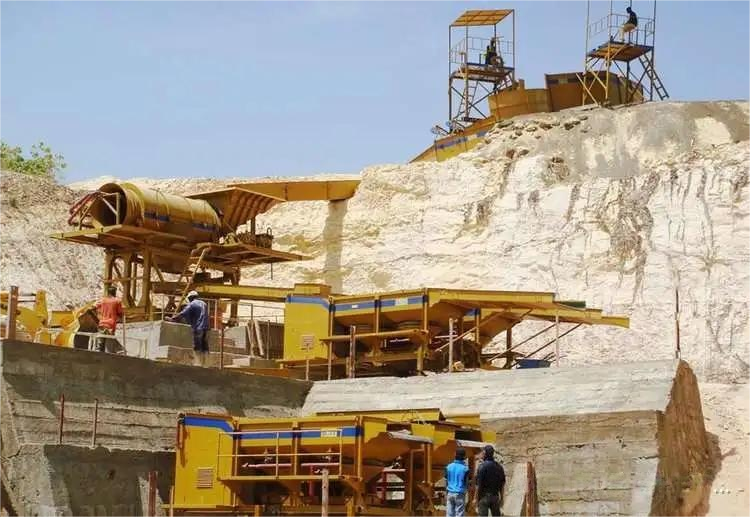
Commonly used equipment: Jig, spiral chute, shaking table, centrifugal concentrator.
Advantages: Low cost, pollution-free, suitable for processing coarse-grained ores.
Limitations: Low recovery rate for fine particles (<0.037 mm), requiring integration with other methods.
2. Flotation is suitable for fine-grained, interbedded, or complexly intergrown tin sulfide ores. Principle: Tin ore flotation utilizes the differences in the surface physical and chemical properties of tin and other minerals. By adding flotation agents, the tin minerals adhere to bubbles and float out, separating them from the gangue minerals. There are two types of flotation: preferential flotation and mixed flotation. The former first adds an inhibitor to suppress the gangue minerals, then adds a collector and frother to flot the tin minerals to obtain a tin concentrate. The tailings are then scavenged to recover the remaining tin. The latter flots the tin minerals along with other highly floatable minerals with the addition of a collector and frother to obtain a mixed concentrate. This mixed concentrate is then separated to obtain the tin concentrate and the other mineral concentrates. Flotation process: Prioritize sulfide flotation (e.g., flot copper, lead, and zinc first, followed by tin); mixed flotation followed by separation (e.g., mixed sulfide flotation followed by sulfur flotation with tin suppression or sulfur flotation with tin suppression).
3. Magnetic Separation: Application: Removal of magnetic minerals (such as pyrrhotite) or separation of weakly magnetic tin minerals. Equipment: High-gradient magnetic separator, wet high-intensity magnetic separator. Principle: Magnetic separation of tin ore primarily aims to remove magnetic impurities, such as magnetite, from the ore, thereby improving the grade of the tin concentrate. Typically performed under weak magnetic field conditions, magnetic impurities (such as magnetite) are attracted by the magnetic field of the separator, thereby separating them from the non-magnetic tin minerals.
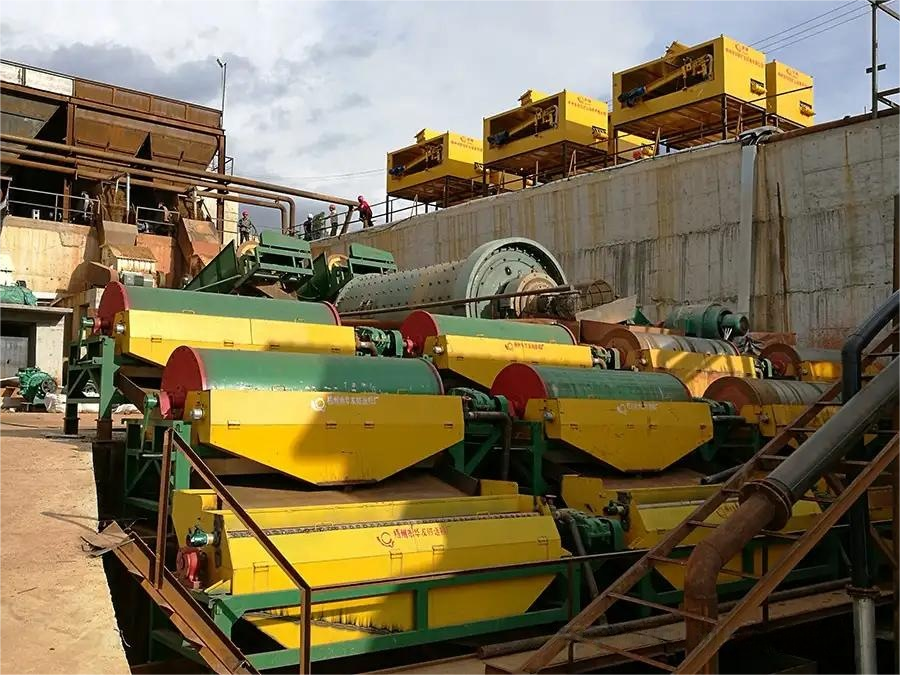
4. Combined Process Separation
Combined Gravity Separation and Flotation Separation: Coarse particles are recovered by gravity separation, while fine particles are purified by flotation.
Combined Flotation and Magnetic Separation: After flotation separation of sulfides, magnetic separation is used to remove magnetic impurities.
Chemical Separation: For difficult-to-separate ores, roasting (for desulfurization and arsenic removal) followed by leaching or flotation can be used.
Typical tin sulfide ore beneficiation process: Example process (tin sulfide ore associated with polymetallics):
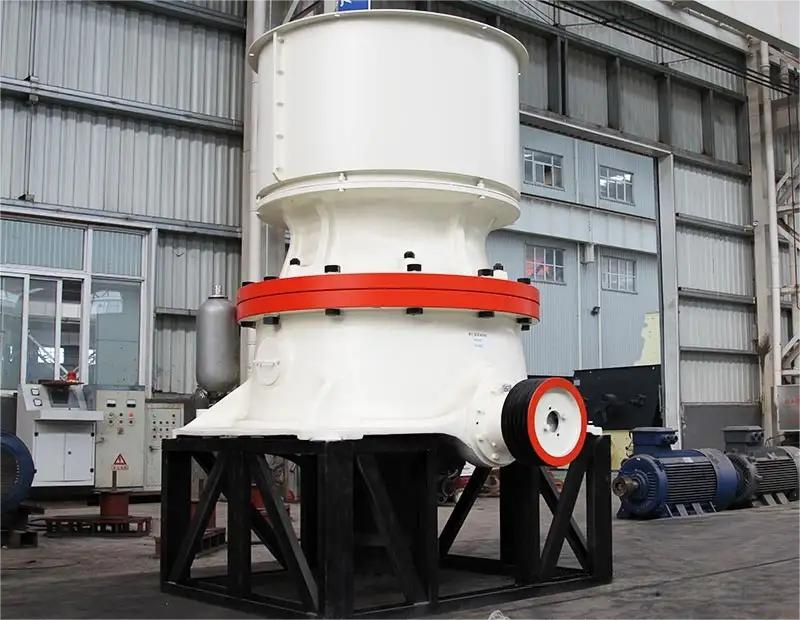
1,Crushing and screening: Raw ore → Jaw crusher (coarse crushing) → Cone crusher (medium and fine crushing) → Screening (particle size controlled to 10-15 mm). A two-stage closed-circuit process is commonly used: the mined ore is fed into a jaw crusher for coarse crushing to approximately 100-200 mm, followed by a cone crusher for secondary and fine crushing, further reducing the ore size to approximately 10-25 mm. 2. Pre-selection and discarding: After coarse crushing, low-grade waste rock is discarded early through heavy media separation or photoelectric separation.
3. Ore Beneficiation and Classification: The crushed ore enters a ball mill or rod mill for grinding. The grinding fineness is typically controlled at -200 mesh, accounting for approximately 60%-70%. During the grinding process, the grinding time and grinding media ratio should be appropriately adjusted based on the ore's hardness and grindability to achieve complete dissociation of the tin minerals. A two-stage closed-circuit grinding process (a first stage ball mill with a spiral classifier, a second stage ball mill with a hydrocyclone) is used, grinding the ore to -0.074 mm, accounting for 60%-80%. 4. Separation: The tin ore beneficiation process depends on the properties of the tin ore. Depending on the properties of the gangue minerals, applicable methods include flotation, gravity separation, and magnetic separation. The equipment required for the separation stage is determined by the process requirements. Examples include flotation cells (XCF, KYF, JJF, SF, etc.), gravity separation using jigs, spiral chutes, and shaking tables, and magnetic separation using permanent magnet separators, dry magnetic separators, magnetic drums, and high-gradient magnetic separators.
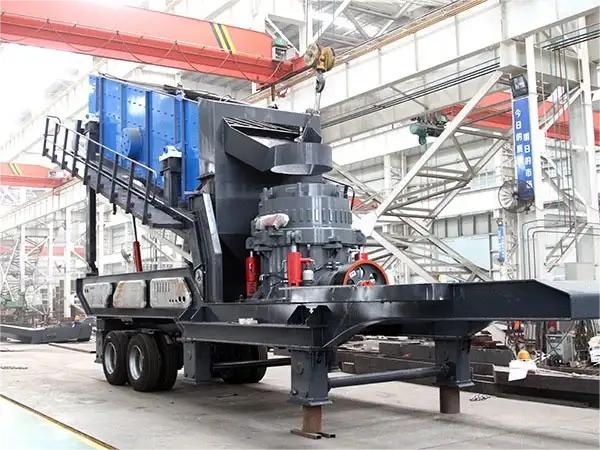
5. Concentrate dehydration: Concentrator → Filter → Drying (hot air drying or natural air drying) to obtain the final tin concentrate. Dehydration is a crucial step in the tin concentrate processing process, playing a vital role in improving the quality of the concentrate, reducing transportation costs, and the subsequent smelting process. The process primarily uses a combination of various concentrating and dehydrating equipment to dehydrate the tin concentrate to a certain level before it is stored and awaiting smelting. Commonly used equipment in this step is concentrators and filters. 6. Tailings treatment: Tailings ponds are used for sedimentation, water reuse, or recovery of associated minerals (such as sulfur concentrate).
Key points to note in the beneficiation method and process flow of tin sulfide ore: Optimization of reagent system: the best reagent ratio needs to be determined through experiments to avoid over-inhibition or over-activation; particle size control: the ore needs to be fully dissociated before flotation, but over-grinding and sliming should be avoided; environmental protection measures: tailings containing arsenic and sulfur need to be solidified, and wastewater needs to be neutralized and precipitated with heavy metals; comprehensive recovery: the associated copper, lead, zinc, etc. can be recovered separately through flotation to improve economic benefits.
Technological innovations in tin sulfide ore beneficiation methods and process flows include:
High-efficiency flotation reagents: Developing more selective collectors (such as chelating agents);
Fine particle separation technology: Combined centrifuge and flotation recovery of fine tin particles;
Automated control: Online analyzers optimize flotation parameters and improve stability;
Green processes: Bioleaching and cyanide-free inhibitors replace traditional toxic reagents.
In actual production, the optimal process must be determined through ore beneficiation testing, and an economically reasonable solution must be selected based on factors such as mine scale and investment costs. For complex and difficult-to-process ores, combined processing with metallurgical processes (such as fuming) can be considered. The above is an introduction to the beneficiation methods and process flow for tin sulfide ores. In actual beneficiation plants, since tin beneficiation is a complex system, the selection of the process flow must consider factors such as the ore properties, the plant scale, and the technical level. It is recommended to conduct beneficiation trials and, through analysis, design a suitable tin ore beneficiation process flow.



