
Vanadium-titanium magnetite beneficiation process flow
Vanadium-titanium magnetite is a complex polymetallic symbiotic ore, characterized by its diverse and complex mineral composition. Besides abundant magnetite (Fe₃O₄) as the main iron mineral component, it also contains rich amounts of ilmenite (FeTiO₃) and a certain amount of vanadium, these useful minerals typically occurring in close association. Furthermore, the ore contains various gangue minerals, such as feldspar, quartz, pyroxene, and olivine. The uneven grain size distribution of vanadium-titanium magnetite, ranging from coarse to fine grains, makes its beneficiation process quite challenging. This paper analyzes the beneficiation process of vanadium-titanium magnetite.
What are the beneficiation processes and methods for vanadium-titanium magnetite?
1. Magnetic Separation Method in Vanadium-Titanium Magnetite Beneficiation Process
Magnetic separation is a method of mineral beneficiation that utilizes the differences in magnetic properties between minerals. For vanadium-titanium magnetite, magnetite is strongly magnetic, while ilmenite is weakly magnetic, and gangue minerals are mostly non-magnetic or weakly magnetic. In the magnetic separation process, the crushed and ground slurry or dry ore powder is fed into the magnetic field of a magnetic separator. The strongly magnetic magnetite is attracted to the magnetic poles. As the magnetic poles rotate or the slurry flows, the attracted magnetite separates from the non-magnetic or weakly magnetic minerals, thus achieving preliminary enrichment of the magnetite.
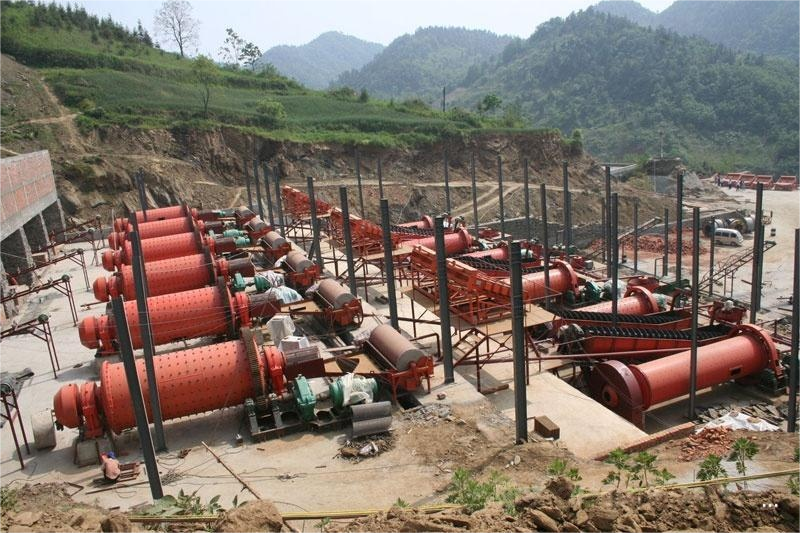
Magnetic separation is generally suitable for roughing and cleaning magnetite in vanadium-titanium magnetite ore, and is widely used in the early stages of the beneficiation process to quickly improve the iron grade of iron concentrate and reduce the processing volume in subsequent beneficiation steps.
This method has a simple process, convenient equipment operation, and low energy consumption, and can quickly and effectively separate most of the magnetite from the raw ore. However, its separation effect on weakly magnetic ilmenite and ilmenite closely associated with magnetite is limited, making it difficult to obtain high-purity titanium concentrate.
2. Vanadium-Titanium Magnetite Beneficiation Process: Flotation Methods Flotation is based on the differences in the physicochemical properties of mineral surfaces, particularly their wettability. In the flotation of vanadium-titanium magnetite, for ilmenite, a suitable collector is typically used to make its surface hydrophobic. Commonly used collectors include fatty acids and phosphonic acids, which react with metal ions on the ilmenite surface under alkaline conditions, making the surface hydrophobic. Phosphonic acid collectors also make it hydrophobic by forming chemical bonds with titanium ions on the ilmenite surface. Simultaneously, a frother (such as pine oil) is added to generate a large number of stable bubbles. The hydrophobic ilmenite particles adhere to these bubbles and float to the surface of the pulp, forming a foam layer, while gangue minerals remain in the pulp. For vanadium recovery, during iron and titanium beneficiation, vanadium is enriched in the corresponding concentrate or tailings along with the separation of the main minerals, and can then be extracted through further chemical treatment or special flotation processes.
Flotation is primarily suitable for further separating ilmenite and gangue minerals after magnetic separation to improve the grade of titanium concentrate. It is used to process vanadium-titanium magnetite with fine-grained disseminated particles and complex mineral composition.
This method offers high separation accuracy and effectively separates ilmenite from gangue minerals. However, flotation reagents are expensive, and some reagents are toxic, posing potential hazards to the environment and operator health.
3. Vanadium-Titanium Magnetite Beneficiation Process: Gravity Separation Gravity separation utilizes the differences in mineral density. Under the influence of external forces such as gravity or centrifugal force, mineral particles of different densities are separated by density stratification or particle size classification. In vanadium-titanium magnetite, magnetite has a density of approximately 5.2 g/cm³, ilmenite approximately 4.7 g/cm³, while gangue minerals generally have a density between 2.6 and 3.3 g/cm³. During gravity separation, the action of water flow or mechanical force—such as the periodic alternating water flow in a jig, or the combined action of transverse water flow and longitudinal shaking in a shaking table—causes denser magnetite and ilmenite particles to concentrate at the bottom of the equipment or in specific areas, while the less dense gangue minerals are separated out.
Gravity separation of vanadium-titanium magnetite is widely used in the pretreatment stage of vanadium-titanium magnetite beneficiation, especially for coarse-grained disseminated ores. It serves as an effective means of initially enriching valuable minerals and discarding large amounts of gangue minerals, reducing the processing volume and cost of subsequent beneficiation processes.
This method is simple, low-cost, and environmentally friendly, but it has poor recovery efficiency for fine-grained minerals, relatively low separation accuracy, and difficulty in obtaining high-grade concentrates.
Vanadium-titanium magnetite beneficiation process steps:
1. Raw ore preparation process
Crushing: The raw ore first needs to undergo crushing, generally using equipment such as jaw crushers and cone crushers. Jaw crushers are used for coarse crushing of large pieces of vanadium-titanium magnetite ore. Their working principle is to crush the ore through the squeezing action of the moving jaw plate and the stationary jaw plate. During the crushing process, it is important to control the feed rate and the size of the discharge opening to ensure the uniformity of the crushed product particle size and the stable operation of the equipment.
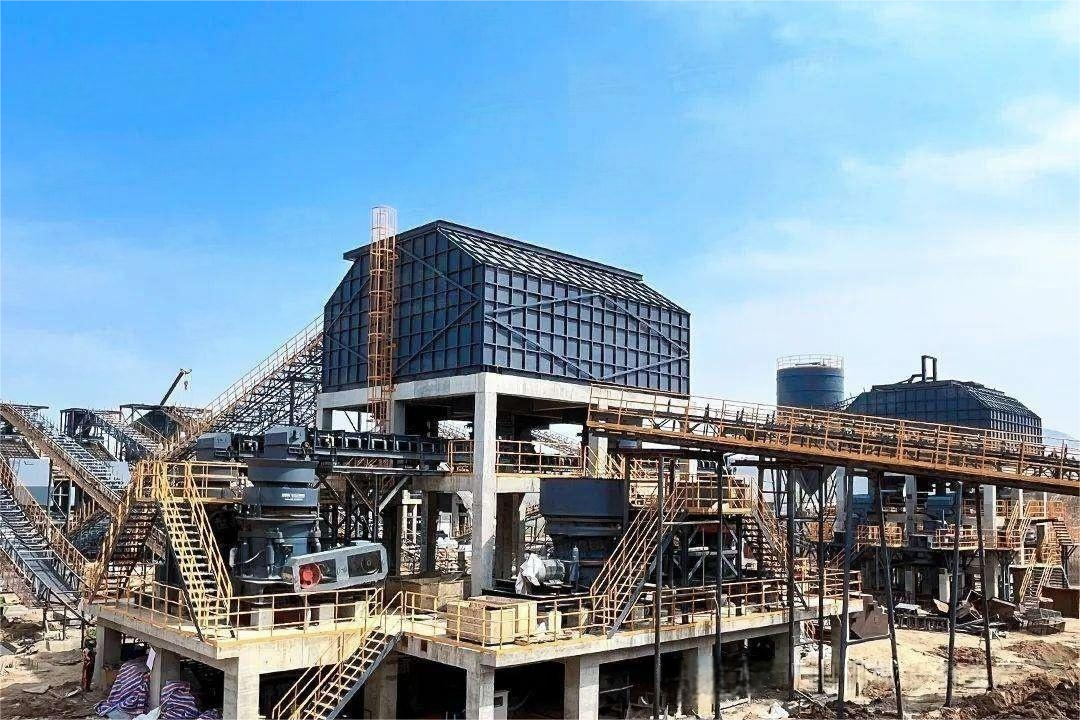
Grinding: The crushed ore enters a ball mill for grinding to fully liberate the valuable minerals from the gangue minerals in vanadium-titanium magnetite. Ball mills and similar equipment are typically used, and the grinding fineness must be controlled during grinding. For vanadium-titanium magnetite, the content of particles smaller than 0.074 mm is generally required to be around 60%-80% in the ground product. During the grinding process, grinding efficiency can be improved by adding grinding aids, and attention should be paid to the selection and replenishment of grinding media to ensure the stability of the grinding effect.
2. Mineral Processing and Purification Process
Magnetic Separation Stage: This stage is divided into two parts: weak magnetic separation and strong magnetic separation. The purpose of weak magnetic separation is to rapidly enrich magnetite, with the magnetic field strength generally between 80-200 mT. Under the influence of the weak magnetic field, the strongly magnetic magnetite is adsorbed onto the magnetic poles, forming an iron concentrate product, while ilmenite and gangue minerals remain in the slurry as tailings from the weak magnetic separation, which then proceeds to the next separation process. Strong magnetic separation further separates the weakly magnetic ilmenite from the gangue minerals, with the magnetic field strength generally between 400-1200 mT.
Flotation Stage: This mainly consists of two parts: ilmenite flotation and vanadium flotation. Ilmenite flotation first requires adjusting the pH of the pulp, generally to between 8 and 10. Vanadium flotation occurs during the iron and titanium beneficiation process, where vanadium is enriched in the corresponding concentrate or tailings. If further vanadium recovery is required, specific intermediate products or tailings can be subjected to vanadium flotation.
Gravity Separation Stage: Gravity separation can be arranged in the early or late stages of the beneficiation process, depending on the ore properties and process requirements. For example, in the raw ore preparation stage, for coarse-grained vanadium-titanium magnetite, pre-concentration using jigs or shaking tables can remove a large amount of gangue minerals and improve the grade of the feed ore. In the later stages, gravity separation can be used for further separation of coarse-grained valuable minerals or gangue minerals in the flotation concentrate or tailings. During gravity separation, the equipment and operating parameters, such as water flow velocity and bed slope, should be selected appropriately based on the density differences and particle size distribution of the minerals.
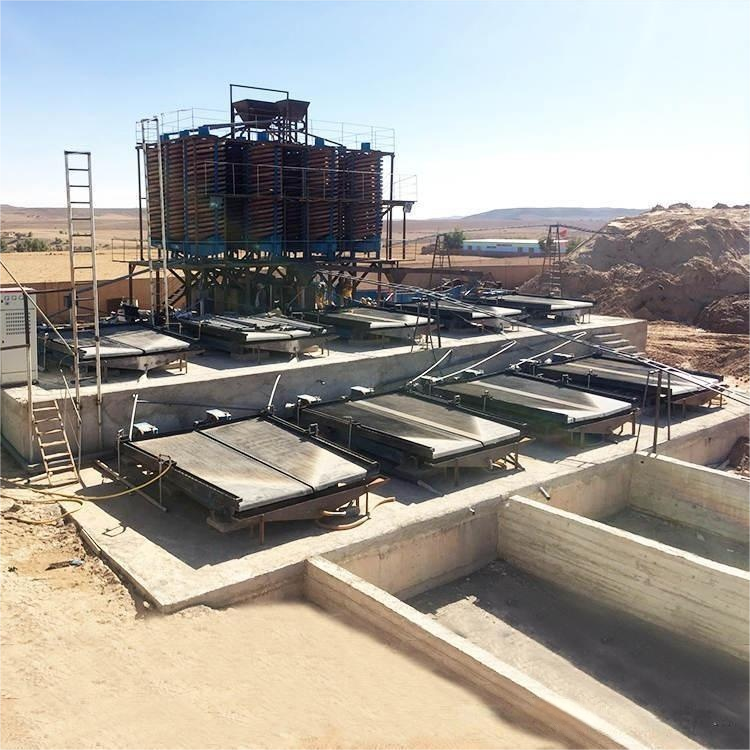
3. Dewatering Process
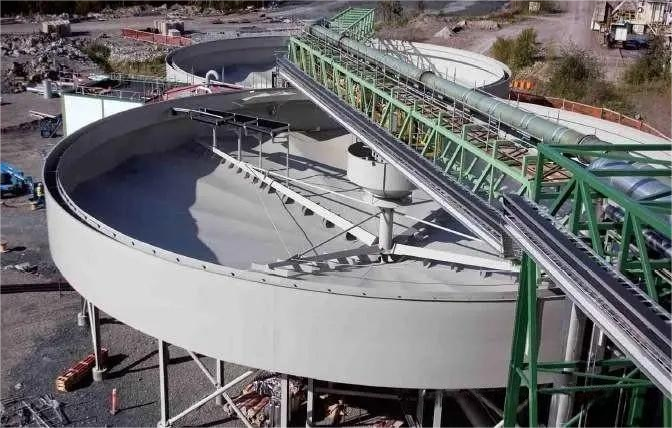
Concentration: Both the concentrate and tailings after beneficiation require dewatering. First, a thickener is used for concentration. Through gravity settling, solid particles in the slurry settle at the bottom of the thickener, while the clear water at the top overflows and is discharged.
Filtration: The concentrated slurry is then filtered to further remove moisture. Commonly used filters include vacuum filters and filter presses. Vacuum filters use vacuum suction to draw water from the slurry through a filter medium (such as filter cloth), leaving solid particles on the filter cloth to form a filter cake. Filter presses use pressure to squeeze out the water from the slurry, resulting in a filter cake with lower moisture content. During filtration, it is important to select appropriate filter media and filtration pressure to improve filtration efficiency and reduce the moisture content of the filter cake.
Drying: For applications requiring very low concentrate moisture content, such as powder metallurgy, drying of the filtered concentrate is necessary. Drying can be achieved using equipment such as a drying machine, which evaporates the moisture in the concentrate through heating. During the drying process, it is important to control the drying temperature and time to avoid excessively high temperatures affecting the quality of the concentrate, such as causing mineral oxidation or changes in crystal structure.
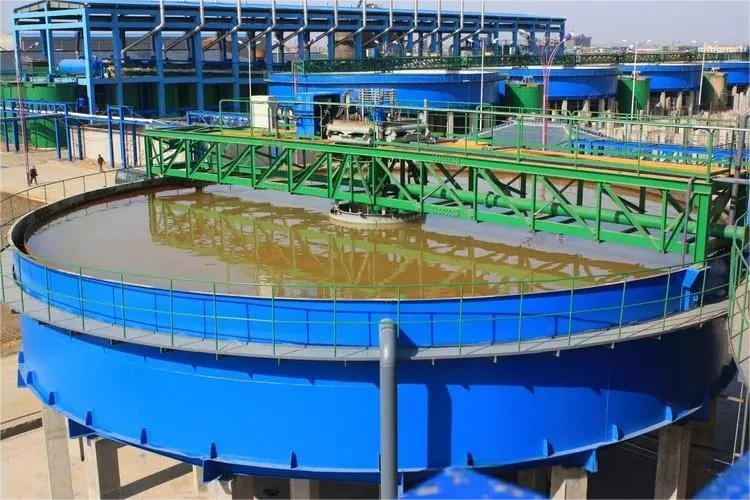
Summary of Common Vanadium-Titanium Magnetite Beneficiation Equipment:
I. Vanadium-Titanium Magnetite Beneficiation Equipment - Crushing and Grinding Equipment
Crushing and grinding equipment is used to reduce the particle size of magnetite ore, liberating its valuable minerals. Commonly used equipment includes:
1. Crusher: Different types of crushers, such as jaw crushers and cone crushers, are used to pulverize magnetite ore into smaller, more manageable particles. This primary crushing stage prepares the ore for subsequent grinding processes.
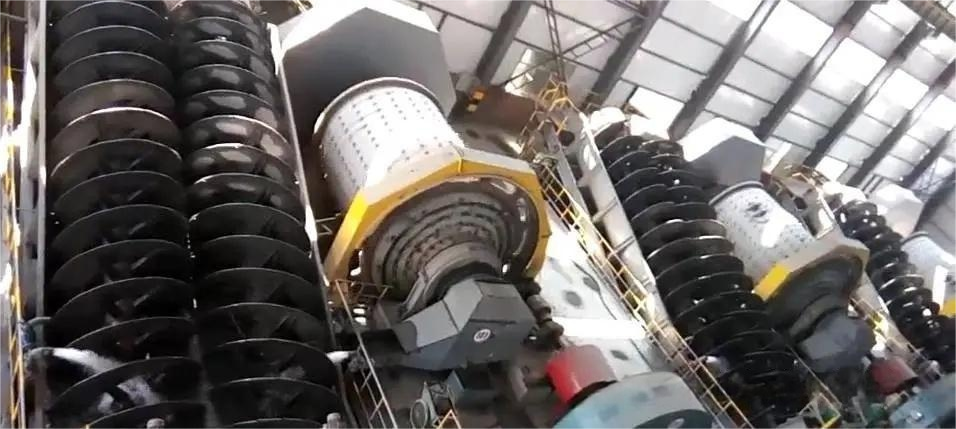
2. Grinding Mills: Grinding equipment such as ball mills and rod mills grind magnetite ore into a fine powder. Grinding increases the surface area of the ore, which helps release valuable minerals and improves the efficiency of subsequent beneficiation processes.
II. Vanadium-Titanium Magnetite Beneficiation Equipment - Magnetic Separation Equipment
Magnetic separation equipment plays a crucial role in magnetite ore beneficiation, utilizing the magnetic properties of magnetite to separate it from non-magnetic materials. Commonly used magnetic separation equipment includes:
1. Wet Magnetic Separator: A wet magnetic separator consists of a rotating drum immersed in a water-filled tank. As magnetite ore passes through the drum, magnetic particles are adsorbed onto the drum surface and collected, while non-magnetic materials continue to flow. This type of magnetic separator efficiently separates magnetite ore from gangue minerals.
2. High-Intensity Magnetic Separator: A high-intensity magnetic separator uses a stronger magnetic field to effectively separate fine magnetite particles from non-magnetic minerals. By applying a greater magnetic force, this equipment improves separation efficiency and can produce high-grade magnetite concentrate.
3. Dry Magnetic Separator: A dry magnetic separator uses magnetic rollers to adsorb and separate magnetic and non-magnetic particles without water treatment. These magnetic separators are advantageous when water resources are scarce or dry processing is required. Dry magnetic separation is particularly suitable for processing fine magnetite particles.
III. Vanadium-Titanium Magnetite Beneficiation Equipment - Gravity Separation Equipment
Although gravity separation is not commonly used in magnetite ore beneficiation, it can still be used to separate coarse magnetite particles from gangue minerals. The following equipment can be used for gravity separation:
1. Jig: Jigs use pulsating water flow to separate heavier magnetite particles from lighter gangue minerals based on density differences. This equipment is suitable for enriching coarse magnetite particles.
2. Spiral Conveyor: Spiral convection uses the principle of gravity separation to separate magnetite particles based on their specific gravity. These devices are particularly suitable for recovering fine magnetite particles.
IV. Vanadium-Titanium Magnetite Beneficiation Equipment - Flotation Machines
Although flotation is not widely used in magnetite ore beneficiation, it can be used in some cases to separate magnetite from gangue minerals. Flotation relies on differences in mineral surface properties for selective separation. However, due to some challenges in magnetite flotation, alternative methods are often preferred.
V. Vanadium-Titanium Magnetite Beneficiation Equipment - Dewatering Equipment
After the beneficiation process, dewatering equipment is needed to remove excess water from the concentrate. This step is crucial for reducing transportation costs and ensuring efficient processing of magnetite concentrate. Commonly used dewatering equipment includes thickeners, filter presses, and vacuum disc filters.
Vanadium-titanium magnetite beneficiation equipment plays a crucial role in unlocking the full potential of this high-grade iron ore resource. Magnetic separators, crushing and grinding equipment, gravity separation equipment, flotation cells, and dewatering equipment are all indispensable components of the beneficiation process. By rationally utilizing these specialized equipment, magnetite ore can be processed efficiently, producing high-grade magnetite concentrates with fewer impurities.
This detailed introduction to vanadium-titanium magnetite beneficiation and its equipment provides comprehensive theoretical guidance and practical reference for vanadium-titanium magnetite beneficiation work, contributing to the continuous development of vanadium-titanium magnetite beneficiation technology and the efficient utilization of resources.



