
Beneficiation methods for tungsten ore slime
Tungsten is a mineral raw material needed in aerospace, nuclear energy, shipbuilding, electronics, and chemical industries. Currently, more than 20 tungsten-bearing minerals have been discovered, but only wolframite and scheelite are commercially viable. Wolframite is brittle and easily over-crushed, generating fine mud during mining and crushing. The recovery rate of this tungsten mud is very low. Therefore, beneficiation of the tungsten mud is essential to improve tungsten recovery. Below, we will explore the beneficiation methods and processes for tungsten ore mud.
I. Traditional Beneficiation Methods and Processes for Tungsten Fine Sludge
Through long-term experience, several relatively mature beneficiation methods for tungsten fine slime have been summarized, including: full shaking table process, classification-shaking table-centrifuge process, wet high-intensity magnetic separation-flotation process, and desulfurization-centrifuge-flotation-(magnetic separation) process, etc.
1. Beneficiation Method and Process Flow for Full Shaking Table Gravity Separation of Tungsten Fine Sludge
Full shaking table gravity separation of tungsten fine slime involves concentrating and classifying the tungsten fine slime, then using multi-stage shaking tables for separation to obtain tungsten fine slime concentrate. For example, a tungsten fine slime from Jiangxi province effectively improved its grade by using a shaking table concentrate re-shaking table refining process. This tungsten fine slime gravity separation method is simple, reliable, and has stable indicators, but the recovery rate of tungsten fine slime is low; it is basically impossible to recover tungsten fine slime of -37μm size.
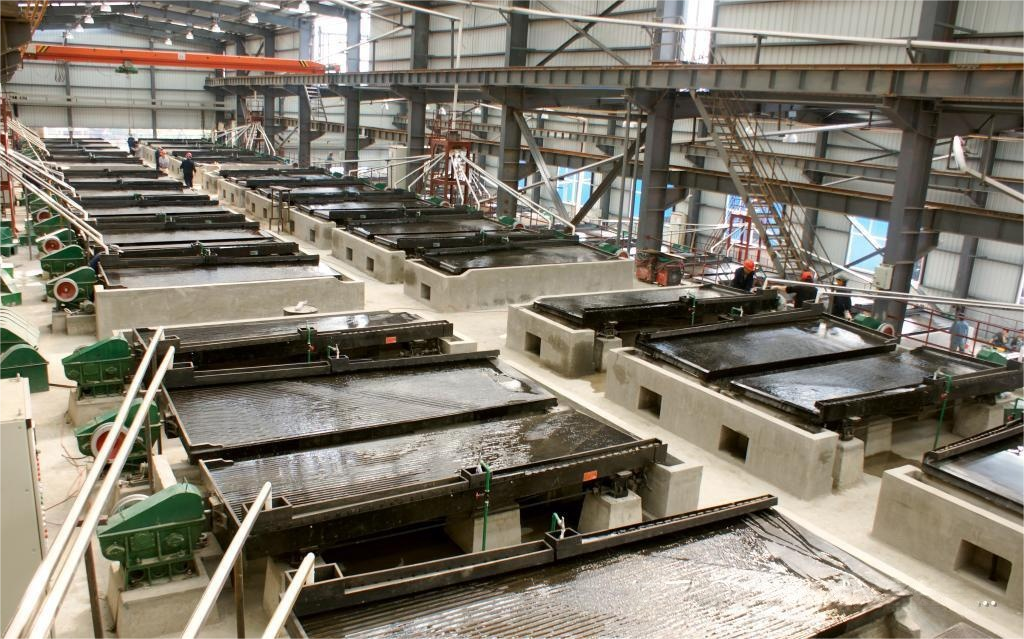
2. A combined beneficiation method and process flow for separating tungsten ore slime using a classification-shaking table-centrifugal concentrator:
This combined beneficiation process separates concentrated and classified tungsten slime into two particle sizes: +37μm and -37μm. The +37μm tungsten slime is subjected to gravity separation using a shaking table, while the -37μm tungsten slime is subjected to gravity separation using a centrifugal concentrator. The resulting tungsten slime concentrate is then desulfurized using a belt conveyor sluice or flotation. This beneficiation method utilizes centrifugal gravity separation to overcome the limitation of shaking tables in handling -37μm particles, effectively improving the recovery rate of tungsten slime.
3. Wet High-Intensity Magnetic Separation-Flotation Method and Process Flow for the Separation of Tungsten Fine Sludge: The wet high-intensity magnetic separation-flotation combined method for separating tungsten fine slime involves magnetic separation using a wet high-intensity magnetic separator after impurity removal and concentration. The obtained magnetic concentrate is then subjected to flotation desulfurization, and the desulfurized product is further floated to obtain qualified tungsten concentrate with a tungsten fine slime grade ≥50%. This combined process is suitable for the separation of any tungsten fine slime within +10μm, and effective recovery can be achieved during wet high-intensity magnetic separation. This stage of operation is relatively stable and allows for the disposal of a large amount of tailings (only 5%–6% of the ore volume), providing more favorable conditions for flotation operations, reducing the flotation throughput, and significantly reducing reagent usage during flotation.
4. Desulfurization-Centrifuge-Flotation-Magnetic Separation Method and Process Flow for the Separation of Tungsten Fine Sludge The combined desulfurization-centrifuge-flotation-magnetic separation method for separating tungsten fine sludge utilizes flotation for desulfurization, comprehensively recovering valuable metals from sulfide ores. The flotation tailings are then fed into a centrifuge for gravity separation. The resulting rough concentrate undergoes secondary flotation desulfurization, ultimately yielding magnetically separated tungsten concentrate and flotation tungsten concentrate. This combined process effectively recovers sulfide ores, and the centrifuge operation allows for significant tailings disposal, improving concentrate recovery particle size and ensuring effective recovery of fine sludge (recovery rate can reach over 65%). However, this method involves two desulfurization processes, increasing reagent usage and potentially impacting subsequent tungsten flotation. Furthermore, centrifuge operation is more complex than shaking table operation, requiring stricter control over feed concentration and feed rate.
II. Innovative Beneficiation Methods and Processes for Tungsten Fine Sludge
With continuous innovation in beneficiation technology, the improvement of beneficiation equipment performance, and in-depth research into the characteristics of tungsten fine slime, the beneficiation of tungsten fine slime has been greatly improved. New process methods have emerged for the beneficiation of some complex and difficult-to-beneficiate tungsten fine slime, such as the full flotation process, magnetic-gravity process, gravity-flotation-gravity process, and magnetic-flotation-gravity process.
1. Full Flotation Beneficiation Methods and Processes for Tungsten Fine Sludge
Full flotation beneficiation of tungsten fine slime involves directly feeding the concentrated and classified slime into a flotation machine for flotation (single flotation process). Compared to combined processes, this method is lower in cost, simpler, and has fewer influencing factors. However, its recovery rate and application range are relatively limited. Under weakly alkaline conditions (pH 7-8), the comprehensive recovery rate of tungsten fine slime is approximately 20 percentage points higher than that of general gravity separation methods.
2. Magnetic-Gravity Separation Method and Process Flow for Tungsten Ore Fine Slime Separation The magnetic-gravity separation method for tungsten fine slime separation involves first subjecting the tungsten fine slime to a wet magnetic separator, and then feeding the concentrated ore from the strong magnetic separation into a shaking table (or centrifugal concentrator) for gravity separation to obtain ideal fine-grained tungsten concentrate. This combined method has a simple process flow, is easy to operate, and has virtually no environmental pollution problems. Furthermore, the beneficiation water can be recycled back to the plant.
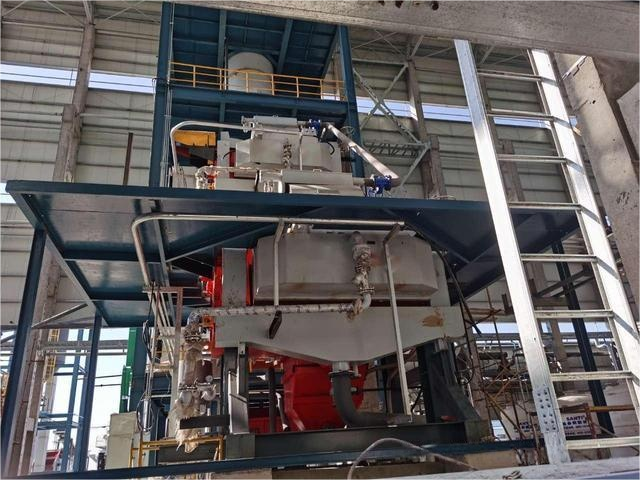
3. Magnetic-Fluorescence-Gravity Separation Method and Process Flow for Tungsten Fine Slime Separation: The magnetic-gravity separation method for tungsten fine slime separation first uses a centrifugal separator to pre-enrich the tungsten fine slime, discarding most of the tailings. The resulting gravity concentrate is then subjected to flotation desulfurization and flotation of scheelite and wolframite. The resulting flotation concentrate is then further refined using a shaking table to obtain the desired tungsten fine slime. The main feature of this combined process is its applicability to the treatment of both wolframite and scheelite fine slime. The centrifugal separator can improve the flotation feed grade and reduce the flotation feed rate and reagent usage. However, this combined process is relatively complex, and the recovery rate for wolframite is relatively low.
4. Magnetic-Flotation-Gravity Separation Method and Process Flow for Tungsten Fine Slime Separation The magnetic-flotation-gravity separation of tungsten fine slime also involves first using a wet magnetic separator to remove impurities. The resulting magnetic concentrate is fed into a shaking table for gravity separation to obtain wolframite concentrate, while the magnetic tailings are fed into flotation to obtain scheelite, tin, and other associated minerals. This combined method is simple, flexible, technically sound, and highly adaptable, and it shows good recovery results for some complex polymetallic tungsten slime deposits.
The above is an introduction to the conventional beneficiation methods and processes for tungsten ore slime. In actual beneficiation plants, whether it is a conventional or innovative process, it is reasonable as long as the recovery efficiency is good and the expected results are achieved. The process method should not be selected blindly, but should be determined according to the properties of the tungsten ore. Therefore, it is recommended to conduct beneficiation tests first, and through test analysis, design a suitable tungsten ore beneficiation scheme, and at the same time, develop suitable tungsten beneficiation equipment based on the scheme.



