
Beneficiation methods for skarn-type scheelite
Skarn-type scheelite (CaWO₄) is an important tungsten mineral resource, often associated with calcite, fluorite, quartz, and sulfides (such as pyrite and chalcopyrite). Its beneficiation methods require comprehensive design considering the ore's mineral composition, distribution characteristics, and associated relationships. Below, we will introduce the beneficiation methods for skarn-type scheelite.
1. Beneficiation Methods for Skarn-Type Scheelite - Gravity Separation
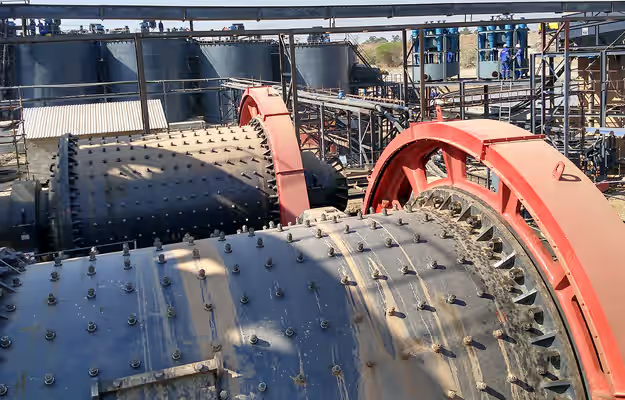
Gravity separation utilizes the differences in mineral density. Under the influence of external forces such as gravity or centrifugal force, mineral particles of different densities are separated by density stratification or particle size classification. The density of scheelite in skarn-type scheelite is approximately 6.1 g/cm³, which is significantly different from most gangue minerals (such as garnet (approximately 3.5-4.3 g/cm³) and calcite (approximately 2.71 g/cm³), providing the physical basis for gravity separation. During gravity separation, the movement of mineral particles in the slurry is facilitated by water flow or mechanical force. The denser scheelite particles tend to accumulate at the bottom of the equipment or in specific areas, while the less dense gangue minerals are distributed in other areas.
Gravity separation is a simple process with low equipment cost, convenient operation, and no need for chemical reagents, making it environmentally friendly. For coarse-grained scheelite, gravity separation can quickly and effectively remove a large amount of gangue minerals, improving the grade of the feed ore and offering high processing capacity. For example, in the pre-concentration stage of some skarn-type scheelite beneficiation plants, gravity separation equipment such as jigs or shaking tables can pre-discard a large amount of low-density gangue minerals, reducing the processing volume in subsequent beneficiation processes.
However, the recovery effect on fine-grained scheelite is poor, the separation accuracy is relatively low, and it is difficult to obtain high-grade scheelite concentrate. This is because, during gravity separation, fine-grained scheelite, due to its small mass, experiences relatively complex effects from gravity and fluid resistance, making it prone to mixing with gangue minerals and hindering effective separation.
2. Beneficiation Methods for Skarn-Type Scheelite - Flotation
Flotation separates minerals based on differences in the physicochemical properties of their surfaces, particularly their wettability. In the flotation of skarn-type scheelite, the properties of the pulp must first be adjusted, typically maintaining the pH between 9 and 10.5, often using sodium carbonate as a pH adjuster.
Flotation offers high separation precision, effectively separating scheelite from gangue minerals and other associated metallic minerals to obtain high-grade scheelite concentrate. It also shows good recovery of fine-grained minerals and can process finely-grained skarn-type scheelite.
However, flotation reagents are expensive, and some reagents are toxic, posing potential hazards to the environment and operator health. The flotation process is complex, requiring precise control of multiple process parameters, such as pulp concentration, pH value, reagent dosage, and flotation time, demanding high levels of operational management expertise. Improper parameter control can easily lead to poor flotation results, such as low concentrate grade, low recovery rate, or excessive reagent consumption.
3. Skarn-type Scheelite Beneficiation Method - Magnetic Separation
Magnetic separation utilizes the differences in the magnetic properties of minerals for beneficiation. Although scheelite itself is a weakly magnetic mineral, skarn-type scheelite often contains accompanying magnetic minerals, such as magnetite. During magnetic separation, the ore is fed into the magnetic field of a magnetic separator. Strongly magnetic mineral particles (such as magnetite) are attracted to the magnetic poles, while non-magnetic or weakly magnetic minerals are unaffected, thus achieving mineral separation. For some scheelite ores, after special treatment (such as roasting), their magnetic properties may change, and magnetic separation can also be used for separation.
For processing skarn-type scheelite ore containing magnetic impurities, magnetic separation can effectively remove magnetic minerals, improving the efficiency of subsequent beneficiation processes and the quality of the concentrate. Magnetic separation equipment is relatively simple, has low operating costs, and minimal environmental impact.
However, its application range is relatively narrow, effective only for scheelite ore with a certain degree of magnetism or ore containing magnetic impurities. Magnetic separation alone is insufficient to obtain high-purity scheelite concentrate; it typically needs to be used in conjunction with other beneficiation methods. Furthermore, altering the magnetic properties of scheelite often requires additional pretreatment steps, such as roasting, which increases the complexity and cost of the process.
Key technologies for beneficiation of skarn-type scheelite:
1. Ore properties and pretreatment
Ore characteristics: Skarn-type scheelite often occurs in disseminated or massive structures with unevenly distributed grain sizes, and is frequently associated with calcareous and magnesium minerals (calcite, fluorite) and silicate minerals.
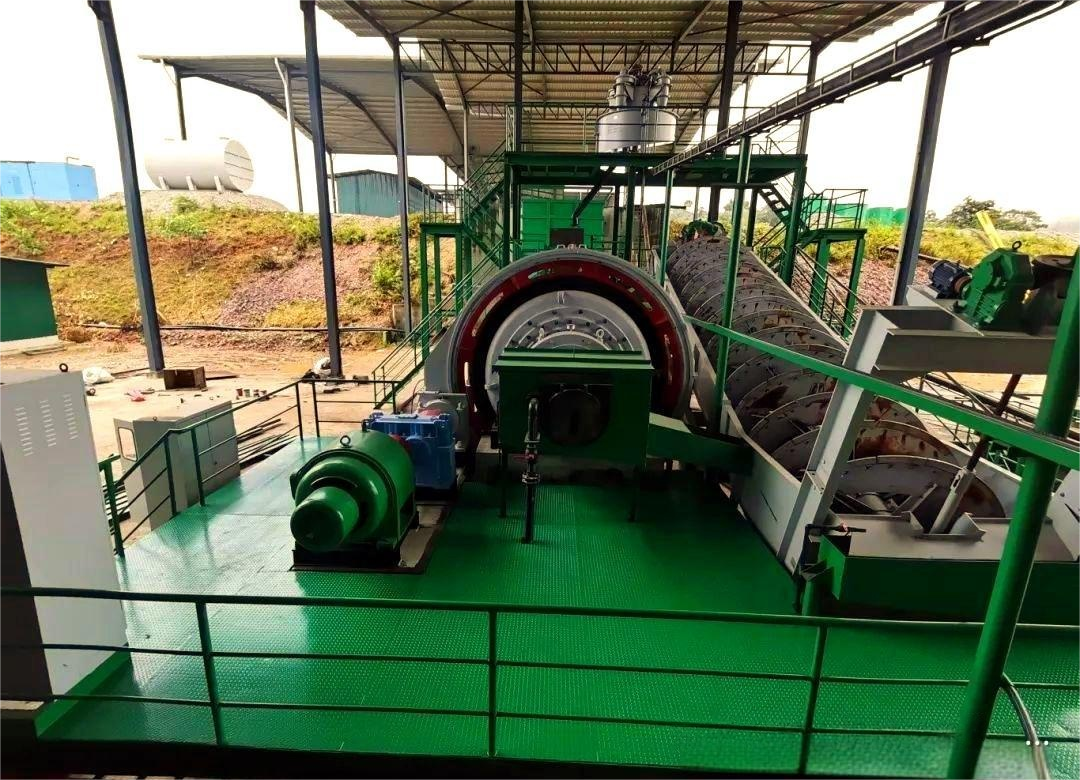
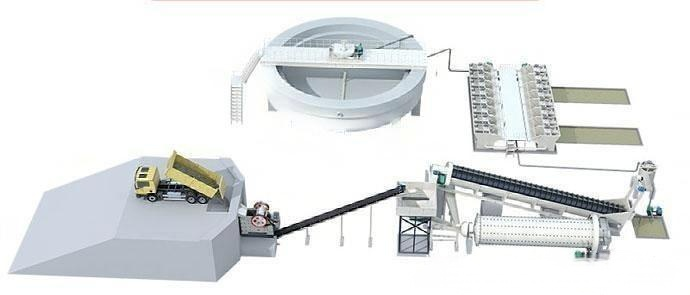
Crushing and grinding: Multi-stage crushing (jaw crusher + cone crusher) and staged grinding (ball mill + classifier) are employed to control the grinding fineness until the minerals are fully liberated (typically -200 mesh accounts for 60%~80%).
2. Separation Methods
(1) Pre-flotation of Sulfide Ores
Purpose: To preferentially float sulfides (such as pyrite and chalcopyrite) in the ore, reducing their interference with the flotation of scheelite, while simultaneously recovering valuable metals.
Process:
Collector: Xanthates (such as butyl xanthate).
Adjusting Agent: Sulfuric acid or lime to adjust the pH to neutral or weakly alkaline.
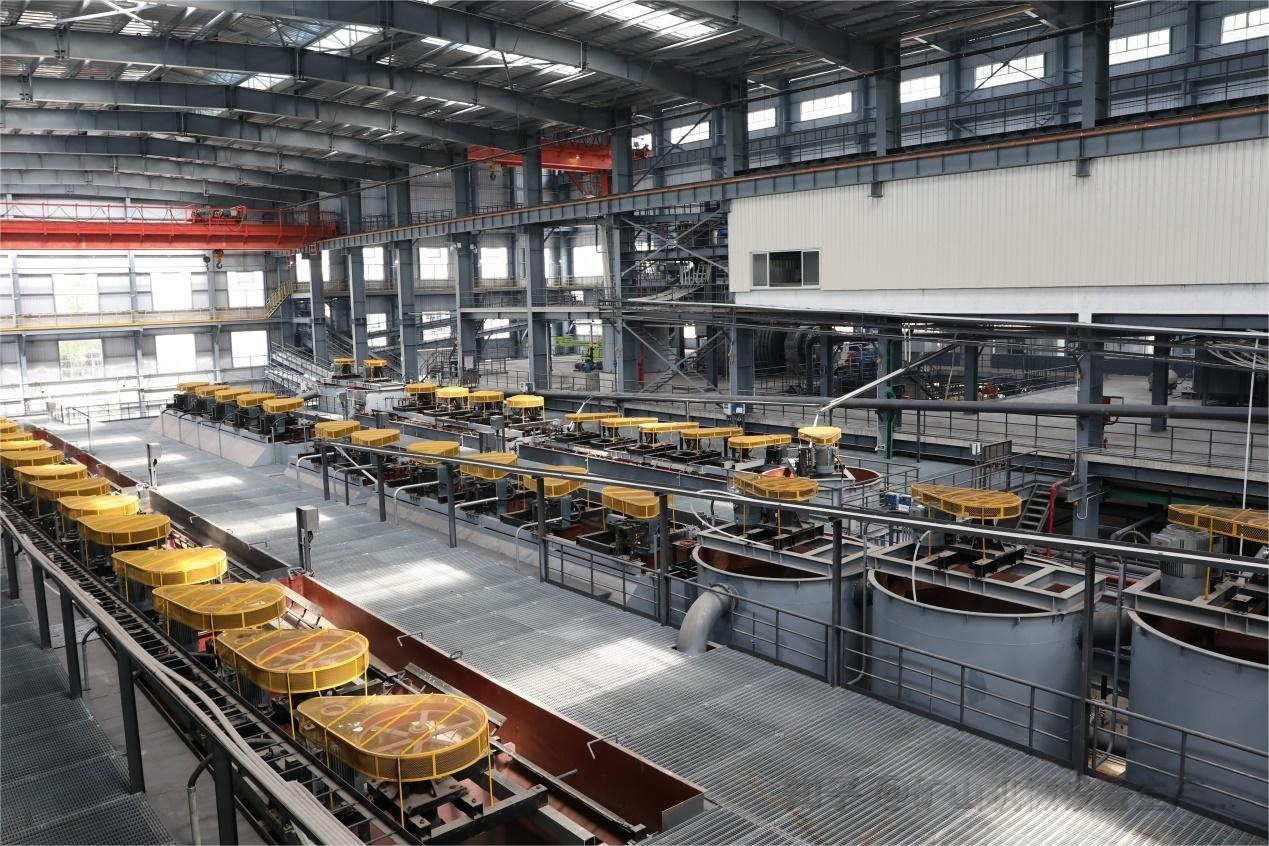
Flotation Flow: Roughing + Scavenging + Cleaning.
(2) Scheelite Flotation
Core Issue: Scheelite has similar surface properties to calcareous minerals such as calcite and fluorite, requiring selective separation.
Key Processes:
Collectors: Fatty acid-based collectors (e.g., oleic acid, oxidized paraffin soap) or chelating collectors (e.g., benzoyl hydroxyxamic acid).
Adjusting Agents:
pH Adjustment: Sodium carbonate (Na₂CO₃) or sodium hydroxide (NaOH) is used to adjust the pH to 8-10, creating an alkaline environment for scheelite flotation.
Depressants:
Water glass (Na₂SiO₃): Inhibits quartz and silicate minerals;
Sodium hexametaphosphate ((NaPO₃)₆) or carboxymethyl cellulose (CMC): Inhibits calcite and fluorite;
Combined depressants (e.g., water glass + sodium hexametaphosphate) can enhance selectivity.
Flotation Process: Roughing (1-2 times) + Scavenging (2-3 times) + Cleaning (3-5 times).
(3) Heated Flotation of Scheelite Rough Concentrate (Petrov Process)
Principle: Utilizing the difference in surface properties between scheelite and calcite/fluorite at high temperatures.
Steps:
Concentrate the rough concentrate to 60%–70% concentration;
Add water glass (to suppress calcareous minerals), heat to 60–80℃, and stir for 30–60 minutes;
Dilute the pulp to 25%–30% concentration, and float at room temperature. Scheelite floats, while calcite and fluorite are suppressed.
Advantages: Significantly improves the grade of scheelite concentrate (WO₃ > 65%).
(4) Gravity Separation-Assisted Recovery
Applicable Conditions: For coarse-grained scheelite, pre-enrichment can be achieved using gravity separation equipment such as shaking tables and spiral sluices.
Limitations: Low recovery rate for fine-grained scheelite; requires combination with flotation.
(5) Magnetic Separation for Impurity Removal
Application: If the ore contains magnetic minerals (such as magnetite), weak magnetic separation can be used to remove them before flotation.
3. Chemical Beneficiation (Complex and Difficult-to-Benefit Ores)
Acid or Alkali Leaching: For ores that are extremely difficult to separate, hydrochloric acid or sodium carbonate solution is used to selectively dissolve calcite and fluorite, enriching scheelite.
Roasting-Leaching: High-temperature roasting destroys the mineral structure, followed by leaching to separate impurities (high cost, rarely used).
Key factors affecting the beneficiation of skarn-type scheelite:
1. Grinding fineness: Ensuring sufficient liberation of scheelite from gangue minerals.
2. Reagent formulation: The selection and ratio of collectors and depressants are crucial to the success of flotation.
3. Pulp temperature: Heated flotation requires strict control of temperature and time.
4. Water quality: Hard water may affect flotation performance and requires softening treatment.
Advances in beneficiation techniques for skarn-type scheelite:
1. New collectors: such as chelating collectors (BHA, SHA) and environmentally friendly reagents (such as plant fatty acids).
2. Flotation equipment: application of high-efficiency aerated flotation machines and flotation columns.
3. Combined processes: integrated flotation-gravity-magnetic separation processes to improve overall recovery.



