
Gravity separation process for extracting gold from carbonaceous gold ores
Carbonaceous gold refers to gold-bearing minerals containing carbon impurities or gold embedded in carbon, with a complex embedding pattern. Gravity separation is a common process in gold ore beneficiation, but its application in carbonaceous gold ore is affected by various factors, primarily ore properties, equipment parameters, and operating conditions. Understanding these factors helps optimize the gravity separation process for carbonaceous gold ore, improving gold recovery and concentrate grade.
1. Ore Properties Affect Gravity Separation of Carbonaceous Gold Deposits
Gold Ore Particle Size: The particle size of gold ore has a significant impact on the gravity separation effect. Generally, the larger the particle size, the better the gravity separation effect. This is because gold has a high specific gravity, and coarser particles are easier to separate from gangue minerals. If the gold particle size is smaller than a certain range (0.03 mm), the difference in settling velocity between the gold and gangue minerals decreases, resulting in poor separation.
Gold Ore Shape: During gravity separation, the morphology of the ore affects its trajectory and settling velocity. Regularly shaped, smooth-surfaced gold particles are more easily separated based on density differences in gravity separation equipment; while irregularly shaped, angular gold particles may experience more friction and fluid resistance, affecting their settling and separation efficiency. Needle-shaped or flaky gold particles may exhibit abnormal trajectories in jigging gravity separation, reducing separation accuracy.
Carbonous Matter Content and Properties: High carbonaceous matter content can interfere with gold gravity separation. A significant density difference between carbonaceous matter and gold may affect the settling and enrichment of gold particles. Some carbonaceous matter has adsorption properties, which may adsorb gold particles, leading to a decrease in gold recovery. In a certain carbonaceous gold ore, when the carbonaceous matter content exceeded 5%, the gold grade in the gravity concentrate decreased significantly.
Ore Density Difference: The density difference between gold and gangue minerals is the basis of gravity separation. The greater the density difference, the more favorable it is for gold separation. If the gangue minerals contain minerals with a density similar to gold, it will increase the difficulty of gravity separation and reduce the separation effect. For example, if the ore contains a large amount of pyrite, whose density is close to that of gold, it is easily separated together with gold during gravity separation, affecting the grade of gold concentrate.
2. Equipment Parameters Affect Gravity Separation of Carbonaceous Gold Ore
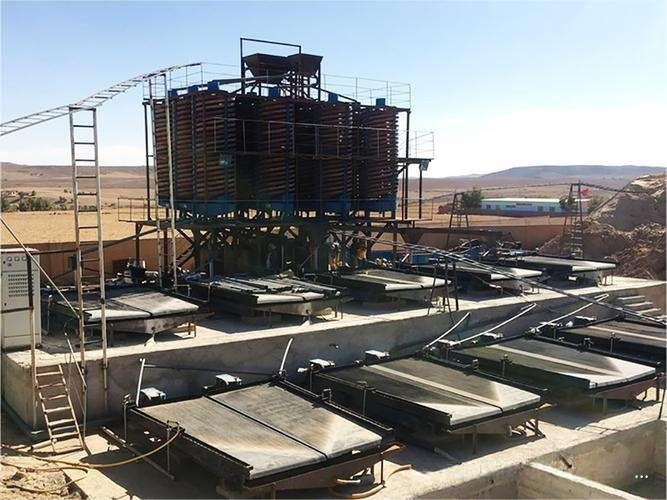
Gravity Separation Equipment Types: Different types of gravity separation equipment have different working principles and applicable ranges, significantly impacting the gravity separation effect of carbonaceous gold ore. Shaking tables are suitable for separating fine-grained gold, jigs are effective at recovering coarse-grained gold, and sluices are commonly used to process coarse-grained or placer gold ores. Choosing the appropriate equipment type can improve the gravity separation effect. When processing fine-grained carbonaceous gold ore, centrifugal gravity separation equipment is more effective than sluice separation in recovering gold.
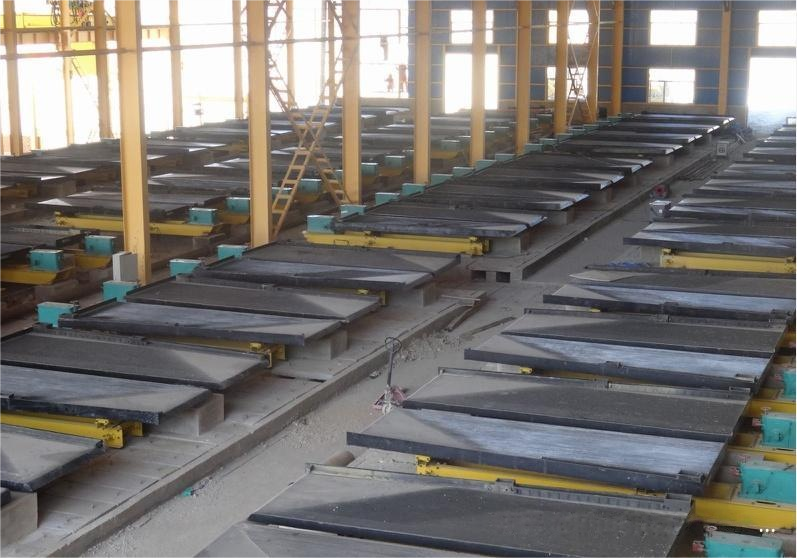
Equipment Structural Parameters: Taking shaking tables as an example, structural parameters such as the inclination, length, and width of the table surface affect the flow velocity and distribution of the slurry on the table surface, thus affecting the gold separation effect. A larger table inclination results in a faster slurry flow rate, which is beneficial for the separation of coarse-grained gold, but may lead to the loss of fine-grained gold; a table length that is too long or too short will affect the settling and enrichment of gold particles. The screen aperture, stroke, and stroke frequency of jigs also have a significant impact on the jigging gravity separation effect.
3. Operating Conditions Affecting Gravity Separation of Carbonaceous Gold Ores
Feed Concentration: Feed concentration has a significant impact on gravity separation efficiency. Excessive concentration increases slurry viscosity, affecting gold particle settling velocity and separation accuracy; insufficient concentration reduces equipment processing capacity. In jigging gravity separation, the feed concentration is generally controlled at around 20%-30%, at which point gold recovery and concentrate grade are relatively high.
Water Flow Rate: In gravity separation equipment such as sluices and shaking tables, water flow rate is a critical operating parameter. Excessive flow rate hinders gold particle settling, leading to reduced recovery; insufficient flow rate affects equipment processing capacity. In sluice gravity separation, the water flow rate needs to be adjusted appropriately based on ore properties and gold particle size, generally between 0.1-0.3 m/s.
Feed Rate: Excessive feed rate results in an excessively thick slurry layer within the gravity separator, affecting gold particle stratification and separation; insufficient feed rate reduces equipment production efficiency. In actual production, the feed rate needs to be reasonably controlled based on the processing capacity of the equipment and the properties of the ore.
How to reduce the interference of carbonaceous matter on the gravity separation process of carbonaceous gold ore? This is mainly because carbonaceous matter interferes with the gravity separation process of carbonaceous gold ore, reducing gold recovery and concentrate grade. Interference can be reduced and the gravity separation effect improved by pretreatment, optimizing the gravity separation process, adjusting equipment parameters, and selecting appropriate reagents.
1. Pretreatment to reduce the impact of carbonaceous matter on the gravity separation process of carbonaceous gold ore
Roasting pretreatment: Roasting oxidizes and decomposes carbonaceous matter at high temperatures, eliminating its interference with gold gravity separation. Traditional roasting processes the ore at 650-750°C, oxidizing the carbonaceous matter and exposing the encased gold, which is beneficial for subsequent gravity separation. In the processing of a certain carbonaceous gold ore, after roasting pretreatment, the carbonaceous matter content was significantly reduced, and the gold gravity separation recovery rate increased from 40% to 70%. However, roasting has problems such as high energy consumption and the generation of harmful gases.
Chemical oxidation pretreatment: This method utilizes strong oxidants, such as potassium permanganate and hydrogen peroxide, to passivate carbonaceous materials, reducing their adsorption capacity for gold and minimizing interference during gravity separation. In laboratory studies, pretreatment of carbonaceous gold ore with sodium hypochlorite solution effectively suppressed the activity of carbonaceous materials and improved gold gravity separation. However, chemical oxidation may increase costs, and some oxidants can pollute the environment.
2. Optimizing Gravity Separation Process for Carbonaceous Gold Deposits to Reduce Interference
Stage Grinding and Stage Separation: Based on the intercalation characteristics of carbonaceous materials and gold in carbonaceous gold deposits, a stage grinding and stage separation process is adopted. First, coarse grinding and rough separation are performed, discarding some tailings to reduce subsequent processing volume. Then, the rough concentrate is finely ground and cleaned. This avoids excessive crushing of carbonaceous materials, reducing their interference with gold gravity separation. Using this process in a carbonaceous gold mine, the gold concentrate grade increased by 15%.
Combined Gravity Separation-Flotation Process: First, coarse gold is recovered using gravity separation, then fine gold is recovered through flotation. Simultaneously, flotation effectively separates carbonaceous materials. First, jigging gravity separation is used to recover coarse gold, then the jigging tailings are subjected to flotation. The total gold recovery rate reaches 85%, and the interference of carbonaceous materials on gravity separation is effectively reduced.
3. Adjusting Equipment Parameters for Gravity Separation of Carbonaceous Gold Ores to Reduce Interference
Optimizing Shaking Table Parameters: The table slope, stroke, and stroke frequency of the shaking table significantly affect the gravity separation effect. For carbonaceous gold ores, appropriately reducing the table slope can prolong the residence time of the slurry on the table, allowing gold particles more time to settle and separate, reducing interference from carbonaceous matter. Adjusting the stroke and stroke frequency makes the difference in movement trajectories between gold particles and carbonaceous matter more obvious. In processing a certain carbonaceous gold ore, adjusting the table slope from 6° to 4° increased the gold recovery rate by 10%.
Improving Jig Parameters: The water flow frequency and amplitude of the jig determine the loosening and stratification effect of the ore particles. For carbonaceous gold ores, reducing the water flow frequency and increasing the amplitude can enhance the stratification effect between high-density gold particles and carbonaceous matter, reducing the mixing of carbonaceous matter into the gravity concentrate. When processing a carbonaceous gold ore, reducing the water flow frequency from 40 times/min to 30 times/min and increasing the amplitude from 40 mm to 50 mm increased the gold concentrate grade by 8%.
4. Adding Reagents to Suppress Interference from Carbonaceous Materials in Gravity Separation of Carbonaceous Gold Ore
Using Inhibitors: Adding inhibitors can suppress the floatability of carbonaceous materials, reducing their interference with gold gravity separation. Commonly used inhibitors include kerosene and salicylic acid, which can form an inhibitory film on the surface of carbonaceous materials, reducing the possibility of agglomeration with gold particles. Adding an appropriate amount of kerosene before gravity separation increased the gold recovery rate by 12%.
Adding Dispersants: Some carbonaceous materials can agglomerate, affecting the separation of gold particles. Adding dispersants can ensure that carbonaceous materials are uniformly dispersed in the slurry, reducing their interference with gold gravity separation. In the gravity separation process of a certain carbonaceous gold ore, adding sodium hexametaphosphate as a dispersant improved the dispersibility of the slurry, and the gold recovery rate was significantly improved.
The above describes the influencing factors of gravity separation for gold extraction from carbonaceous gold ores. In practical applications, these influencing factors should be comprehensively considered based on the specific characteristics of the carbonaceous gold ore. Gravity separation process parameters should be optimized, appropriate equipment types selected, and operating conditions strictly controlled to improve gold recovery and concentrate grade. Through scientific and reasonable process design and operation management, the gravity separation effect of carbonaceous gold ores can be effectively improved, providing strong support for the efficient development and utilization of gold resources.



