
Gold extraction process by cyanidation of whole gold ore mud
The whole-ore cyanidation process for gold extraction is one of the important methods for gold extraction. With the continuous development and maturation of the technology, the whole-ore cyanidation method is becoming increasingly popular among gold mine beneficiation plants. So how is gold concentrate extracted using the whole-ore cyanidation method? The core of the whole-ore cyanidation process is to leach gold from the ore using a cyanide (NaCN or KCN) solution, and then recover the gold through displacement or adsorption. This process is suitable for ores where the gold is in a fine-grained free or semi-free state, and has advantages such as high recovery rate (usually 90%~98%) and simple process, but strict control of environmental risks is required.
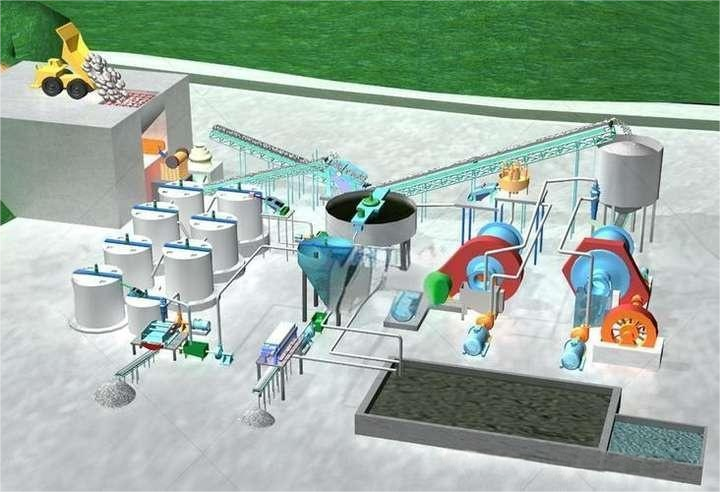
The gold extraction process using whole-ore cyanidation can be divided into six stages: crushing and screening, grinding-gravity separation, secondary classification, slurry preparation and trimming, cyanidation leaching, and desorption electrolysis. The specific process flow for gold extraction using whole-ore cyanidation is as follows:
1. Gold Ore Crushing and Screening Process: To improve production line efficiency, this stage often employs a two-stage, closed-circuit crushing and screening process. Specifically, the raw gold ore is fed into a jaw crusher for coarse crushing. The coarsely crushed product is transported by a belt conveyor to a vibrating screen for screening. Qualified particles are stored in a powder silo. Unqualified particles are returned to a cone crusher for further crushing. The discharge from the cone crusher and jaw crusher then enters a screening machine for processing. This two-stage, closed-circuit crushing and screening operation prevents over-crushing of the ore and improves the efficiency of the crushers, while also ensuring the separation of valuable minerals from gangue minerals as much as possible.
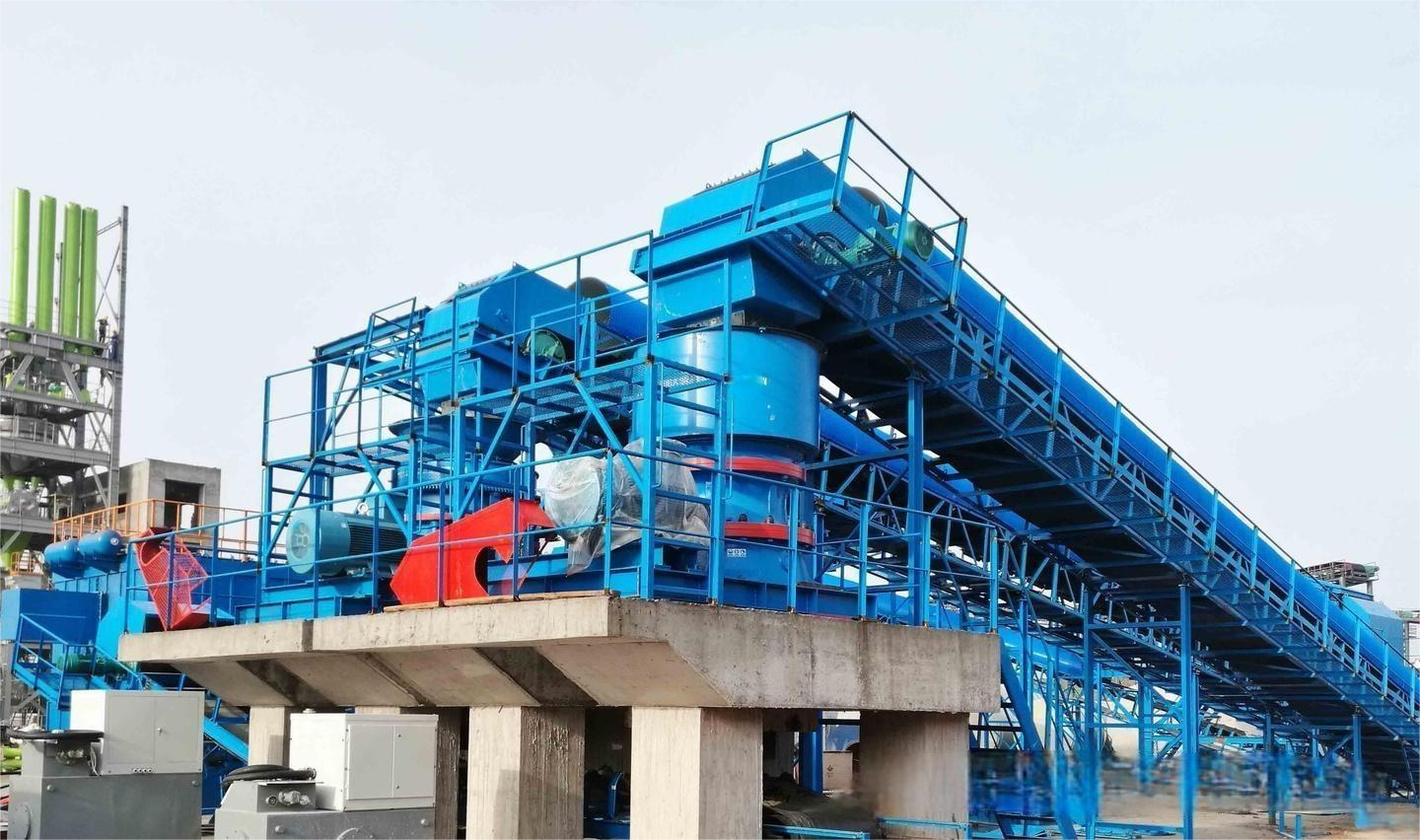
2. Gold Ore Grinding-Gravity Separation Process: Material stored in the powder silo is conveyed by a screw conveyor into a grate-type ball mill for grinding. After grinding, a portion of the product has already achieved complete liberation of the concentrate and gangue minerals. To prevent over-grinding and material waste, a combined gravity separation process can be used to pre-separate the gold concentrate.
The specific process is as follows: The ground product enters a jig for primary gravity separation. The overflow portion is stored in a pump box. The underflow portion is pumped by a slurry pump into a shaking table for secondary and tertiary gravity separation. After gravity separation, gold particles are obtained. The remaining slurry is pumped by a slurry pump into a desliming hopper for washing.
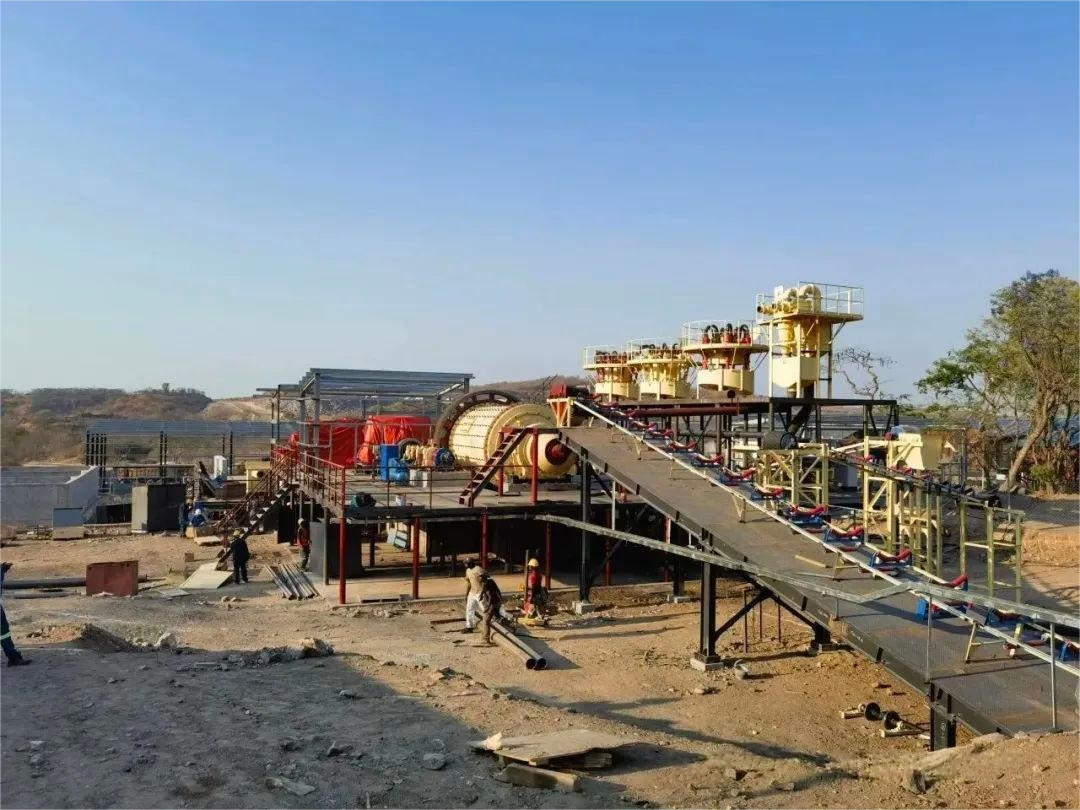
3. Secondary Classification Process for Gold Ore: The underflow from the desliming hopper and the overflow from the jig are stored in a pump box, then enter a hydrocyclone for primary classification. The overflow is pumped into a hydrocyclone assembly for secondary classification. The underflow from both the hydrocyclone and the hydrocyclone assembly returns to the ball mill for further grinding; the former enters a grate-type ball mill, while the latter enters an overflow-type ball mill.
4. Gold Mine Slurry Preparation and Slurry Removal Process
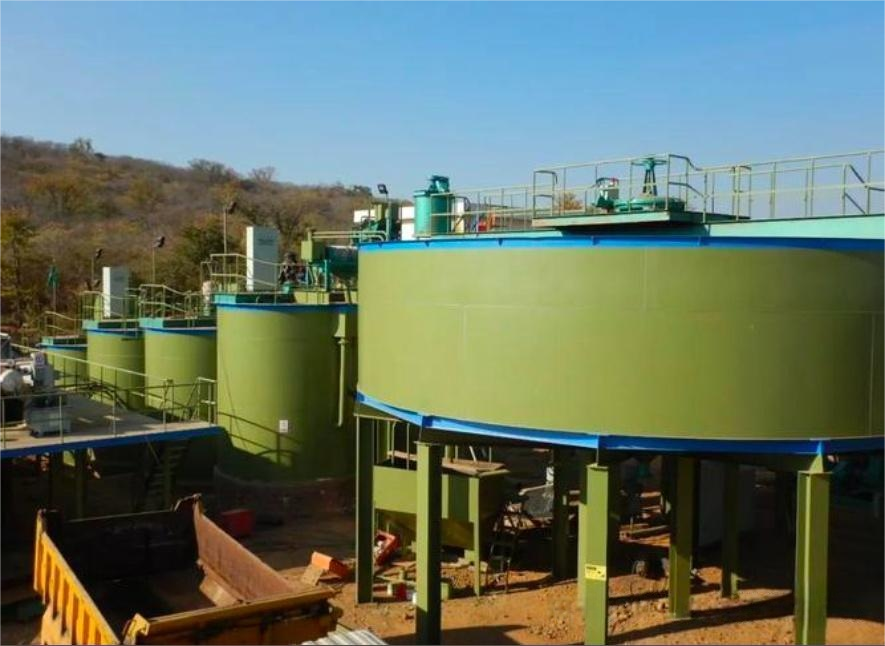
Because the slurry contains sawdust and other impurities, a sawdust removal screen is needed to treat the slurry and prevent these impurities from affecting the leaching effect. Slurry preparation is mainly carried out in the thickener. To meet the conditions for the cyanidation reaction, the slurry concentration should be controlled at 35%-38%, and its pH value should be maintained at 10-11. In actual production, the slurry concentration needs to be controlled by the thickener's bottom flow rate and the amount of flocculant added. The pH value can be controlled by adjusting the amount of lime in the raw ore and the amount of sodium hydroxide in the thickener.
5. Gold Ore Cyanide Leaching Process: The slurry flowing from the bottom of the thickener is pumped into the leaching tanks (3 tanks) for pre-leaching. The pre-leaching stage mainly controls the CN- concentration, oxygen content, and aeration pressure. By adjusting various air valves, bubbles with a diameter of approximately 5-10 mm are evenly dispersed on the surface of the slurry. This process can be achieved using an air compressor. After pre-leaching, the slurry undergoes a countercurrent activated carbon adsorption stage, i.e., leaching and adsorption occur simultaneously. This stage requires five leaching tanks to complete the addition, series, and removal of activated carbon. After the carbon removal unit operates, the leached slurry flows in the opposite direction to the original slurry. This completes the cyanide leaching process.
6. Gold Ore Leaching Solution Desorption and Electrolysis Process Gold ore desorption is primarily carried out within a desorption column. During desorption, cleaned gold-loaded carbon is loaded into the desorption column, and then an aqueous solution of NaCN and NaOH is added to submerge the carbon layer. Under pressure or atmospheric pressure, the desorption column is heated to 90℃~95℃ using an electric heater. After a period of desorption, desorbed carbon and a gold-rich desorption solution are obtained. The main method for recovering gold from the gold-rich desorption solution is electrolysis. The desorption solution is electrolyzed in an electrolytic cell to obtain gold mud. The desorbed carbon can be regenerated and reused after adding a certain proportion of new activated carbon.
7. Gold Smelting Process: Gold mud is smelted with flux (borax, soda ash) at 1200℃, slag is removed, and gold ingots with a purity of 90%-95% are cast. Further electrolytic purification brings the purity to 99.99%.
8. Tailings Treatment Process: Cyanide Degradation: CN⁻ is converted to harmless CNO⁻ or CO₂/N₂ using the SO₂-air method or hydrogen peroxide oxidation.
Tailings Dam:
Safely sealed, seepage-proofed, and with regular water quality monitoring.
Characteristics of the whole-sludge cyanidation gold extraction process:
Advantages:
High recovery rate (90%-98%), simple process, suitable for low-sulfur, low-arsenic fine-grained gold ores.
Disadvantages:
High toxicity of cyanide, high environmental protection costs; unsuitable for complex minerals (such as encapsulated gold ores, high-sulfur arsenic ores).
Application conditions for whole-sludge cyanidation gold extraction process in gold mines:
Ore Requirements
Gold must be in a fine-grained free state (particle size < 0.01 mm), free from seriously interfering minerals (such as copper and antimony).
Environmental Compliance
A cyanide neutralization system is required, complying with local emission standards.
Safety and Environmental Protection in the Whole-Sludge Cyanide Gold Extraction Process:
Protective Measures
Operators must wear respirators, and HCN concentration in the workshop must be monitored in real time.
Alternative Process Exploration
Non-cyanide leaching (thiourea, thiosulfate) is the future trend, but currently it is costly.



